Choosing a heavy-duty bike carrier means weighing capacity, compatibility, and ease of use. The five options below offer a mix of platform-style racks and versatile 2-in-1 carriers designed for SUVs, trucks, and cars. Each entry emphasizes load capacity, hitch compatibility, and security features to help you pick a dependable solution for transporting multiple bikes, including fat-tire and electric models. A quick summary table follows to compare the core specs at a glance.
| Product | Brand | Capacity (lbs) | Receiver | Notable Feature |
|---|---|---|---|---|
| Young Electric Heavy-Duty Bike Carrier | Young Electric | 200 total | 2-inch | Tilting design; soft padded hooks; fat tires support |
| XtraEzzy Ebike Heavy-Duty Rack | XtraEzzy | 300 | 2-inch | 2-in-1 carrier and cargo rack; fits up to 5.5″ tires |
| Tow Tuff Steel Cargo Carrier With Bike Rack | Tow Tuff | 500 | 2-inch | 2-in-1 design; carries up to 4 bikes |
| Tow Tuff Aluminum 500 lb Carrier | Tow Tuff | 500 | 2-inch | Lightweight aluminum; cargo or bike rack |
| Upgrade 2.0 Hitch Bike Rack | GOEHNER’s | 240 | 2-inch | Dual locking; 6″ bike spacing; tilt-ready |
Young Electric Heavy-Duty Bike Carrier
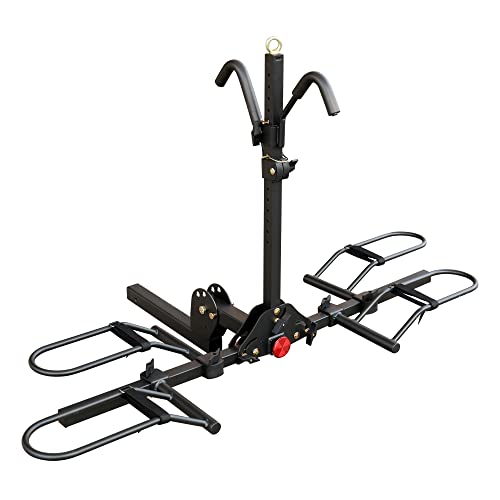
This Young Electric model is designed to transport two bikes with a total capacity of 200 pounds, or up to 100 pounds per bike. The rack uses soft padded hooks to secure the frame, reducing sway and protecting paint. A rear safety reflector increases visibility in low light, which is important for road safety when mounting or dismounting on busy streets. The rack supports fat tires up to 5 inches and wheelbases from 20″ to 29″, accommodating a wide range of mountain, gravel, and road bikes. The design includes foldable storage and a tilt-down feature that allows trunk access without detaching the rack, making daily use more convenient.
Installation centers on a 2-inch hitch receiver. The universal tire holders and wheel straps secure wheels firmly, while the 58″ wheelbase maximum ensures compatibility with many frames. The combination of safety features and practical access makes this model suitable for homes with limited garage space or for those who regularly need to reach their trunk without removing bikes.
XtraEzzy Ebike Heavy-Duty Rack

The XtraEzzy model functions as a 2-in-1 carrier: a sturdy bike rack and cargo carrier that can hold up to 300 pounds total. It is designed for vehicles with a 2-inch receiver and is compatible with a wide range of bikes, including fat-tire and electric models. Tires up to 5.5 inches wide and wheelbases up to 51 inches are supported, making it a strong option for households with mixed fleets. The unit measures 66x20x6 inches as a cargo rack, which helps maximize onboard storage space during travel, ideal for camping trips or long road outings.
Security and stability are supported by heavy-duty construction and a layout that favors even weight distribution. The design aims to minimize bike-to-bike interference with adequate space between arms. For travel enthusiasts with multiple bikes of varying sizes, this rack provides flexibility without requiring separate racks or complex adjustments.
Tow Tuff Steel Cargo Carrier With Bike Rack

This Tow Tuff model combines rugged steel construction with a 500-pound capacity, making it a robust choice for heavy gear, camping equipment, or luggage. The design supports a quick transition between a bike rack and a cargo carrier, enabling users to switch configurations by removing pins. It accommodates up to four bikes when used as a rack and offers a sturdy platform for bulky cargo when used as a carrier. Adjustable wheel holders and multiple tie-down holes help secure bikes during transit, reducing movement and potential damage on the road. This versatility makes it a strong option for travelers who frequently switch between hauling bikes and other gear.
With a 2-inch receiver, it remains compatible with many vehicles. Its heavy-duty build is intended for long-term use and frequent travel, offering reliable performance in a variety of weather conditions. When not in use for bikes, the carrier can serve as a general-purpose cargo platform, providing additional vehicle storage capacity on adventures away from home.
Tow Tuff Aluminum 500 lb Carrier

This model uses aluminum construction to reduce weight while delivering a substantial load capacity of up to 500 pounds. It functions as a 2-in-1 carrier, serving as both a cargo carrier and a bike rack, which expands its utility for users who need to haul gear beyond bikes. The rack includes adjustable wheel holders and tie-down points to secure bicycles effectively and prevent shifting during transit. It is designed to fit all 2-inch receivers and supports a wide range of vehicles, including cars, SUVs, and trucks. The combination of aluminum durability and versatile setup makes it a practical option for frequent travelers seeking a balance between strength and portability.
The aluminum design helps minimize overall rack weight, improving fuel economy and ease of handling during installation or removal. As with other heavy-duty options, proper securing of loads and periodic inspection of straps and fasteners are advised to maximize safety on long trips or rough roads.
Upgrade 2.0 Hitch Bike Rack

The Upgrade 2.0 hitch rack offers heavy-duty stability with a max load of 240 pounds and space for up to four bikes. Its dual locking system provides security during transport, and the design includes ample 6-inch spacing between bikes to prevent frame contact. The rack is constructed from high-strength steel and includes 2-inch receiver compatibility for broad vehicle compatibility. A tilt feature with a pin-locking mechanism allows rear access to the vehicle without removing the bikes, enhancing convenience during daily use or on quick trips. The package includes rubber straps and stabilizers for added protection against wheel movement and frame wear.
With a focus on safety and ease of use, this model balances capacity with user-friendly features. It appeals to riders who transport a mixed fleet of bikes, including road, mountain, and heavier electric models, while maintaining a straightforward installation and secure transport.
Buying Guide
Choosing the right heavy-duty bike carrier involves balancing several factors to meet your specific needs. The following considerations compare common options and highlight what matters most for different scenarios.
- Weight capacity versus bike weight: Total capacity should exceed the weight of all bikes you plan to carry, with extra margin for safety. Some models list total capacity (e.g., 200 lb), while others specify per-bike limits (e.g., 100 lb per bike). Plan for your heaviest bikes, including fat-tire or electric models.
- Receiver compatibility: The majority of these carriers fit 2-inch hitch receivers, which is the most common standard for larger vehicles. Confirm your vehicle’s hitch size before purchasing and ensure the chosen model does not obstruct other components or reduce rear clearance unnecessarily.
- Bike type compatibility: Fat tires, fat-tire e-bikes, and irregular frame shapes require wider tire clearance and robust frame contacts. Look for models that specify tire widths (e.g., up to 5.5 inches) and wheelbase compatibility to avoid returns or fit issues.
- 2-in-1 versus single-function racks: 2-in-1 cargo carriers offer added versatility for hauling gear beyond bikes, which can maximize usable space on trips. However, they may be heavier and bulkier. Consider how often you will use the cargo mode versus bike-only mode.
- Security features: Locking hitch pins, locking arms, and anti-theft measures protect bikes and racks on the road. Some models include dual or integrated locks for added security, which is especially important for longer trips or unattended parking.
- Adjustability and bike spacing: Plenty of space between bikes reduces frame contact and damage. Look for models with adjustable wheel trays, thicker straps, and padded contact points to protect frames and finishes.
- Materials and weight: Steel racks tend to be heavier but robust, while aluminum racks reduce weight for easier handling and better fuel efficiency. For frequent removal and installation, lighter options can be advantageous, provided they meet your capacity needs.
- Storage and portability: Folding designs and tilting mechanisms improve trunk access and storage in garages. Check whether the rack folds flat for storage and whether it remains stable when transported without bikes mounted.
- Maintenance and warranty: Inspect strap wear resistance and hardware corrosion resistance. A strong warranty can reduce long-term ownership costs, especially if you travel often or store bikes outdoors.
- Installation complexity: Some racks require minimal tools and straightforward mounting, while others involve additional steps or alignment checks. Consider your comfort level with installation and whether you need professional help.
In sum, for heavy loads, prioritize high total capacity, a solid 2-inch receiver, secure mounting features, and sufficient space between bikes. If you frequently travel with bulky gear beyond bikes, a 2-in-1 cargo carrier can offer meaningful flexibility. For lighter or occasional use, steel or aluminum construction with foldable, tilt-down features can be advantageous for frequent trunk access and storage. Always verify compatibility with your vehicle and your largest bikes to ensure a safe and convenient transport solution.