Choosing a battery powered balance bike for a child blends safety, learning, and fun. The models below focus on lightweight frames, manageable power, and user-friendly controls to help kids build balance and confidence. From small 6V ride-ons for toddlers to 24V balance bikes with two-speed options, these picks cover a range of ages and abilities while prioritizing durability and simplicity. Read on to compare top options and find one that best fits a child’s skill level, space, and supervision needs.
| Product | Brand | Key Features Snapshot |
|---|---|---|
| AIII 24V Lightweight Balance Bike | AIII | Two speeds (5 mph / up to 10 mph); detachable 24V battery; LED display; lightweight aluminum frame |
| AIII 24V Lightweight Balance Bike (Variant) | AIII | Same core specs; another option with similar weight and power for different color or style |
| JoyRydz 6V Baby Balance Bike | JoyRydz | Remote control; bubble machine; 1–4 year age range; low floor height; indoor/outdoor use |
| TOBBI 12V Toddler Dirt Bike (Rose Pink) | TOBBI | 12V battery; two speeds; training wheels; soft start; 66 lb weight limit |
| TOBBI 12V Kids Motorcycle Blue | TOBBI | 12V dual motors; two speeds; training wheels; rugged design for varied terrains |
AIII 24V Lightweight Balance Bike

This entry highlights a compact, lightweight electric balance bike designed for younger riders. It uses a 24V power system with a 150W brushless motor, delivering two speed settings: a beginner-friendly 5 mph mode and a faster option up to 10 mph. The aluminum alloy frame keeps weight low at about 23.2 pounds, aiding control and maneuverability during balance practice or light off-road use. A throttle with an LED display helps with battery management, while the detachable 24V 2.6Ah lithium-ion pack can be swapped quickly if a ride continues after charging.
Two-wheeled stability is supported by hand-operated dual brakes, contributing to safe stops as new riders learn to coordinate throttle and balance. The bike’s sleek finish and durable construction are paired with a protective battery cover for safety. A quick-charging cycle, typically around 1.5–2 hours, minimizes downtime between sessions. Parents can expect roughly 40–60 minutes of runtime per charge, depending on riding conditions and rider weight. While designed for ages 3–12, it scales well as a child’s balance skills improve.
AIII 24V Lightweight Balance Bike
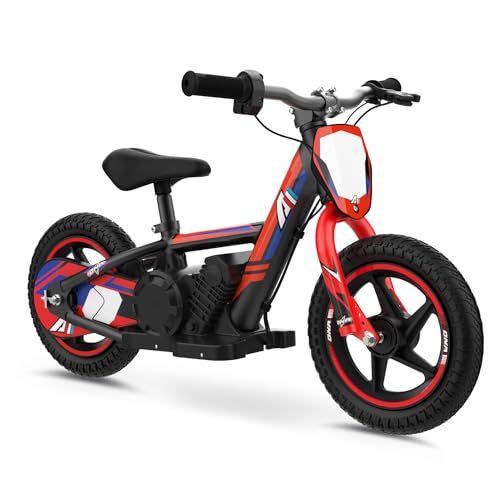
This second listing mirrors the core AIII balance bike design with a focus on portability and ease of use. A robust aluminum frame, a modest weight, and a 24V powertrain deliver predictable power suitable for early balance practice and controlled acceleration. The dual-brake system provides intuitive stopping power for young riders who are still mastering pedal-free balance. The ability to detach and swap the battery adds convenience for families who like to rotate bikes between siblings or keep a spare pack charged for longer play sessions.
Key advantages include the two-speed option for progressive skill building, a throttle-mounted LED for quick battery checks, and a simple charging routine. On urban sidewalks or unpaved paths, this balance bike helps kids practice steering, weight shifting, and confidence behind a handlebar, all while maintaining a lighter overall profile to reduce fatigue during longer sessions.
JoyRydz 6V Baby Balance Bike

JoyRydz offers a starter balance bike that blends play with basic balance training. This 6V model targets the youngest riders, typically ages 12–48 months, and emphasizes low seat height to promote easy mounting and safe starts. A distinctive bubble machine and remote-control capability provide engaging, supervised play, while the non-slip wheels help protect indoor and outdoor flooring. With two operating modes—non-electric propulsion and electric support—parents can gradually introduce motorized power as the child gains balance confidence. It’s light, compact, and ideal for early scooting and foot-to-floor practice.
The design prioritizes safety: a short wheelbase, simple on/off control, and a lightweight plastic chassis reduce risk while still delivering a motorized boost. The remote is useful for directing rides in open spaces, and the absence of aggressive speed reduces the chance of falls during early sessions. This model serves as a transitional tool between traditional pedal-bikes and larger battery bikes.
TOBBI 12V Toddler Dirt Bike

This TOBBI model targets toddlers with a 12V battery and dual-wheel training wheels for extra stability. The bike offers forward motion and a high/low-speed option suitable for developing riders. Soft-start technology helps prevent sudden jerks, delivering a smoother ride when a child presses the accelerator for the first time. The design emphasizes safety and support for younger children who may benefit from longer practice sessions with stable footing and controlled acceleration. The bike’s rose color adds visual appeal for younger fans who prefer bright, playful aesthetics.
With a maximum weight capacity around 66 pounds, this ride-on remains manageable for most toddlers while still offering enough power for confident starts. Parents will appreciate straightforward assembly and a design that reduces the risk of tipping during early attempts at steering and throttle control.
TOBBI 12V Kids Motorcycle Blue

This blue TOBBI model provides a dual-motor setup with 12V power and two speeds, designed for kids who have moved beyond basic balance practice and want a bit more power for their rides. Training wheels remain in place to offer stability as young drivers master steering and throttle response. Built for resilience, the bike’s frame and wheels balance grip with easy maintenance, making it suitable for varied surfaces. The inclusion of a robust seat and ergonomic controls supports longer ride times and helps young riders develop better posture and balance coordination over time.
Buying Guide
- Age and size alignment: Choose models with appropriate seat height, foot ground clearance, and rider weight limits. Very young children benefit from 6V or 12V ride-ons with training wheels and low steps, while older kids can graduate to higher voltage balance bikes that include two-speed options.
- Power and speed: 6V and 12V units offer gentler acceleration ideal for beginners and indoor use. 24V systems provide more dynamic performance and longer outdoor play, but require closer supervision and protective gear.
- Battery life and charging: Look for run times around 40–60 minutes or longer for longer sessions. Detachable or swappable batteries reduce downtime. Favor models with clear battery indicators and straightforward charging routines.
- Safety features: Prioritize dual brakes, soft-start mechanisms, protective covers for batteries, sturdy frames, and anti-slip tires. For toddlers, consider remote control options for parental guidance and training wheels for stability.
- Wheelbase and stability: Shorter wheelbases support easier turns and balance for beginners; training wheels or wider tires improve stability on uneven surfaces.
- Build quality and weight: Lighter frames aid balance and reduce fatigue, but must remain sturdy enough to withstand typical kid use. Aluminum frames are common for good strength-to-weight ratios.
- Maintenance and replacement parts: Check for availability of spare batteries, replacement tires, and simple modular components. A detachable battery is convenient for quick swaps and charging flexibility.
- Intended environment: Indoor-friendly models with lower top speeds suit living rooms and hallways, while rugged, higher-power bikes are better for driveways, sidewalks, and light trails.
- Growth and progression: Some bikes include adjustable speed settings or growth-adjustable seats, which help extend the usable life of a single bike as a child grows.
- Warranty and safety certifications: Review manufacturer warranties and any compliance with child-safety standards. A solid warranty can reduce maintenance concerns over time.