Walking bikes help toddlers transition from walking to riding by building balance and coordination before pedaling. The following five options cover a range of ages, safety features, and modes—from four-wheel walkers to versatile, 5-in-1 designs. Use the table below to compare basics at a glance, then read each product section for deeper details. All models emphasize durable materials, parent-friendly adjustments, and safe, kid-focused design.
| Product | Brand | Recommended Age | Key Feature |
|---|---|---|---|
| SEREED Baby Balance Bike | SEREED | 12-24 months | Pedal-free, wide wheels for stability |
| KRIDDO Toddler Balance Bike | KRIDDO | 24 months – 5 years | Removable customizable plate with stickers |
| Retrospec Cricket Balance Bike | Retrospec | 12-24 months | 4 wheels; beginner-friendly balance |
| newyoo Toddler Bike 5 In 1 | newyoo | 12-24 months to 3 years | Five modes in one frame |
| YBIKE Pewi Walking Ride On | YBIKE | 9 months – 3 years | Versatile ride-on, push, and walk helper |
SEREED Baby Balance Bike
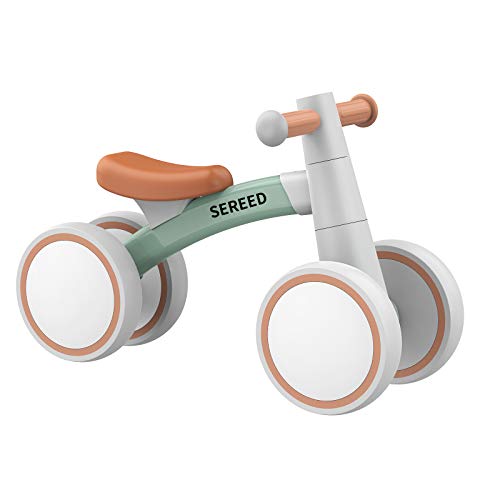
The SEREED balance bike is designed as a first ride option with no pedals, helping toddlers learn balance and steering early. Its recommended age of 12–24 months aligns with the period when children start to explore standing and moving with more control. The bike features a sturdy aluminum alloy frame and a softly supportive seat, ensuring a comfortable ride at small heights. The 135° turning limit and gravity-steering mechanism reduce the risk of tipping, making transitions to independent movement smoother and safer.
With fully widened closed wheels, this model minimizes feet clamping and keeps little toes safe during early exploration. The non-slip TPU handles provide a secure grip, while the non-slip, wear-resistant wheels are gentle on indoor floors and rugged enough for outdoors. The design promotes confidence and coordination as babies practice gliding, steering, and balance through play. Parents will appreciate the lightweight frame for easy carrying and transport between rooms or outdoor spaces.
Overall, the SEREED balance bike offers a gentle introduction to mobility, focusing on core skills without the pressure of pedaling. It serves well as a birthday gift or a warm introduction to riding for toddlers who are still mastering gait and balance. While it lacks pedals, the focus on safe balance, turning, and controlled movement makes it a strong foundation for future pedal bikes.
KRIDDO Toddler Balance Bike
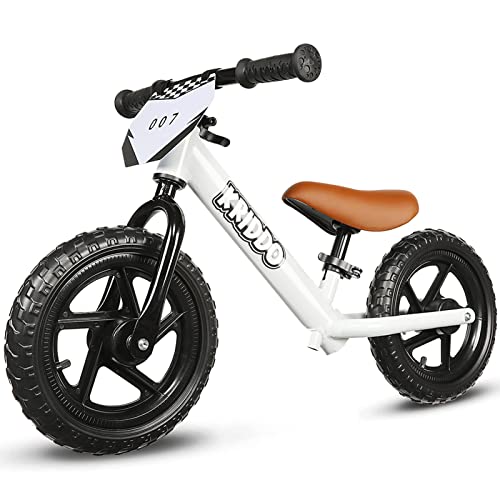
KRIDDO’s balance bike targets children in the late toddler years and early preschool stage, spanning roughly 24 months to 5 years. The bike emphasizes safety with a wide, sturdy carbon-steel frame and soft grip handlebars plus a soft PU seat. It supports up to 110 pounds, providing room to grow as kids gain balance and confidence. A standout feature is the removable customizable plate, letting children personalize their ride with stickers. This element adds a playful, engaging aspect that can help kids feel ownership and pride in their bike learning process.
The push-bike design encourages pushing, standing, and outer movement while kids learn to balance and steer. The steel construction emphasizes durability, which is important as toddlers navigate a mix of indoor and outdoor surfaces. While the setup focuses on balance, the model’s robust frame and comfortable components contribute to a stable ride that can handle curious toddlers who are learning to coordinate their movements. The included sticker options provide an activity beyond riding, supporting fine motor skills and creativity.
For families seeking a growth-oriented balance bike, KRIDDO combines safety, durability, and personalization. While it may be slightly heavier than lighter plastic options, the rugged frame and long-term usability make it a solid investment for a child’s early riding journey and transition to pedal bikes later on.
Retrospec Cricket Balance Bike
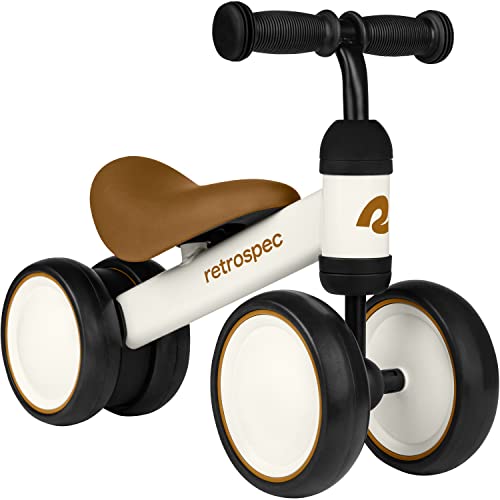
Retrospec Cricket is designed as a four-wheeled walker balance bike for toddlers aged 12–24 months. The model emphasizes safety with a design that keeps feet on the ground, allowing kids to regulate speed and movement without fear of premature tipping. Scratch-resistant wheels protect floors while providing secure grip on both indoor and outdoor surfaces. This setup makes it ideal for first-time walkers who are also beginning to explore balance and coordinated motion in a controlled environment.
Parents can expect a stable, straightforward learning experience, as the four-wheel configuration reduces tipping risk and provides reliable stability while kids practice pushing, gliding, and steering. The non-slip wheels are a practical feature for households with hard floors, children who are still developing core strength, and spaces where careful control matters. Retrospec Cricket is a friendly, durable option that helps toddlers gain early motor skills in a low-pressure setting.
While not a long-term solution for growing beyond balance-bike use, Cricket offers a smooth, safe ramp into riding. It makes a practical gift for a child’s first birthday or early milestone while aligning with safe play guidelines and home versatility.
newyoo Toddler Bike 5 In 1

newyoo offers a versatile 5-in-1 toddler bike designed to grow with a child from 12–24 months through about 3 years. With modes including tricycle, balance bike, and bicycle configurations, this model supports a progression from pushing to balancing to pedaling. The frame uses carbon steel with nylon rear legs and an alloy body, providing a sturdy, durable base. EVA solid, shock-absorbing wheels contribute to a smoother ride on various surfaces, while the included adjustable components help caregivers adapt the bike as a child grows.
Easy assembly and quick-mode conversion tap into busy family life, as parents can switch modes with a single button—no complicated tools required. The vehicle’s design emphasizes safety features such as a low seat height and stable geometry to minimize falls during mode transitions. This flexibility makes newyoo a practical option for families looking to maximize a single product’s lifespan and functionality across multiple developmental stages.
The 5-in-1 approach often represents a thoughtful balance of value and utility, potentially reducing the need for multiple separate toys. For households wanting a single, long-term companion for early riding skills, newyoo combines versatility with straightforward operation and durable construction.
YBIKE Pewi Walking Ride On

The YBIKE Pewi is a walking ride-on toy designed for ages 9 months to 3 years, acting as a transitional “walking buddy” that supports early mobility. It serves multiple purposes, including riding, pushing, sitting, and supported walking. This flexibility makes it suitable for toddlers who are still developing balance while also seeking a playful ride-on experience. The Pewi can stimulate motor skills, balance, and spatial awareness during indoor play or on smooth outdoor surfaces.
Education-oriented features highlight its developmental benefits, including strength building, coordination, and confidence as children explore different ways to move. The Pewi’s design prioritizes gentle, user-friendly interaction with a focus on early exploration rather than intense athletic performance. For parents seeking a lightweight, compact option that scales with a child’s early mobility, the Pewi offers a straightforward, durable solution that blends play with learning.
A mid-range choice in the family of toddler mobility devices, Pewi emphasizes versatility without sacrificing safety. While it is not a traditional balance bike, its walking-support versatility makes it a strong option for households prioritizing varied movement experiences in a compact package.
Buying Guide
Age and Development Milestones
Match the bike to your child’s current motor skills. Younger toddlers gain most benefit from four-wheel designs with a resting feet-on-the-ground stance, while older toddlers and preschoolers can transition to two-wheel balance bikes or three-to-five mode designs. Look for models that align with the child’s balance, coordination, and confidence levels to minimize frustration and maximize learning.
Growth and Adjustability
Choose configurations that grow with the child. Adjustable seat heights and handlebar positions help extend usable life. Some models offer mode switches or removable parts to accommodate advancing abilities. By supporting longer-term use, these features reduce the need for frequent replacements and provide continuity as skills improve.
Safety and Durability
Durability matters for toddlers who will be learning through trial and error. Favor frames made of sturdy materials (steel or aluminum), non-slip grips, and wheels designed to minimize floor scuffs. A low center of gravity and wide wheelbases reduce tipping risk. Inspect for smooth edges, secure fasteners, and reliable brakes or simple speed-control mechanisms appropriate for early riding.
Versatility and Longevity
Versatile bikes that transition from push-and-walk to balance and pedaling modes provide more value. Five-in-one designs or convertibles allow a single product to accompany a child from toddlerhood through early preschool years. Weigh the benefits of extra features like customizable plates, stickers, or built-in learning toys against price to determine overall value for your family.
Indoor vs Outdoor Use and Space
Consider where the child will primarily ride. Indoor-friendly options with smooth wheels work well in living areas, while those with rugged outdoor tires suit driveways or parks. If space is limited, a compact model with easy storage can be important. Always supervise toddlers on any riding device and select pieces with rounded edges and adequate protection against pinched fingers.
Assembly, Maintenance, and Value
Look for straightforward assembly and tool-free adjustments where possible. Regular maintenance—checking bolts, lubricating moving parts, and inspecting tires—extends life and safety. Compare features relative to price, including durability, weight limit, adjustability, and included accessories, to determine long-term value rather than just upfront cost.