Finding the right ride-on option for a toddler can be a balance of safety, development, and independent fun. The following five bikes are selected for their blend of stability, low pedals or pedal-free design, adjustable sizing, and durable construction. Each is designed to help little ones develop balance, coordination, and confidence as they transition from guided motion to independent riding. The selections emphasize indoor and outdoor versatility, ease of setup, and kid-friendly features that parents can trust for everyday adventures.
| Product | Brand | Age Range | Notable Benefit |
|---|---|---|---|
| SEREED Baby Balance Bike (4 Wheels) | SEREED | 12-24 months | Pedal-free design with safe, wide wheels for early balance training |
| EveStone 5-in-1 Toddler Bike | EveStone | 18-48 months | 5 riding modes from guided trike to balance bike |
| Balance Bike With Headlight | Beyond Innoventions | 12-36 months | Lightweight, quick setup and a modern, safe design |
| Umatoll Colorful Lighting Balance Bike | Umatoll | 12-24 months | Glow rear wheels and adjustable seat for growing riders |
| DRAMATION Baby Balance Bike Pink | DRAMATION | 10-12+ months | 2-minute installation and circular body for easy carrying |
SEREED Baby Balance Bike For Toddlers
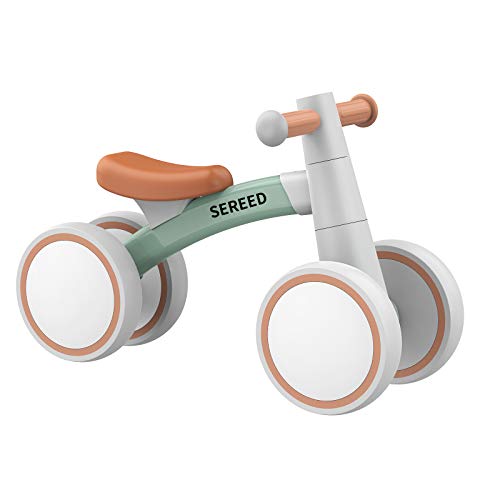
The SEREED balance bike is designed to help toddlers begin walking and riding with a pedal-free, four-wheel setup. With recommended use for ages 12-24 months, it emphasizes balance, steering, and coordination while building early confidence. The design includes a widened, closed wheel layout to prevent foot clamping and a 135° turning limit paired with gravity steering to help prevent tipping without leaving the ground. A sturdy aluminum alloy frame, non-slip TPU handle, and a softly cushioned seat complement a ride that works well on both indoor floors and outdoor surfaces. This model prioritizes safety and stability as a foundational riding experience.
In practice, the bike lets little riders push off and glide, focusing on balance rather than pedaling. The four-wheel design provides a stable base to support wobble during early attempts at steering. Parents appreciate the lightweight frame and non-slip wheels that reduce the risk of floor marks or scratches on home floors. While it lacks pedals, the bike’s focus on balance development can translate to quicker transitions to pedal-based riding as children grow older, helping them feel secure on their first wheels.
EveStone 5-in-1 Toddler Bike
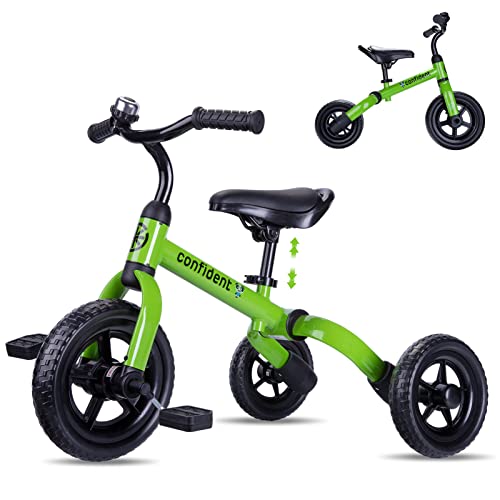
The EveStone 5-in-1 toddler bike grows with your child from a guided trike to an independent balance bike, providing five riding modes across three bike forms. Suitable for children from 18 to 48 months, this bike supports transitions as a child develops. Its standout feature is the absence of pedals in the early stages, allowing toddlers to push off with their feet to practice balance and steering, before cycling becomes fully autonomous. It includes an adjustable seat (height options) and a foldable design, and it’s built on a sturdy carbon steel frame with EVA wheels for smooth handling on varied terrains.
The design emphasizes safety and adaptability, including an anti-tip configuration and the ability to switch modes without complex tools. With quick-release pedals and a one-click mode switch, parents can set up the bike efficiently and transition between modes as the child grows. The balance-to-pedal evolution supports future biking skills while maintaining a simple, reliable first-ride experience for younger toddlers.
Balance Bike With Headlight

Beyond Innoventions’ Balance Bike With Headlight is crafted as a modern, lightweight option for little riders. It emphasizes safety with non-slip wheels and a sturdy build designed for ages around 1 to 3 years. The bike offers a simple, tool-free assembly approach, making it easy for caregivers to get a child riding quickly. While it keeps a contemporary aesthetic, the core strengths are reliability, ease of use, and a comfortable ride. The absence of overly complex parts helps reduce maintenance while providing a stable platform to practice balance and steering before advancing to pedal-based riding.
This model is well-suited for families seeking a straightforward, dependable first bicycle that can be used in multiple settings—from living room carpet to outdoor paths. The design supports early balance training and builds early confidence by giving children a sense of control over motion with a low center of gravity and predictable handling.
Umatoll Colorful Lighting Balance Bike

The Umatoll bike adds a playful twist with a glow-enhanced rear wheel that lights up without batteries—just by spinning. It targets toddlers aged 12-24 months with a 3-position adjustable seat to accommodate growth. Safety features include a 135° steering limiter to prevent rotation mishaps and fully enclosed wheels to prevent toes from slipping or pinching. The handle is made from non-slip materials to provide a confident grip for tiny hands. Overall, it blends visual appeal with essential safety and adjustability, making it a compelling option for early balance work and indoor-outdoor use.
Practicality comes through in the build: the low weight aids parents moving the bike between rooms, and the adjustable seat helps keep the child in a natural riding position as they grow taller. The combination of bright design elements and functional safety enhancements makes it a popular choice for households looking to encourage independent exploration during the toddler years.
DRAMATION Baby Balance Bike Pink

The DRAMATION balance bike emphasizes quick setup and portability, claiming a two-minute installation that gets a curious toddler on the bike rapidly. Its circular body design aims to simplify storage and carrying, making it easy to transport to parks or friends’ houses. A 135° turning limit helps minimize tipping on tight turns, while the wider enclosed wheels reduce the risk of foot injuries during early riding attempts. The pink variant adds a friendly, approachable aesthetic for young riders exploring balance and spatial awareness in a safe, uncomplicated package.
This model balances ease of use with safety: minimal assembly steps, straightforward handling, and a focus on stability and user-friendly features. It’s well-suited for families seeking a low-friction first bike that encourages toddlers to move confidently while learning basic balance and leg strength.
Buying Guide
Key purchase considerations
- Age and growth range: Choose a bike with an adjustable seat and handlebars to accommodate your child as they grow from roughly 12 months to 4 years. Multi-form bikes or those with adjustable components provide longer use.
- Pedal design and drivetrain: Pedal-free or three-wheel designs promote balance before pedaling. This is ideal for foundational motor skill development and reduces the risk of cramping toes in the early stages.
- Safety features: Look for 135° turning limits, fully enclosed wheels, non-slip handles, and a stable frame. A low center of gravity and wide wheelbase improve balance and reduce tipping risk.
- Materials and weight: Aluminum frames are common for lightweight yet sturdy builds. Lighter bikes are easier for parents to lift and maneuver, especially indoors.
- Wheels and grip: Non-slip EVA or rubber wheels protect floors and provide reliable traction on various surfaces. Enclosed wheels prevent toes from getting caught.
- Assembly and maintenance: Tool-free assembly or minimal tools help families set up quickly. Simple parts and straightforward adjustments reduce maintenance needs.
- Indoor vs. outdoor use: Consider the environment where the bike will be used most. Some models perform better on smooth floors, while others handle uneven sidewalks or grass.
- Portability and storage: A compact, easy-to-store design is ideal for small living spaces or travel. Some bikes are designed with carrying handles or compact shapes for transport.
Feature comparisons at a glance
- Balance-first vs. hybrid: Pedal-free or 3-in-1 designs provide a more gradual progression to pedals, while 2-wheeled balance bikes emphasize independent balancing from an earlier age.
- Adjustability: Look for adjustable seats and handlebars to ensure a proper fit as your child grows. Height-adjustable models extend usability.
- Safety emphasis: A 135° turning limit combined with enclosed wheels is a common standard among top-rated beginner bikes and helps prevent accidental tipping or foot injuries.
- Ease of setup: Tool-free or minimal-install bikes save time and reduce frustration for busy families. Quick setups are particularly valuable for travel or busy days.
- Durability vs. cost: While premium materials can offer longer life and better ride quality, many affordable options provide reliable performance for a child’s first riding experiences.
In selecting a toddler ride-on bike, emphasize safety and progressive skill development. The five models highlighted above offer a blend of balance-first design, adjustable sizing, and user-friendly assembly. Consider your child’s current mobility stage, the space available for play, and how long you want the bike to remain suitable as your child grows. By prioritizing stability, ease of use, and age-appropriate features, caregivers can invest in a toy that promotes healthy motor development and confident, independent driving as early as possible.