Choosing the right toddler bike with a parent handle helps children learn balance, steering, and confidence while giving caregivers a safe way to guide and support. The options below highlight five well-regarded models that combine multiple riding modes, adjustable push handles, and kid-friendly safety features. They are designed for ages roughly 1 to 4 years and emphasize easy storage and quick setup. Each entry includes a short product summary and the essential features to help you compare at a glance.
| Product | Brand | Key Features (Summary) |
|---|---|---|
| newyoo TR008 5-in-1 Tricycle | newyoo | 5 modes; parent push handle; adjustable handlebar, seat, pedals; 3 pedal positions; suitable for ages 1–3 |
| JMMD 6-in-1 Push Bike | JMMD | 6 modes; tool-less assembly; foldable; durable steel frame; hand brake; easy storage |
| LOL-FUN 5-in-1 Toddler Tricycle | LOL-FUN | 5 modes; parent steering push handle; carbon steel body; quick, tool-free assembly |
| JMMD 7-in-1 Folding Tricycle | JMMD | 7 modes; quick folding; holds up to 55 lbs; all-terrain wheels; dual rear brakes |
| Rolitwils Training Handle | Rolitwils | 4-height levels; supports up to 110 lbs; universal clamp; fits 12–20 inch wheels |
newyoo TR008 5 in 1 Tricycle
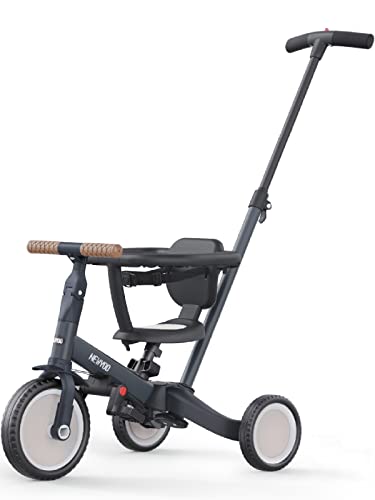
The newyoo TR008 Tricycle offers five distinct riding configurations in a single frame: Push Tricycle, Push Balance Bike, Tricycle, Balance Bike, and Bike mode. This versatility supports children from ages 1 to 3 as they grow from their first push to pedal confidence. The steering push handlebar rotates up to 135 degrees, allowing caregivers to guide speed and direction while keeping the child safe from falls. An adjustable handlebar, seat, and pedals enable parents to tailor the fit as the child grows, with three pedal placements when converting between modes. This design prioritizes safety and adaptability, making practice sessions more engaging for both child and parent.
JMMD 6 in 1 Push Bike

JMMD’s 6-in-1 toddler bike blends a push handle with multiple riding modes to grow with a child from infancy through early preschool. The bike transitions through six configurations, including push bike, bike with training wheels, balance bike, and folding modes, to meet a child’s developing skills. Assembly is described as tool-free, with a front wheel installation and a red fold-button for quick transformation. The steel frame offers durability, while all-terrain, inflatable-free wheels provide a stable ride on varied surfaces. A handbrake adds emergency stopping control for caregivers guiding new riders.
LOL-FUN 5 in 1 Toddler Tricycle

LOL-FUN’s 5-in-1 tricycle emphasizes versatility and safety for early riders. Its five modes support progression from scooting to pedaling with confidence, while a parent steering push handle helps caregivers guide speed and direction as needed. The balance bike frame uses a carbon steel body with upgraded wheels, delivering durability for indoor and outdoor use. Designed for quick setup, assembly takes about a minute and requires no tools. The handle is designed for comfort and grip, aiding caregivers during rides and practice sessions.
JMMD 7 in 1 Folding Tricycle
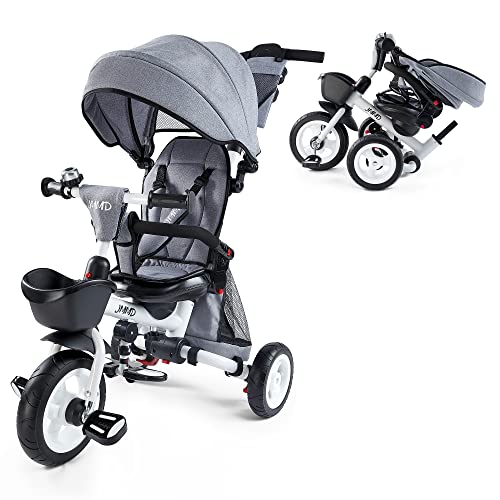
JMMD’s 7-in-1 folding tricycle is designed for long-term use as a child grows. With seven modes, the trike can serve as a toddler trike, steering trike, learn-to-ride unit, classic trike, a 360-degree seat, and folding mode for travel. The foldable design makes storage and transport practical for families on the go. It supports up to 55 pounds, uses sturdy all-terrain inflatable-free wheels to handle different surfaces, and includes dual brakes on the rear wheels for added safety. A canopy and storage options are mentioned as useful accessories for sun protection and on-the-go errands.
Rolitwils Training Handle

The Rolitwils training handle is a universal, adjustable support that attaches to most children’s bikes. It features four height settings to suit parents from 5’2″ to 6’2″ and a robust clamp system designed to fit seat posts with 25–32 mm diameters. The handle offers a two-handed grip to improve stability during learning sessions, and its construction uses premium steel tubing with reinforced welds for extra durability. It is compatible with bikes in the 12–20 inch range, making it a versatile addition to early rider training, especially when parents want additional control and confidence-building support.
Buying Guide
Choosing between a full 5-in-1 toddler bike and a separate training handle depends on your child’s age, skill level, and family needs. Here are the main considerations to help you compare options and select the best fit.
- Age range and growth trajectory: Look for models that explicitly state age ranges and offer multiple modes to grow with your child. Some units start as push bikes for 1-year-olds and expand to pedals and steering for older toddlers.
- Number and type of modes: More modes usually offer longer usefulness. Assess how easily the bike can transition between modes and whether pedals are removable or adjustable for each stage.
- Adjustability and fit: An adjustable handlebar, seat, and pedals help accommodate your child’s growth and your own height. Confirm that adjustment mechanisms are simple and secure.
- Safety features: Prioritize models with stable steering, protective guards, reliable brakes (handbrake or rear-brake systems), and sturdy frames. Look for wide, low centers of gravity to reduce tipping risk during learning.
- Durability and materials: Steel frames and durable plastics last longer and resist wear from outdoor use. All-terrain wheels improve ride quality on different surfaces.
- Foldability and portability: For families on the go, folding designs or compact storage are important. Check how easily a unit folds and whether it fits in a car trunk or closet.
- Weight capacity: Ensure the product can support your child’s current weight and anticipated growth, especially for higher-weight limits or dual-use frames.
- Installation and maintenance: Tool-free assembly is convenient, but some units may require basic setup with included instructions. Consider cleaning and maintenance needs for moving parts.
- Budget and value: Compare features against price. A slightly higher upfront cost can be worthwhile if it offers longer-term use and safer ride characteristics.
- Portability vs. stability: Training handles add safety for caregivers but may limit the child’s independent movement early on. Decide whether you want more parental control or more independent practice for the child.
When evaluating the options above, consider your typical riding environment (indoor, pavement, or varied outdoor terrain), how often you plan to use the bike, and whether you prefer a device that can be stored compactly or one that can transition through multiple developmental stages without changing equipment. The best choice balances safety, adaptability, and convenience for your family’s routine, ensuring the child gains confidence with each new riding milestone.