Finding the right no-pedal balance bike helps toddlers learn balance, steering, and confidence on two wheels. This guide highlights five top-rated no-pedal options designed for ages roughly 18 months to five years. Each model emphasizes safety, durability, and easy growth as your child gets taller. Below, you’ll find quick product highlights in a summary table, followed by detailed sections for each bike and a practical buying guide to compare design choices, materials, and features across the best toddler balance bikes available today.
| Product | Brand | Key Benefit |
|---|---|---|
| SEREED Toddler Balance Bike — Black | SEREED | Tool-Free Adjustments, Personalization Plate |
| Youthkkee 12 Inch Balance Bike | Youthkkee | Easy Assembly, Adjustable Seat |
| Yvolution Y Velo Junior Toddler Bike | Yvolution | Double-Wheel Stability, Growth with Child |
| FunFitX Toddler Balance Bike | FunFitX | Tool-Free Height Adjust, Comfortable Ride |
| AmazingLife Balance Bike | AmazingLife | Durable Frame, 110 Lbs Capacity |
SEREED Toddler Balance Bike — Black

The SEREED balance bike features a wide, sturdy carbon steel frame that supports up to 110 lbs, a safe footrest pad, rubber grips, and a soft saddle. With a starting seat height of 12.6 inches, it’s designed to fit young beginners. A quick-release mechanism allows tool-free adjustment of seat height (12.6–17.1 inches) and handlebar height (19.6–22.5 inches), helping parents tailor the bike as the child grows. No pedals means the child focuses on balance and steering, building confidence for a smooth transition to a pedal bike. The model includes a customizable plate and stickers for personalization, adding a fun, creative element to early riding.
Youthkkee 12 Inch Balance Bike

The Youthkkee balance bike is designed to help young children develop balance and coordination. Pedal-free operation lets kids focus on balance, while the low center of gravity and adjustable seat height provide a stable, confidence-building ride. Built with a robust frame, the bike is capable of handling daily wear and tear as children grow. Its ergonomic design promotes a natural riding posture, encouraging longer play sessions and steady skill progression. This model emphasizes durability and a kid-friendly aesthetic to engage both children and parents.
Yvolution Y Velo Junior Toddler Bike

The Y Velo Junior balance bike is centered on stability and growth. It features iconic dual rear wheels that provide a stable platform for toddlers learning essential riding skills, with a design that evolves as confidence grows. The seat height and handlebar height are adjustable to fit children from 18 months up to about 4 years, with a ride height range of 11″ to 14.17″. This model is marketed as a gateway to independent riding, helping kids develop motor skills, balance, and self-assurance at an early stage.
FunFitX Toddler Balance Bike
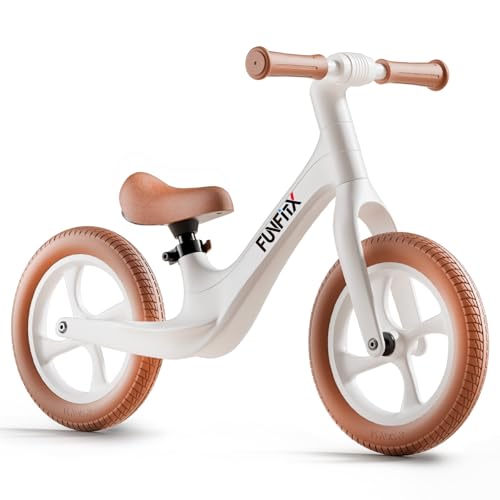
The FunFitX balance bike emphasizes easy adjustability and rider comfort. Seat height and handlebar height are designed for simple, tool-free changes to accommodate growing toddlers. The bike’s padded saddle and child-specific handlebars provide a comfortable riding experience for extended playtime. Its design focuses on helping children learn to balance faster than with traditional training wheels, offering a practical path toward confident, independent riding for ages roughly 1 to 4 years.
AmazingLife Balance Bike
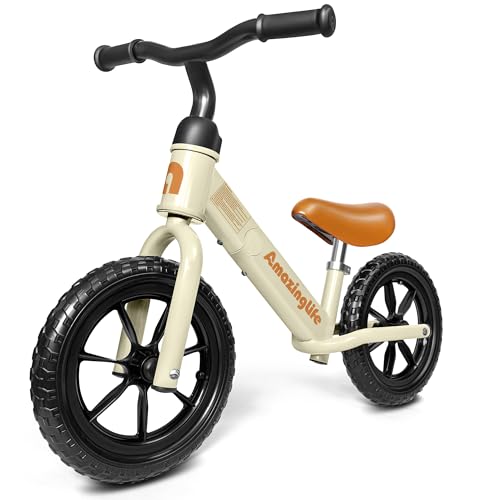
The AmazingLife balance bike pairs a durable carbon steel frame with a weight capacity of up to 110 lbs, supporting children as they grow. It features a 135° steering limit to reduce tipping risk and all-terrain tyres that enable riding both indoors and outdoors. The 11.8-inch starting seat height and adjustable handlebars offer a growth path from toddlers to early preschoolers. The design focuses on safety and longevity, making it a practical investment for families seeking a long-lasting no-pedal option.
Buying Guide
Key Factors To Consider
Choosing a no-pedal bike hinges on growth fit, safety features, and overall durability. Look for adjustable seat and handlebar heights to grow with your child, a robust frame that supports at least 110 lbs, and a wide, non-slip saddle for comfort. No-pedal designs help kids concentrate on balance and steering, which accelerates skill development. Double-wheeled designs can offer added stability for the earliest riders, while single-wheel configurations are common as more confidence appears. Personalization options, like decals or plates, may increase engagement and motivation to ride.
Age Range And Sizing
Most toddler balance bikes are recommended for ages 18 months to five years, but exact sizing varies. Check the starting seat height and the maximum height to ensure the bike can accommodate your child’s growth over several months. A lower seat without compromising stability enables younger toddlers to reach the ground comfortably, while a higher range provides room to learn new skills as they mature.
Adjustability And Comfort
Tool-free adjustments are a major convenience, allowing quick height changes as your child grows. Look for bikes with easy-to-use quick-release mechanisms for seat and handlebar height. A comfortable saddle and grippy handlebars help reduce fatigue during longer play sessions and encourage sustained practice of balance and steering skills.
Materials, Durability, And Safety
Durable frames—often carbon steel or high-quality steel—together with wide, stable wheelbases contribute to safer riding experiences. Steering limits (such as a 135° limit) prevent sharp turns that could cause falls. All-terrain tires increase versatility for both indoor and outdoor use. Ensure the bike has well-sealed bearings, non-slip pedals-free design, and sturdy footrests to protect little feet during workouts in balance mode.
Maintenance, Assembly, And Accessories
Simple assembly and minimal maintenance save time and keep kids riding longer. Tools should be unnecessary for everyday adjustments, and replacement parts should be readily available. Extras like customizable plates or stickers add a personal touch, which can boost engagement and pride in riding progress. When comparing models, consider the availability of replacement tires, seats, and handlebars in case of wear or damage.
Comparing No-Pedal Designs
Balance bikes with dual rear wheels provide extra stability for toddlers just learning to ride, while bikes with single wheels encourage more advanced balance once confidence builds. Growth-oriented models typically offer broader adjustment ranges to maximize lifespan. Evaluate whether a bike emphasizes personalization, or if it focuses on rugged durability for outdoor adventures. By weighing these design choices, families can select a model that aligns with their child’s pace, space, and activity preferences.