Choosing the right bike for a four-year-old balances safety, growth, and enjoyment. This guide spotlights five top-rated options designed for early riders, including pedal bikes with training wheels, balance bikes, and stable trikes. Each option supports balance, steering, and braking while staying durable for learning tumbles on sidewalks or driveways. Read on to compare styles, adjustability, and safety features to find the best match for your child’s size and development stage.
| Product | Age Range | Type | Notable Feature |
|---|---|---|---|
| JOYSTAR 12 Inch Kids Bike With Training Wheels | 2-4 Years | Bicycle With Training Wheels | DIY decal, quick height adjust, chain guard |
| RoyalBaby Freestyle 12 Inch | 3-4 Years | Pedal Bike With Training Wheels | Sealed bearings, adjustable seat/handlebar |
| SEREED Toddler Balance Bike No Pedal | 2-5 Years | Balance Bike (Pedal-Free) | Height-adjustable, sturdy frame, grows with kid |
| Radio Flyer Red Rider Trike | 2-5 Years | Tricycle | Storage bin, easy transport |
| KRIDDO Tricycle For Toddlers | 2-4 Years | Tricycle | Rollover prevention design, comfortable grips |
JOYSTAR 12 Inch Kids Bike With Training Wheels

The JOYSTAR 12 Inch bike is designed for kids who are transitioning from balance to pedaling. It includes stable training wheels to build early confidence and a quick-release seat that makes height adjustments quick as your child grows taller. The saddle features a holder to practice balance riding even when the training wheels are off, supporting a natural progression to independent riding. A child-safe foot brake accommodates small hands, which helps with stopping control before mastering hand braking. Built from a durable steel frame, the bike emphasizes reliability through learning tumbles and daily use. With a simple single-speed drivetrain, maintenance is minimal. It also includes a DIY decal kit and a chain guard to protect little fingers and extend the bike’s lifespan.
RoyalBaby Freestyle 12 Inch

RoyalBaby Freestyle blends BMX-inspired styling with kid-friendly adjustability. The bike features patent-sealed bearings for smooth pedaling and longevity, helping children pedal with less resistance as they learn. Training wheels come in multiple sizes (12, 14, 16 inches) to align with growth, making early rides stable yet challenging enough to progress. An adjustable seat and handlebar ensure continued comfort as your child grows taller. A shortest-travel brake lever is designed for small hands to improve braking efficiency, while 2.4-inch wide tires provide stable traction. The frame is built for durability, and a BPA-free water bottle adds a playful touch to ride time without compromising safety.
SEREED Toddler Balance Bike No Pedal

The SEREED balance bike emphasizes balance and balance-alone riding without pedals. Its wide, sturdy carbon steel frame supports up to 110 pounds, providing durability as the child grows. A 12.6-inch starting seat height and quick-release adjustments for both seat height (12.6-17.1 inches) and handlebar height (19.6-22.5 inches allow a precise fit for growing children. With no pedals, children learn balance, steering, and confidence, creating a smoother transition to a pedal bike. The set includes a personalized plate and stickers to customize the bike, adding a fun, personal touch while maintaining safety through a stable, low-speed ride.
Radio Flyer Red Rider Trike
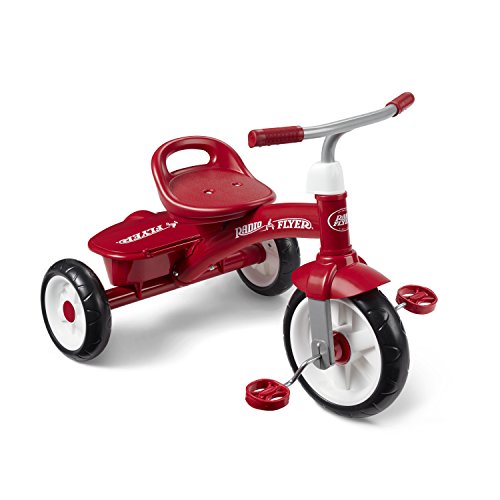
The Radio Flyer Red Rider Trike offers a classic, beginner-friendly ride. It is designed for early riders with a stable, low-profile tricycle frame and smooth, quiet ride tires ideal for sidewalks and driveways. A storage bin adds practical space for treasures during a ride, encouraging exploration while keeping hands free for balance control. The design includes a convenient adult hand grip on the seat back, which makes transportation easier for parents during trips to parks or family outings. The trike’s lightweight construction supports easy maneuverability and reliability for daily use in a variety of environments.
KRIDDO Tricycle For Toddlers Pink

KRIDDO’s tricycle is built with a focus on stability and safety for 2- to 4-year-olds. The design features a smarter triangular frame and extended rear wheels to help prevent tipping during learning, along with an easy-to-carry seat and comfortable grips. The bike’s build supports growing kids, encouraging independence as they practice steering and basic pedaling. The bright pink color and toddler-friendly details appeal to many children while maintaining a robust, durable structure designed for everyday play and learning.
Buying Guide
Choosing the right ride for a four-year-old involves understanding learning styles, growth potential, and safety. Here are key purchase considerations and practical comparisons to help you decide which option best fits your child.
- Age and size alignment: Begin with a bike that fits your child’s height and inseam. Balance bikes require good leg reach for pushing off, while bikes with training wheels require a comfortable saddle height so knees bend slightly at pedal stroke.
- Learning style: Balance bikes build core riding skills without pedals, making a future transition to pedal bikes smoother. Pedal bikes with training wheels offer a natural stepping-stone for kids who want to pedal sooner. Tricycles provide maximum stability and control for younger toddlers or kids still mastering balance.
- Adjustability: Quick-release seat and handlebar adjustments extend the usable life of a bike as your child grows. Look for bikes that accommodate height and reach changes without tools for convenience.
- Safety features: Chain guards, foot brakes suited to small hands, and sturdy frames reduce risk during learning. A carbon steel frame or sealed bearings can indicate durability, while wider tires improve stability on varied surfaces.
- Durability and warranty: Kids’ bikes take repeated tumbles. Prioritize frames with durable materials and warranties or lifetime guarantees for long-term value.
- Weight and portability: Lighter frames are easier for kids to handle and transport. Trikes may be heavier but provide steady balance for early riders.
- Maintenance and parts: Simpler drivetrains and easily replaceable parts shorten downtime after mishaps. Check availability of replacement parts and customer support from the brand.
- Terrain and use case: Sidewalks and paved driveways require different tires and braking responses than grass or gravel. A bike with more grip and stable geometry performs better on varied surfaces.
- Accessories and safety gear: A properly fitting helmet, knee and elbow pads, and gloves complement any ride. Reflective elements and bright colors can improve visibility during early evening rides.
- Budget and value: Balance price with features such as adjustability, durability, and growth potential. A mid-range option with solid warranty often outperforms a cheaper bike that wears out quickly.
Across these options, balance between growth potential and current skill level matters most. For a four-year-old just starting to pedal, a bike with training wheels combined with adjustable height offers a gentle path to independence. For a child continuing to refine balance, a pedal-free balance bike or a stabilizing trike may be the best strategy. Consider your child’s comfort with speed, turning, braking, and how much parental handling you want during rides when making a final choice.