Riders seeking a more comfortable riding position on road and mountain bikes can benefit from a stem extender. By adding height to the handlebar, these devices help reduce lower-back strain, improve visibility, and accommodate taller riders or long-distance journeys. The best stems balance strength, weight, and compatibility with common bar and steerer diameters. This guide highlights five well-regarded options and explains what to consider when choosing one for your road bike.
Below are five stem extenders that cover a range of heights, angles, and mounting styles. Each entry includes key specs, compatibility notes, and installation considerations to help you pick a model that matches your bike and riding style. The selections emphasize robust materials, straightforward mounting, and secure clamps to keep handlebars steady on rough roads or steep climbs.
Here is a quick summary of the five products:
| Product | Brand | Height Range | Compatibility | Notable Feature |
|---|---|---|---|---|
| CXWXC Adjustable MTB Stem 31.8mm 70 Degree | CXWXC | 90–145 mm | 31.8 mm handlebars, 28.6 mm front fork | 70° adjustable angle |
| TOBWOLF Bike Stem Riser & Adjustable MTB Bicycle Stem | TOBWOLF | 115–145 mm | 31.8 mm handlebars, ±90° | Includes 4 spacers for height tuning |
| LUNJE Bike Stem Riser Extender | LUNJE | 90 mm | 1-1/8″ (28.6 mm) fork stem | 6061-T6 aluminum, lightweight |
| TRIWONDER Bike Stem Riser Handlebar Extender | TRIWONDER | Up to 85 mm | 6061 aluminum, 4 gaskets | Adjustable gasket height |
| Sweetone Bike Stem Riser Adjustable Extender | Sweetone | Up to 10 cm | 1-1/8″ bars | Double screw fastening, includes washers |
CXWXC Adjustable MTB Stem 31.8mm 70 Degree

The CXWXC adjustable stem extender is designed for mountain and road bikes that use a 31.8 mm handlebar and a 28.6 mm front fork stem. Available lengths include 90, 110, 130, and 145 mm, helping riders tune reach and height for comfort during long rides. The unit is built from an aluminum alloy, offering a balance of strength and lightness. A note on the product page advises customers to confirm size before purchase to ensure proper fit and clearance.
With a 70° adjustable profile, this stem offers a modest rise while maintaining responsive steering. It is suitable for riders seeking an upright posture without overly altering steering geometry. Installation requires standard bike tools and careful torque to avoid slippage. This model provides a straightforward way to refine riding position for endurance cycling or touring scenarios.
TOBWOLF Bike Stem Riser & Adjustable MTB Bicycle Stem

TOBWOLF’s stem riser is built for comfort and long rides. It fits 31.8 mm handlebars and supports a wide angle range, from -90° to +90°, enabling a very upright or more extended riding posture. The design includes 4 spacers, which allow height adjustments up to a base of 115 mm and an overall extension toward 145 mm when fully configured. The stem is aluminum and specially developed for durability, aiming to improve riding comfort by reducing torso strain during touring and daily commutes.
The product emphasizes easy adjustability to accommodate riders of different heights and preferences. Compatibility spans common road and mountain setups, and the adjustable range helps riders fine-tune reach for better visibility, posture, and control on varying terrains. As with any height-extending component, verify fit and clearance with your cockpit before riding.
LUNJE 90Mm Stem Riser Extender
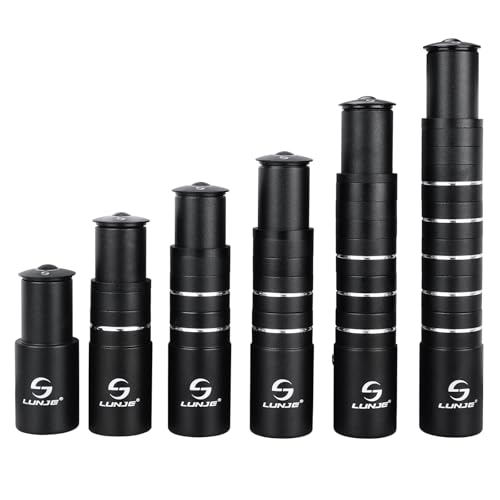
The LUNJE stem riser extender offers universal compatibility for 1-1/8″ (28.6 mm) fork stems, making it broadly suitable for many mountain, road, and hybrid bikes. This 90 mm height option is designed to be lightweight yet durable, crafted from 6061-T6 aluminum. The extender aims to raise cockpit height to provide a more upright riding position, potentially reducing back and neck strain on long-distance rides or steep climbs.
Installability is straightforward for riders familiar with basic stem components. LUNJE emphasizes robust materials that resist corrosion and maintain rigidity under typical cycling loads. While the extender is relatively simple, riders should verify that the overall stack height remains within safe clearance and that the handlebar clamp remains secure after installation.
TRIWONDER Stem Riser Handlebar Extender

TRIWONDER’s stem extender is crafted from 6061 aluminum and delivers a compact height increase of up to 85 mm via adjustable gaskets. The kit includes four gaskets: three of 10 mm and one of 5 mm, allowing users to tailor the final height precisely. This design focuses on a secure, slip-resistant fit and a simple installation process, with a four-bolt clamp to lock the handlebars firmly in place during aggressive riding and rough terrain.
The gasket-based height adjustment provides flexibility for riders seeking an upright posture without committing to a single fixed height. The extender’s aluminum construction offers durability while remaining relatively light for casual riders and more aggressive cyclists alike. Ensure proper torque when tightening and verify gasket alignment during setup.
Sweetone Bike Stem Riser Adjustable Extender

The Sweetone stem riser is built from refined aluminum alloy for high toughness and corrosion resistance. It raises bar height up to about 10 cm and uses double-screw fastening with steel screws to keep the handlebar secure. The kit includes five washers to fine-tune height and clamp tension. It’s designed for 1-1/8″ handlebars and is compatible with most road, mountain, and BMX bikes, making it a flexible option for mixed riding styles.
Installation is described as straightforward, and the product emphasizes stability and safety in everyday riding conditions. Riders should check for any interference with brake hoses or cables and ensure the extender’s additional height does not create clearance issues at the head tube or fork crown during cornering or steep climbs.
Buying Guide
Key purchase considerations
- Compatibility: Check handlebar diameter (most are 31.8 mm) and steerer diameter (common sizes include 1-1/8″ or 22.2–25.4 mm). Some extenders are designed as quill adapters; others fit threadless systems. Ensure the product matches your bike’s cockpit dimensions.
- Height range and adjustability: Decide how much height you need. Options range from roughly 70–85 mm up to 100–150 mm. Consider whether you want fixed height or incremental adjustment using spacers or gaskets.
- Angle and geometry: Some extenders offer fixed angles; others provide a wide angle range (for example -90° to +90°). A broader range helps tailor posture for comfort, visibility, and control on varying terrain.
- Material and weight: Aluminum alloys (such as 6061) are common, offering a balance of strength and lightness. Heavier components may provide extra rigidity but can impact overall bike weight.
- Installation and safety: Look for clear installation instructions, secure clamps (four-bolt options offer solid grip), and gasket or spacer systems that prevent slippage. Always torque bolts to the manufacturer’s specifications and recheck after initial rides.
- Intended riding style: Endurance road riding, touring, or technical mountain biking each benefit from different height and angle configurations. Choose a model that aligns with your typical terrain and riding posture needs.
- Durability and environment: Stainless or anodized finishes resist corrosion and wear. Consider exposure to wet or muddy conditions and whether maintenance steps are needed to preserve clamping surfaces.
Comparisons and practical tips
- Best for frequent height changes: Models with spacer sets or gasket packs (like TOBWOLF and TRIWONDER variants) provide flexible tuning for comfort on long rides.
- Best for road efficiency: Lower-height extenders with modest rise and reliable clamps maintain aerodynamic posture while preserving steering response.
- Best for rugged use: Sturdier aluminum extenders with reinforced clamps and robust finishes may tolerate harsher conditions and occasional impacts during off-road segments.
- Installation considerations: If you’re new to stem extenders, start with the smallest height increase and test ride a few miles to assess comfort before increasing height.
- Maintenance: Periodically inspect clamp bolts, spacers, and gasket contacts for wear, and re-torque to spec after initial rides or rough terrain.
Practical recommendations
- For road riders seeking a subtle upright posture, a 70–90 mm extender with a modest angle is often sufficient.
- For touring or endurance rides, consider extenders offering up to 115–145 mm with spacers to dial in a comfortable, upright position without sacrificing control.
- If you ride mixed terrain (road and light trails), choose a versatile model with a broad angle range and a robust clamp to minimize slippage on rough sections.
Ultimately, the best stem extender depends on your bike’s cockpit dimensions, riding style, and comfort goals. By matching diameter compatibility, height range, and clamp design to your needs, you can achieve a healthier posture, reduced fatigue, and improved visibility on longer rides—whether you’re navigating city streets, turning fast corners, or chasing all-day endurance sessions.