Finding a stationary bike that fits a shorter frame can be challenging. The following five models blend compact design with adjustable features to suit riders from about 4’4″ to 6’1″ or taller. Each option offers a seat that adjusts, easy setup, and quiet operation, making them suitable for apartments, shared spaces, or homes where space is at a premium. The table below highlights essential specs to help you compare at a glance.
| Product | Brand | Type | Key Benefit |
|---|---|---|---|
| Birdfeel Foldable Exercise Bike | Birdfeel | Foldable, 8-Level Magnetic | Space-saving, multi-mode cardio and strength |
| SLUNSE Adjustable Magnetic Bike | SLUNSE | Upright, App Compatible | Adjustable seating and app connectivity for short riders |
| XVGVSV Recumbent Bike | XVGVSV | Recumbent | Ergonomic seating with easy adjustability |
| Niceday Recumbent Bike | Niceday | Recumbent | Back-friendly, multi-level resistance |
| MERACH Recumbent Bike With App | MERACH | Recumbent | Bluetooth app tracking and adjustable resistance |
Birdfeel Foldable Exercise Bike For Small Spaces

The Birdfeel Foldable Exercise Bike is designed for compact living spaces. It provides eight levels of magnetic resistance for varied workouts and includes dual resistance bands to add upper-body training without extra equipment. The seat is oversized and adjustable, and the design supports riders from about 4’4″ to 6’6″, accommodating multiple family members. A maximum user weight of 300 pounds reflects solid durability for most adults. The quiet magnetic system keeps disruption to a minimum, making it suitable for shared homes or early morning routines.
In daily use, this bike transitions between upright cardio, a recumbent ride, and a fully folded storage mode. Front transport wheels facilitate moving the unit between rooms, while the foldable frame reduces its footprint when not in use. The seat padding and detachable foam covers enhance comfort and hygiene, and the overall quiet operation helps maintain a peaceful home environment. For anyone needing a space-saving, adaptable cardio option, Birdfeel offers a practical, versatile solution.
SLUNSE Adjustable Magnetic Exercise Bike

SLUNSE’s Adjustable Magnetic Exercise Bike fits small spaces and growing training needs. It supports up to 350 pounds and uses a 30-pound flywheel with a sturdy steel frame for stability during vigorous sessions. The belt drive delivers a smoother, quieter ride than chains, which suits apartments or shared homes. Both the handlebar and seat are highly adjustable: the 2-way handlebar moves for height and reach, while the 4-way seat adjusts to fit leg length and posture. A tablet holder and built-in console help you monitor progress during workouts, turning every session into a personalized plan.
Smart upgradability comes via an app-friendly design that pairs with Zwift or Kinomap on compatible devices. The console displays speed, time, distance, and calories in real time, allowing you to track goals without distraction. The combination of quiet operation, high weight capacity, and flexible geometry makes this model particularly suitable for shorter riders who still want a solid cardio experience at home. The overall build emphasizes durability while staying approachable for users who prioritize adjustability and tech features.
XVGVSV Recumbent Bike With Adjustable Seat
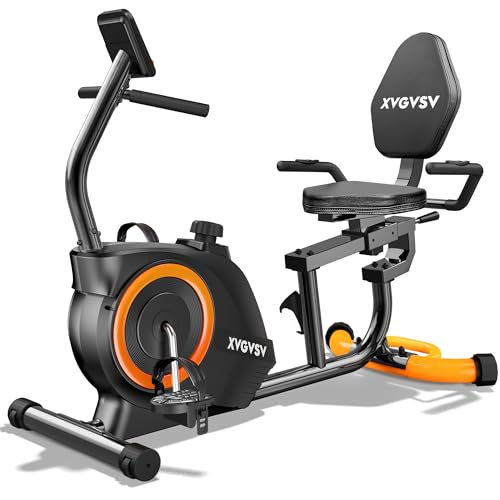
XVGVSV’s Recumbent Bike emphasizes comfort and accessibility. The plush padded seat and ergonomic backrest provide support during longer sessions, while the lever-based seat adjustment makes it simple to dial in the correct position for shorter users. Built on a commercial-grade steel frame, this bike supports up to 400 pounds and remains stable and quiet thanks to a magnetic resistance system. The unit ships roughly 85 percent pre-assembled, and front transport wheels help you move it around the room with ease, reducing setup friction.
In daily use, the recumbent design minimizes strain on the back and joints, making it a practical choice for seniors, adults with mobility concerns, or anyone seeking a low-impact cardio option. The ride stays smooth and quiet, ideal for early mornings or late nights in living spaces. With straightforward seat adjustment, a supportive backrest, and easy transport, XVGVSV’s recumbent bike delivers reliable, long-term comfort for shorter riders seeking an approachable home workout companion.
Niceday Recumbent Bike With Heart Rate

Niceday’s Recumbent Bike prioritizes back support and joint comfort, making it well-suited for physical therapy or mobility-focused routines. It supports up to 400 pounds and offers 16 levels of progressive resistance, accessible via a mechanical knob for precise control. The design promotes easy sitting and stepping-on, which can be a benefit for users with limited mobility or those recovering from injury. The heart-rate handle provides immediate feedback on exertion, supporting safer, targeted workouts and encouraging steady progress over time.
The 16-resistance levels enable a wide range of workouts, from gentle warm-ups to more challenging cardio. The built-in LCD monitor tracks distance, time, and calories, while simple controls help users adjust intensity without distraction. The combination of back-friendly geometry, robust construction, and intuitive controls makes this model a practical option for older adults, physical therapy patients, or anyone prioritizing safe, comfortable, long-duration cardio at home.
MERACH Recumbent Bike With App Connectivity

MERACH’s Recumbent Bike With App Connectivity combines modern data tracking with a comfortable, low-impact ride. Bluetooth connects with the included FantomFite app to capture real-time metrics such as distance, time, and calories, and it can sync with Google Fit and Apple Health for seamless health data aggregation. The bike uses an eight-level magnetic resistance system for tailored workouts and a quiet belt drive to minimize noise during early workouts. This model is designed to support steady progress through app-guided programming and a comfortable recumbent posture.
The inclusion of a bottle cage supports hydration during longer sessions, while the eight resistance levels allow a smooth progression from warm-ups to challenging intervals. The app connectivity and ergonomic design make this MERACH recumbent model appealing to users who value data-driven training and the convenience of tracking progress across devices. For shorter riders seeking a quiet, adaptable, and tech-enabled home cardio option, this model offers a compelling combination of comfort and capability.
Buying Guide
Fit and Adjustability
For shorter riders, seat adjustability and overall reach determine everyday comfort. Recumbent bikes with adjustable seats and backrests, plus adjustable handlebars or fore-aft seat movement, tend to be friendlier for a range of heights. Look for models offering a clear height range (ideally below 4’8″ to 6’1″ or similar) and easy-to-use adjustment mechanisms. If you share the machine, prioritize those with quick, tool-free seat and handlebar adjustments to minimize setup time.
Space, Storage, And Footprint
Compact or foldable designs help when space is tight. Bikes that fold or telescope down for storage can free up living space between workouts. For apartments, consider models with transport wheels and a stable stand when upright to avoid wobble during use. A foldable bike that also offers a multi-position setup (upright, recumbent, or folded) provides flexibility for different users and activities without occupying permanent floor space.
Weight Capacity And Stability
Weight capacity matters for durability and safety. Shorter riders should still verify the maximum user weight and the bike’s stability under dynamic loads (standing up briefly during intervals or quick posture changes). A robust frame, reinforced joints, and a belt-drive system often translate to quieter, steadier performance. For households with more than one user, a machine rated around 300–400 pounds capacity is typically a prudent choice.
Ride Type And Comfort
Recumbent bikes are generally easier on the back and joints, making them a good fit for shorter riders seeking low-impact cardio. Upright or foldable models may suit those who want a more traditional cycling feel or who have limited hip flexibility. Comfort features—such as padded seats, back support, and seat depth—should be prioritized alongside adjustability to ensure a sustainable routine.
Noise, Maintenance, And Durability
Quiet operation matters in shared living spaces. Belt drives typically deliver less noise than chain-driven systems, which is advantageous for apartments or late workouts. Maintenance considerations include the ease of tightening belts, lubricating moving parts, and the availability of replacement parts. Look for models with durable steel frames, quality bearings, and supplier support that extends beyond the warranty period.
Technology, Tracking, And Compatibility
Smart features can motivate consistent workouts. App compatibility and real-time metrics—distance, time, pace, calories, and heart rate—help you monitor progress and stay motivated. If you value data, opt for bikes that sync with health ecosystems like Google Fit or Apple Health or apps such as Zwift or Kinomap. However, assess whether the app integration adds hardware requirements or a learning curve that may affect initial satisfaction.
Ease Of Setup And Maintenance
First-time assembly should be straightforward, with clear instructions and minimal tools. Some models arrive 70–90% assembled, reducing setup time. Consider how often you’ll need to adjust seats or handlebars, and whether the bike’s weight and footprint require a second person to move or reposition during routine maintenance.
Durability, Warranty, And Support
Choose a model backed by a solid warranty and responsive customer support. Recumbent bikes with steel frames and high-quality components tend to hold up well over time, especially when used for regular, moderate-intensity workouts. Confirm the warranty terms for frame, parts, and electronics, and verify the availability of replacement parts if needed in the future.