Choosing the right speed sensor for a stationary bike can sharpen your training data, improve cadence drills, and help you optimize workouts on apps like Zwift, Peloton Digital, and Rouvy. This guide reviews five top options that cover magnetless designs, multi-protocol sensors, and bundles compatible with indoor and outdoor bikes. You’ll find devices that suit spin bikes, home trainers, and mixed-use setups, with a focus on ease of installation, cross-device compatibility, and data accuracy. Use the table below as a quick reference, then dive into detailed product sections to find the best fit for your routine.
| Product | Brand | Key Feature | Connectivity |
|---|---|---|---|
| Magene S3+ Speed & Cadence Sensor | Magene | One-mode-per-sensor design; dual-use for speed or cadence | Bluetooth, ANT+ |
| Wahoo RPM Cadence Sensor | Wahoo Fitness | Real-time speed and cadence with dual-band tech | Bluetooth, ANT+ |
| Garmin Speed Sensor 2 & Cadence Sensor 2 Bundle | Garmin | Self-calibrating hub sensor plus cadence sensor | Bluetooth, ANT+ |
| COOSPO Cadence & Speed Sensor | COOSPO | Two sensors for simultaneous speed and cadence | Bluetooth, ANT+ |
| Sunny Health & Fitness CB110S 2-in-1 Cadence/Speed | Sunny Health & Fitness | Magnet-free design with app integration | Bluetooth |
Magene S3+ Speed & Cadence Sensor
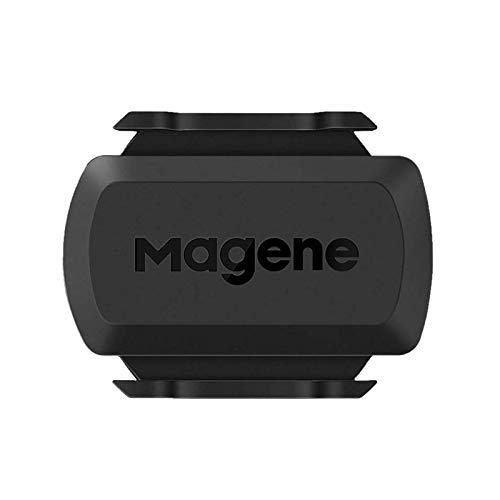
The Magene S3+ is designed for versatility across both outdoor rides and indoor training. It operates as a single-mode sensor per unit, meaning you’ll typically use one sensor for speed and a separate unit for cadence if you need both metrics simultaneously. Setup involves removing the insulating sheet from the pre-installed battery before first use, then re-installing the battery to switch between speed and cadence modes. When connected via Bluetooth, one sensor can pair with a single app or device at a time, while ANT+ allows multiple devices to stay connected concurrently. This arrangement can be advantageous for multiscreen training or sharing data with teammates. Compatible with popular platforms like Onelap, Wahoo Fitness, and Zwift, it supports streamlined data integration for many riders. The sensor is well suited for spin bikes, home trainers, and various cycling setups that rely on ANT+ wireless ecosystems.
Pros include flexible protocol support (Bluetooth and ANT+), a cost-effective path to get one metric at a time, and broad compatibility with training apps. The need for a second sensor to measure the other metric can feel like a drawback for riders who want a single, all-in-one solution. Its magnet-less design is not universally highlighted, but its modular approach makes it easy to mix-and-match with other ANT+ sensors if you’re building a multi-sensor setup. Overall, Magene S3+ provides solid value for riders who primarily track one metric at a time and want broad app compatibility.
Wahoo RPM Cadence Sensor
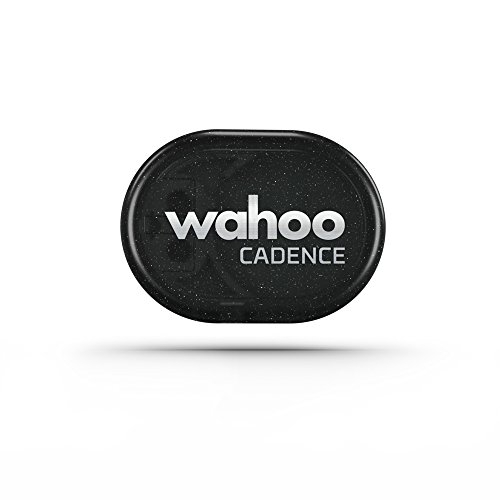
The Wahoo RPM Cadence Sensor is built to capture real-time cadence, with speed data accessible through compatible training apps via Bluetooth. It supports dual-band connectivity (ANT+ and Bluetooth Smart), enabling data transfer to smartphones, tablets, and bike computers. This sensor is designed to work seamlessly with popular platforms such as Zwift, SYSTM, RGT, Peloton Digital, and other Bluetooth-enabled apps. The multi-protocol approach makes it easier to integrate into diverse training ecosystems, reducing compatibility concerns when using different devices or ecosystems. For riders focused on cadence optimization and cadence-based drills, this sensor offers a reliable, widely supported option.
One potential drawback is that the device primarily emphasizes cadence measurement, so users seeking speed tracking may need a separate sensor. However, its accurate cadence data, strong cross-app compatibility, and easy setup make it a strong choice for riders who want a straightforward, well-supported cadence sensor that can pair with multiple devices and apps.
Garmin Speed Sensor 2 & Cadence Sensor 2 Bundle

The Garmin Speed Sensor 2 attaches to the wheel hub and self-calibrates with Garmin devices or Edge cycling computers to deliver accurate speed and distance data—even without a head unit. A companion Cadence Sensor 2 fastens to any crank arm and measures pedal revolutions per minute, enabling cadence-focused training. The bundle supports both ANT+ and Bluetooth Low Energy, so you can send live speed, distance, and cadence data to Garmin Connect and other compatible apps and displays. Self-calibration to wheel size and seamless Garmin ecosystem integration make this a strong choice for Garmin-centric riders who want end-to-end data flow across indoors and outdoors.
Benefits include robust calibration, broad device compatibility, and a cohesive data pipeline within Garmin’s ecosystem. The setup is straightforward if you already use Garmin devices, and the sensors’ hub-mount design provides reliable attachment for many wheel types. A potential limitation is reliance on Garmin’s ecosystem for full value; non-Garmin users may find cross-platform data sharing more constrained than with some multi-protocol partners.
COOSPO Cadence & Speed Sensor

The COOSPO Cadence & Speed Sensor package includes both a speed sensor and a cadence sensor, enabling riders to track both metrics simultaneously. The system supports Bluetooth and ANT+ connections, with ANT+ able to connect to multiple devices at the same time. When pairing via Bluetooth, only one app or device can be connected at once, so riders who rely on multiple apps concurrently may prefer ANT+ for broader data sharing. COOSPO emphasizes app-based setup, noting that pairing typically occurs through the phone’s Bluetooth settings and within the sensor app itself rather than the device’s standard Bluetooth menu.
With two sensors in one kit, COOSPO provides a flexible, cost-efficient way to capture dual metrics. The two-sensor configuration is especially helpful for indoor cycling on stationary bikes and trainers where you want both speed and cadence data streamed to a single dashboard. The primary trade-off is the Bluetooth single-app constraint, which can slow multi-app workflows if you rely on simultaneous data across multiple apps. Still, the ANT+ option offers strong multi-device compatibility for most riders.
Sunny Health & Fitness CB110S Cadence & Speed Sensor

The Sunny Health & Fitness CB110S offers a magnet-free design that simplifies installation and battery management while providing cadence and speed data via Bluetooth. The sensor data can be transmitted to the Free SunnyFit App, where users can monitor real-time metrics such as RPM, speed, time, and calories. The SunnyFit ecosystem adds value through a library of workouts and community features, which can enhance motivation and adherence. The magnet-free design reduces setup complexity and magnet alignment concerns, making this option particularly beginner-friendly for home cyclists who want a straightforward, app-backed experience.
As with any Bluetooth-only device, it is important to verify app compatibility with your preferred training platforms. Sunny Health & Fitness emphasizes the integrated app experience, which can be a plus for users who appreciate guided workouts and data visualization in one place. For riders who want a lightweight, magnet-free sensor that integrates neatly with a dedicated app, CB110S is a solid, beginner-friendly choice.
Buying Guide
Key purchase considerations
- Connectivity: Decide between Bluetooth, ANT+ or dual-band sensors. Bluetooth is easy for phones and tablets, while ANT+ often supports multiple devices at once and can improve cross-device reliability in complex training setups.
- Single sensor vs. two-sensor configurations: Some models (like Magene S3+) use one sensor per metric, meaning you may need two units to measure speed and cadence concurrently. Others (like COOSPO) bundle two sensors for simultaneous data.
- Measurement focus: If your priority is cadence-focused training, a dedicated cadence sensor may suffice. If you want both speed and cadence, choose a package or sensor that supports dual metrics reliably.
- Mounting compatibility: Check whether the sensor attaches to the hub, the crank arm, or another mounting point. Hub-mounted sensors are common for wheel-based measurement, while crank-mounted sensors are typical for cadence.
- App ecosystem and data sharing: Look for compatibility with your preferred apps (Zwift, Peloton Digital, Rouvy, OpenRider, Garmin Connect). Cross-platform data sharing can simplify training logs and progress tracking.
- Battery life and maintenance: Pre-installed batteries save a step, but plan for battery replacement and ease of access. Magnet-free designs can simplify maintenance and reduce alignment fiddling.
- Calibration and setup complexity: Some sensors self-calibrate, others require wheel size input or manual calibration. Simpler calibrations save setup time and reduce errors.
- Durability and weather resistance: For indoor bikes, this is less critical, but if you use mixed indoor/outdoor training, consider IP ratings and build quality to withstand sweat and frequent mounting.
- Price-to-value: Compare feature sets, compatibility, and ease of use. A higher upfront cost may be worth it for multi-device compatibility and a streamlined app ecosystem.
Which sensor fits which rider?
Riders entering the ecosystem or focusing on cadence drills may prefer the Wahoo RPM or Sunny Health CB110S for their user-friendly apps and reliable Bluetooth performance. Those who already rely on Garmin devices will benefit from the Garmin Speed Sensor 2 and Cadence Sensor 2 Bundle, which integrates smoothly with Garmin Connect and Edge computers. If you want the most flexible multi-device setup, COOSPO’s dual-sensor package or Magene S3+’s modular approach offers powerful options, especially when you need to mix ANT+ and Bluetooth across several screens. In short, choose based on the balance you want between simplicity, cross-device compatibility, and the number of metrics you plan to track.
For stationary bikes and home trainers, ease of installation often matters as much as data richness. Magnet-less designs tend to reduce setup time and alignment concerns, while hub-mounted sensors may require attention to wheel size and hub dimensions. Always confirm that your chosen sensor supports the apps you rely on most, and consider whether you need a single-sensor or two-sensor configuration to cover your typical workouts. With the right choice, speed and cadence data become a more consistent and actionable part of every ride.