Choosing a sit-and-ride scooter blends a child’s love of scooting with the stability parents value. The five picks below highlight 2-in-1 sit-and-stand designs from Scoot & Ride and Hurtle, featuring adjustable seats and handlebars, multi-height setups, and safe, stable builds that grow with children from ages one to five. These models work well for both indoor practice and outdoor adventures, offering lasting value as kids progress. Each option prioritizes balance, ease of use, and kid-friendly design to support early independence.
In this guide, five top sit-and-ride scooters are highlighted. Each product offers a 2-in-1 sit-and-stand experience, with tool-free height adjustments, three-wheel stability, and engaging colorways. These picks include multiple Highwaykick 1 versions for color variety, plus robust Hurtle models with flip-out seats and LED accents for extra fun. Use the Buying Guide toward the end to compare options and choose the best fit for your child’s development and your home environment.
| Product | Brand | Color | Age | Key Feature |
|---|---|---|---|---|
| Scoot & Ride Highwaykick 1 Kiwi | Scoot & Ride | Kiwi | 1–5 years | 2-in-1 sit/stand with tool-free height adjust; stable 3-wheel design |
| Scoot & Ride Highwaykick 1 Rose | Scoot & Ride | Rose | 1–5 years | 3-height settings on seat and handlebar; 2-in-1 ride mode |
| Scoot & Ride Highwaykick 1 Blueberry | Scoot & Ride | Blueberry | 1–5 years | 2-in-1 sit/stand; adjustable seat and handlebar; stable design |
| Hurtle 3-Wheeled Sit/Stand Scooter Blue | Hurtle | Blue | 1+ years | Flip-out seat, LED wheel lights, adjustable handlebar |
| Hurtle 3-Wheeled Sit/Stand Scooter Yellow | Hurtle | Yellow | 1+ years | Flip-out seat, four-height handlebar, wide deck |
Scoot & Ride Highwaykick 1 Kiwi

The Scoot & Ride Highwaykick 1 Kiwi offers a 2-in-1 ride experience that grows with your child. It begins as a seated scooter for ages 1 to 2 and converts to a standing scooter for older toddlers up to five, providing a long usage window. The seat height and handlebar are adjustable without tools, delivering a personalized fit as the child grows taller, learns balance, and gains confidence behind the handlebars. This design prioritizes stability with two front wheels and a rear wheel, helping new riders feel secure during early attempts.
Its stability comes from two front wheels and one rear wheel, delivering a steady ride whether you’re navigating living room floors or cruising the driveway. The Kiwi color adds a cheerful look that kids love, and the compact frame stores easily in a closet or car trunk for travel. The design supports both indoor practice and outdoor adventures, helping little riders build balance and coordination while transitioning to larger scooters later on. With sturdy construction and easy adjustments, this model is a dependable starter that grows with your child.
Scoot & Ride Highwaykick 1 Rose

The Hicycle Rose model trades a calm flair for a reliable, beginner-friendly ride with a flip-out seat that can be used while cruising and detached as kids gain standing confidence. Its four-height adjustable handlebar keeps pace with growing children, and the wide deck provides ample space for little feet to stay balanced during turns. With three-wheel stability, it remains easy to steer on sidewalks, driveways, or even indoor floors, making it a practical option for early scooting adventures.
The unit supports kids starting at around age one and up to roughly 132 pounds, offering long-term value. The built-in seat encourages first rides, while the ability to ride in stand mode promotes independence as balance improves. Its compact size makes it suitable for apartments and travel, and parents appreciate the simple maintenance and straightforward cleaning after outdoor play. Rose combines dependable stability with a friendly look that appeals to many toddlers.
Scoot & Ride Highwaykick 1 Blueberry
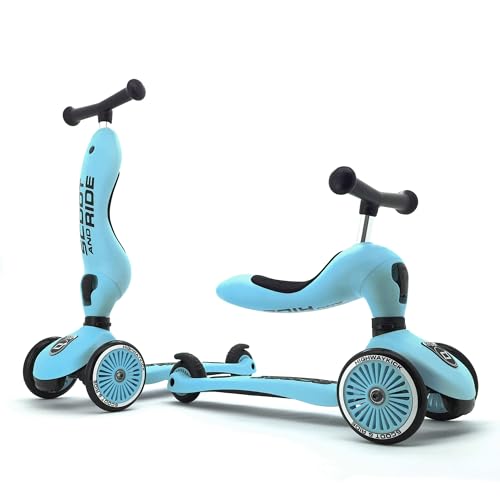
The Highwaykick 1 Blueberry continues the sit-and-ride tradition with dependable two-front-wheel stability and a single rear wheel, designed to feel balanced even for first-time riders. The Blueberry color adds a calming yet playful look that many kids enjoy during early practice, while the seat and handlebar adjust to a growing child’s height. This variant emphasizes easy conversion and stability, making it a solid option for families seeking a durable, multi-year scooter that accommodates growing riders.
Like the Kiwi variant, it offers tool-free height adjustment for the seat and handlebar, plus a stable 3-wheel layout that prioritizes safety during transitions from seated to standing modes. It is well-suited for light outdoor use as well as indoor practice. Parents value the durability, long-term versatility, and the ability to reuse the same scooter as their child grows from toddler to early school years.
Hurtle 3-Wheeled Sit/Stand Scooter Blue

The Hurtle Blue 3-Wheeled Sit/Stand Scooter blends a sturdy frame with kid-friendly features that support early balance and coordination. A flip-out seat lets younger children ride seated, and the seat can be tucked away as they gain confidence standing. The three-wheel layout enhances stability on sidewalks and indoors, while the wide deck helps little feet stay centered during turns. The blue finish provides a cheerful, outdoorsy look that many kids respond to positively. The adjustable handlebar supports growth, and the overall design emphasizes safety and ease of use for beginners.
The handlebar is adjustable with four height options to keep pace with growth, and LED wheel lights add a playful touch when riding in dim areas. It supports riders up to about 132 pounds, making it a practical long-term choice for families seeking a single toy that evolves with a child from toddler to early school years. The Blue model balances durability with kid-friendly aesthetics, encouraging ongoing participation in active play.
Hurtle 3-Wheeled Sit/Stand Scooter Yellow

The Yellow variant of the Hurtle 3-Wheeled Sit/Stand Scooter delivers the same core 2-in-1 experience in a bright, kid-friendly look. The flip-out seat and adjustable handlebar enable smooth transitions from seated cruising to standing scoots as balance improves. A broad deck and stable three-wheel design help keep young riders centered during turns, while the yellow color boosts visibility for safer outdoor play.
With four height options and a wide deck, kids can practice at different heights as they progress. The seat detaches when ready to stand, and LED wheel lights add a playful touch that enhances engagement during dusk sessions. This model supports riders up to about 132 pounds, making it a durable, long-lasting option for families seeking a single toy that evolves with a child through several stages of early mobility.
Buying Guide
Choosing the right sit-and-ride scooter involves considering growth, safety, and daily use. The five models above share core traits like 2-in-1 ride modes, adjustable seating and handlebars, and three-wheel stability, but they differ in design details such as seat placement, wheel lights, and weight limits. This guide outlines practical considerations to help you pick the best fit for your child and home environment.
Age And Growth Considerations
- Most 2-in-1 sit-and-ride models target ages 1–5; confirm weight limits and height ranges for your child.
- Look for tool-free or easy tool-assisted adjustments to accommodate growth over several years.
- Consider whether your child’s motor skills are emerging at a pace that benefits from a gradual transition from seated to standing riding.
Design And Safety Features
- Three-wheel stability (two front wheels and one rear) helps early riders feel secure during turns and transitions.
- A flip-out seat provides a gentle intro to riding; a detachable seat supports improved balance as kids mature.
- Adjustable handlebars and seats at multiple heights reduce strain on growing bodies and extend usable life.
- Safe components include sturdy decks, non-slip foot surfaces, and anti-tipping considerations in the base design.
Indoor Versus Outdoor Use
- Indoor practice benefits from smaller footprints and smoother surfaces; outdoor use should consider pavement textures and curb access.
- Wheels and overall weight affect the ride on different terrains; larger wheels and higher weight capacity support longer-term use outdoors.
Durability, Maintenance, And Longevity
- Durable plastics and metal components help withstand daily wear; check for easy-clean surfaces and resistance to moisture.
- Regularly inspect folding mechanisms, seat attachments, and handlebars for signs of wear; keep screws tight as advised by manufacturers.
Portability, Storage, And Budget
- Folding or compact designs facilitate storage in small spaces and travel in cars or public transport.
- Prices vary by features like LED lights, adjustable components, and weight capacity; weigh the upfront cost against long-term value.
- Consider which features will matter most for your child’s progression: seat use, height adjustability, or enhanced stability.
Recommended approach: prioritize models with two to three height settings, a secure flip-out seat, and a sturdy three-wheel base. If you anticipate frequent indoor use, look for a compact design with smooth, non-marring wheels. For outdoor use, prioritize larger wheels, higher weight limits, and robust construction. The best choice balances safety, growth potential, and practical storage in your home.