Choosing a first scooter for a toddler around 18 months old requires balancing stability, safety, and growing independence. This guide highlights five Amazon picks that address early balance, seat needs, and protective gear. The featured rides emphasize three-wheel stability, low seat options, adjustable handlebars, and materials designed for active toddlers. While no helmet replaces supervision, the included safety gear is recommended when scooter use begins. The summary table below provides quick references, and the following product sections offer concise overviews, key features, and safety notes to help caregivers compare options at a glance.
| Product | Brand | Age Range | Why It Fits |
|---|---|---|---|
| Kid Trax 6V Starlight Scooter With Sidecar | Kid Trax | 18-30 Months | Sidecar boosts social play; low top speed for safe learning. |
| Hurtle Kids Scooter With Foldable Seat Teal | Hurtle | Ages 12 Months+ (1 Year and Up) | Sit-or-stand versatility with a foldable seat and height options. |
| 3 Wheel Scooter With LED Front Wheels | Scooter Stars | Ages 2+ | Three wheels for stability and immersive LED wheels for visibility. |
| Glaf Matte Blue Toddler Helmet | Glaf | 18 Months+ | Adjustable sizes and solid protection for growing heads. |
| FunFitX Toddler Bicycle Helmet | FunFitX | 18 Months to 8 Years | Wide size range, multiple vents, safety standard certifications. |
Kid Trax 6V Starlight Scooter With Sidecar

The Kid Trax Starlight Scooter is designed for young riders who are beginning to explore independent motion. It includes a sidecar to carry a doll or small toy, enhancing imaginative play while promoting balance. The sidecar has a 5 lb weight limit, keeping loads light and manageable for toddlers. A contoured scooter seat mirrors a real ride, and foot-pedal acceleration offers a gentle, intuitive driving feel. The top speed is safely capped at 1.5 mph, giving caregivers predictable control during early trials in both indoor and outdoor settings.
Durability and control come from a practical design with traction suitable for smooth surfaces. The overall construction supports safe, supervised fun as little ones practice standing and steering, gradually building confidence. This option is best for families prioritizing social play, low-speed exploration, and early motor skills development in toddlers around 18 months and older.
Hurtle Kids Scooter With Foldable Seat Teal
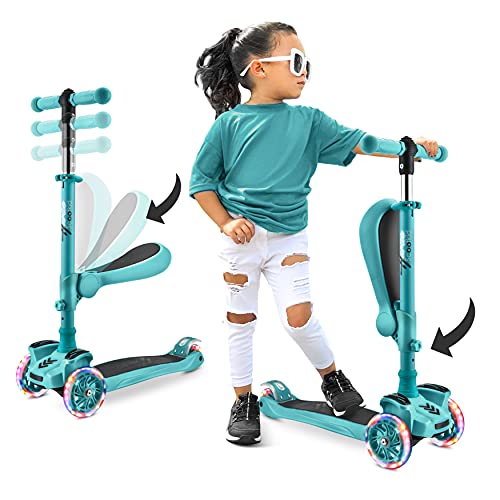
This Hurtle scooter blends seated and standing riding modes, supporting growth from baby steps to more confident independent riding. The flip-out seat is removable and supports up to 45 lb, giving toddlers a comfortable cruising option before they learn to stand confidently. As kids mature, the scooter transitions to a standing ride with equal ease, promoting balance and coordination.
The ride is enhanced by bright LED turning wheel lights, which add a playful, visible element to evening or dusk sessions. The handlebar is adjustable across four height settings (25.5″, 27.5″, 31″, and 34″), accommodating riders from about 1 year old up to taller toddlers. This versatility makes it a strong option for families seeking one scooter that grows with a child around 18 months and beyond.
3 Wheel Scooter With LED Front Wheels

Designed to help toddlers gain balance with confidence, this three-wheel scooter uses a lean-to-steer mechanism. Instead of twisting a handlebar, riders lean to direct the scooter, supporting smoother, safer transitions for new riders. The LED wheels light up in motion, adding excitement while increasing visibility in low-light environments—no batteries or charging required for operation.
The deck measures 21.45″ x 4.3″ x 8.46″ and is slip-resistant, providing a stable platform for small feet. With a weight capacity up to 55 lb, this model is suitable for toddlers who are beginning to explore mobility, typically around ages 2 and older, and can be used indoors or outdoors as coordination improves.
Glaf Matte Blue Toddler Helmet
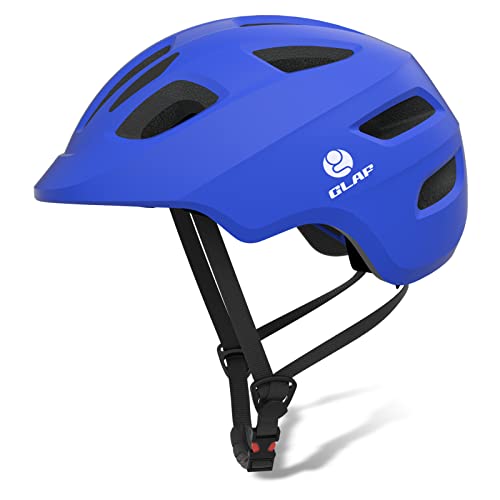
This toddler helmet offers a practical two-size design to accommodate growing heads. The Small size (18.1″ – 20.0″) fits roughly 18 months through 3 years, while the Medium (20.4″ – 22.0″) covers ages 3 to 8. Caregivers are advised to measure circumference just above the eyebrows to determine the correct fit. The helmet combines a PC shell with EPS foam for impact absorption and durability during scooter, bike, or skate sessions.
Durability is matched with comfort thanks to a lightweight build and a snug fit that helps kids forget they are wearing protection. The design supports common toddler activities such as skating, cycling, or scooter riding, ensuring a secure experience for early adventures in mobility.
FunFitX Toddler Bicycle Helmet

FunFitX helmets are designed to grow with young riders, offering sizes from XS (18 months to about 2 years) to S (covering older children). The helmet accommodates head circumferences from 47 cm to 55 cm, making it a versatile option for toddlers up to roughly 8 years old. It features 11 ventilation holes to promote airflow, a tough ABS shell with high-density EPS foam for impact protection, and safety certifications that align with common child-safety standards.
Notable notes include a visor-free profile and sizing guidance that ensures a snug fit for younger users. The helmet is suitable for cycling, skateboarding, roller skating, and scooter riding, providing a protective layer during early mobility experiments while keeping comfort and breathability in focus.
Buying Guide
Size And Fit
Choosing the right size is essential for both scooters and helmets. For scooters, ensure the handlebar height can be adjusted to your child’s reach, and consider three-wheel designs for extra stability at younger ages. For helmets, measure head circumference above the eyebrows and consult the manufacturer’s sizing chart. Look for adjustable straps and a secure, snug fit that remains comfortable during extended wear. The included two-size helmets in the selections above illustrate how growth affects safety equipment choices.
Safety Standards And Certification
Safety standards play a crucial role in toddler protection. Look for helmets that meet recognized safety certifications such as CPSC and ASTM, which indicate testing for impact resistance and strap integrity. When possible, choose helmets with multi-directional foam protection and energy-absorbing shells. Scooter selections should prioritize stability, low speeds, and robust build quality to minimize injury risk during early learning phases.
Three-Wheel Vs Two-Wheel Scooters
Three-wheel designs provide a wide base and greater balance for toddlers learning to ride, especially for those around 18 months to 2 years old. Two-wheel scooters with lean-to-steer can teach balance and directional control but may be less forgiving for beginners. The best option often depends on the child’s motor development, comfort with standing, and the parent’s supervision level. A model with a seat option can help transition from seated to standing riding as skills progress.
Seat Options And Growth
Seat-equipped scooters support younger toddlers who are not yet ready to stand for long periods. Removable seats offer quick transitions to a standing ride. For families with siblings or rapidly growing children, choosing a scooter with an adjustable seat height that converts into a standing scooter provides extended usability and value.
Durability And Materials
Durable scooters commonly use a combination of metal frames, plastic components, and rubberized decks. Look for wide, non-slip decks and sturdy wheel assemblies. Helmets described here commonly feature a PC shell and EPS foam for impact absorption, with additional protective features such as high-density foam liners and reinforced straps. Durability shapes how well a scooter resists everyday wear and how long safety gear remains effective with growing children.
Portability And Storage
Kids’ mobility gear should be easy to transport and store. Foldable designs, lightweight frames, and compact storage options are helpful for trips to the park or visits to friends’ houses. When shopping, consider weight limits—especially with seats—and how easily the scooter can be tucked into a car or closet. Helmets should be easy to put on and take off, with adjustable straps and simple retention mechanisms for quick use.
Usage Scenarios
Indoor and outdoor use each bring different considerations. Indoors, smooth hard floors call for low-friction wheels and a stable base. Outdoors, rougher surfaces require solid tires and a secure deck to prevent slips. For 18-month-olds, a three-wheel model with a seat is often most practical for initial sessions, while a helmet and active supervision are essential in all scenarios.
Budget And Value
Value comes from longevity and growth potential. A scooter with seat options and adjustable handlebars tends to offer longer usability as a child grows. Helmet sets that cover multiple sizes reduce the need for frequent replacements. When evaluating options, weigh the initial cost against the long-term use, safety features, and ease of maintenance to determine the best value for your family.