For people dealing with knee pain or arthritis, traditional cardio can be tough. Recumbent bikes offer a gentle, low-impact workout that protects joints while building endurance. This guide reviews five recumbent bikes that emphasize knee-friendly design, comfortable seating, and quiet operation, helping you choose a model that fits rehab goals and living spaces.
The selections below prioritize secure entry, adjustable seating, generous weight capacity, and varied resistance levels. Each model is described with its targeted benefits for bad knees, plus practical notes on setup and daily use. A quick buying guide follows to compare key features side by side.
| Model | Brand | Key Benefit |
|---|---|---|
| JEEKEE Recumbent Bike For Knee Rehab | JEEKEE | Knee rehab and quiet resistance |
| Cursor Fitness Recumbent Bike For Home Gym | CURSOR FITNESS | Adjustable seat/back, 16 levels |
| YOSUDA Recumbent Bike For Seniors Rehab | YOSUDA | Seniors rehab friendly, adjustable seat |
| Birdfeel Recumbent Bike For Low-Impact Home Use | Birdfeel | Ergonomic design, quiet, 400 lb capacity |
| Sunny Health SF-RB4850SMART Recumbent Bike | Sunny Health & Fitness | 16 resistance levels, Bluetooth, 24 programs |
JEEKEE Recumbent Bike For Knee Rehab
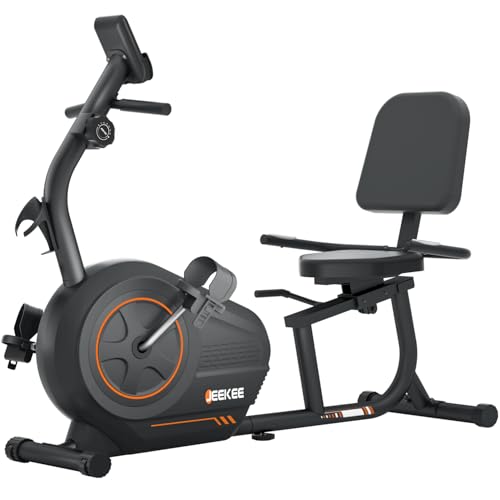
This model emphasizes knee and lower back arthritis rehabilitation with a low-impact, seated motion suitable for mobility recovery and light cardio at home.
- Knee rehab and mobility support through a gentle, seated pedal motion.
- Weight capacity up to 300 lbs; weighs under 64 lbs; easy to move with casters.
- 16 levels of magnetic resistance provide progressive workouts with a quiet footprint.
- 90% pre-assembled for quick setup (about 30 minutes) with an installation video.
Cursor Fitness Recumbent Bike For Home Gym

With a strong focus on comfort and durability, this bike suits home cardio routines and rehabilitation, featuring an adjustable seat and backrest, plus a smooth, quiet ride.
- 16 levels of magnetic resistance powered by an 11 lb flywheel for challenging workouts.
- Extra cushioned breathable saddle for long, comfortable sessions.
- Seat, backrest, and pedals are adjustable; fits riders from 4’8″ to 6’5″; wide pedals with 7×2 positions.
YOSUDA Recumbent Bike For Seniors Rehab

YOSUDA markets its bike as a rehab-friendly option developed with seniors in mind, emphasizing safety, joint protection, and a customizable seating layout for comfortable daily rides.
- Designed with rehab professionals for safer, low-stress workouts for seniors and those with knee issues.
- Infinitely adjustable seat, with knob-based height positioning; fits from about 4’9″ to 6’2″.
- 16 resistance levels and up to 350 lb capacity for scalable workouts.
Birdfeel Recumbent Bike For Low-Impact Home Use

This model emphasizes an ergonomic, easy-on-off design with quiet operation, built to support seniors and multi-user households seeking a smooth cardio experience without knee strain.
- 8 levels of magnetic resistance for gentle to moderate workouts.
- Commercial-grade steel frame supports up to 400 lbs; whisper-quiet belt-driven ride.
- 85% pre-assembled with built-in transport wheels for convenient movement between rooms.
Sunny Health & Fitness SF-RB4850SMART Recumbent Bike

Sunny Health & Fitness offers a feature-rich recumbent bike with smart connectivity, providing a blend of guided workouts and data tracking that appeals to tech-savvy users seeking structured knee-friendly cardio.
- 16 electro-magnetic resistance levels for precise control and smooth changes in intensity.
- 300 lb weight capacity; advanced console with Bluetooth and the SunnyFit app for tracking.
- 24 built-in workout programs plus programmable options to tailor routines.
Buying Guide For Knee-Friendly Recumbent Bikes
Choosing a knee-friendly recumbent bike involves balancing comfort, safety, and long-term usability. The best models provide low-impact riding, easy on/off access, and flexible seat adjustments to fit a wide range of riders with knee concerns.
Use this guide to compare core features and assess how a bike fits your rehab goals, living space, and daily routine.
- Seat and backrest comfort: A wide, padded saddle and ergonomic backrest can dramatically reduce knee strain during longer workouts.
- Adjustability and fit: Seats should move forward/backward and adjust to a wide height range to accommodate different leg lengths and user heights.
- Resistance and drive system: Magnetic resistance is typically quieter and smoother than belt-only options; higher flywheels can offer more stable pedaling for rehab patients.
- Weight capacity and durability: A 300–400 lb rating covers most users and supports longer-term use.
- Monitoring and programs: Built-in displays, heart-rate options, and pre-programmed workouts help guide safe, effective sessions.
- Ease of setup and maintenance: Partial assembly, included manuals or videos, and transport wheels improve daily use.
- Space and portability: Consider footprint and whether wheels enable easy room-to-room movement for multi-room routines.
- Warranty and support: A solid warranty protects investment as comfort and mobility needs evolve.
- User profiles: For households with multiple people, models with variable seat and height ranges work best.