Choosing a rear rack bike light is a straightforward safety upgrade for urban riders, commuters, and nighttime explorers. The right tail light should be bright, weatherproof, easy to mount, and capable of catching a driver’s attention from the right distance. Below are five highly capable options that balance brightness, versatility, and convenience across road and mountain bikes. Each product section includes a quick look at key features, mounting options, and battery considerations to help you compare at a glance.
| Product | Brand | Top Feature | Notes |
|---|---|---|---|
| G2FS LITH 150 Lumen Tail Light | G2FS LITH | 220° beam; 150+ lumens with 5 modes | IPX6 waterproof; multiple mounting options |
| BikeSpark Auto-Sensing Rear Light | BikeSpark | Auto-brake sensing with 220° visibility | Type-C rechargeable; automatic ON/OFF |
| ONVIAN Rear Rack Tail Light | Onvian | 500m visibility; steady brightness | IP64 waterproofing; 5 light modes |
| Cygolite Hypershot Tail Light | Cygolite | 350 lumens; 7 day/night modes | USB rechargeable; IP64; durable mount |
| Knog Blinder Link Rear Light | KNOG | 100 lumens; 8 modes | IP67 rating; fits 50–80mm racks |
G2FS LITH 150 Lumen Tail Light

The G2FS LITH tail light emphasizes high visibility with a wide 220-degree beam and a compact design suitable for a variety of bicycles. It delivers about 150 lumens in red to maximize daytime and nighttime conspicuity. The five modes accommodate different riding conditions, including a High Flash mode for fast-paced night rides or dense traffic. Two installation options—bracket behind the seat or a rubber strap—make it compatible with most bikes, including road, mountain, and cruiser models. IPX6 waterproofing ensures performance during rain or spray. The unit has been tested for shock resistance to help it endure rough roads.
- Five modes: Half Light, Full Light, Breathing Flash, Slow Flash, High Flash
- Long runtimes: up to ~23 hours on Half Light and ~21.5 hours on High Flash
- Two mounting options for flexible installation
- IPX6 water resistance; shock-tested for durability
BikeSpark Auto-Sensing Rear Light

The BikeSpark BKS-G5 focuses on automatic, sensor-driven safety. Its deceleration-detecting algorithm responds to slowing traffic by briefly boosting brightness, alerting following drivers and improving reaction times. It automatically turns on with motion and shuts off after a minute of inactivity, helping conserve battery life. In addition to automatic behavior, it offers standard modes with bright, long-range illumination and 220-degree visibility. The light is designed to mount cleanly on cargo racks or seat posts and uses a Type-C rechargeable battery for quick, modern charging. Germany-regulatory modes are available to assist riding in dark conditions according to local standards.
- Auto ON/OFF with motion; auto off after 1 minute of inactivity
- Deceleration sensing increases brightness for 2.5 seconds
- Four lighting modes plus two regulatory modes for compliance
- Type-C rechargeable; high-visibility lighting for long-distance visibility
ONVIAN Rear Rack Tail Light

Onvian’s rear light prioritizes brightness and reliability for long rides. It features high-power LEDs that create visibility up to an estimated 500 meters, making it easier for drivers to notice you at a distance. A digital constant-current drive ensures steady brightness as the battery drains, preventing dimming toward the end of a ride. The IP64 rating provides protection against rain and splashes, so riders can confidently navigate through wet conditions. With five light modes, riders can tune the level of flash or steady light to suit urban streets, trails, or mixed riding environments. USB charging adds to convenience on the go.
- 500-meter visibility; steady brightness via constant-current drive
- IP64 waterproof; all-weather usefulness
- Five light modes for different riding conditions
- USB rechargeability for easy topping up
Cygolite Hypershot Tail Light
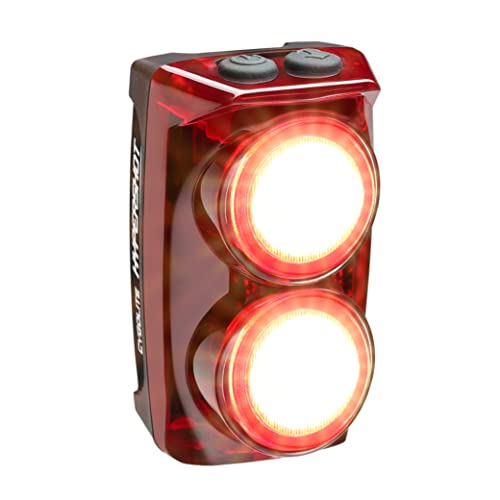
The Cygolite Hypershot delivers a high-contrast 350-lumen output designed to cut through daytime glare and nighttime darkness alike. It offers seven modes for day and night use, including several flash patterns and a steady option. The adjustable flash speeds help users customize motorist awareness and reaction time. A wide run-time range—from a few hours to many hours—accommodates different riding schedules, and the USB rechargeable design supports quick top-ups. The Hypershot comes with a durable, secure mount and IP64 water resistance, making it suitable for city commutes and rugged rides alike.
- 350 lumens; multiple daytime and nighttime modes
- 7 lighting modes including Daylighting Flash
- USB rechargeable; IP64 rating; durable mount
- Wide run-time range for busy riders
Knog Blinder Link Rear Light

The Knog Blinder Link combines a compact, easy-to-mount design with a robust feature set. It produces 100 lumens and offers eight distinct modes, giving riders a wide range of visibility options for day and night riding. Its IP67 rating protects against immersion in rain and wet conditions, while the rack-mount design fits 50–80mm racks, accommodating many common cargo setups. The light’s modular design makes it simple to recharge and swap batteries if needed. The Blinder Link emphasizes reliability, long-term durability, and consistent performance through varying weather and riding environments.
- 100 lumens with eight modes
- IP67 waterproof; rugged, weatherproof build
- Fits 50–80mm racks; secure, versatile mounting
- Rechargeable, long runtimes for extended rides
Buying Guide
Visibility and Brightness
Rear bike lights are judged by lumens and beam pattern. Lights in the 100–150 lumen range are suitable for urban streets, while 250–350 lumens provide stronger daytime and nighttime presence. A wide 210–220 degree beam ensures drivers see you from multiple angles, reducing blind spots. When choosing, consider a light with multiple brightness levels or an adaptive mode that increases output during high-risk situations, such as intersections or high-traffic corridors.
Modes and Controls
Multiple modes—steady, flashing, breathing, and high-flash bursts—offer flexibility for different rides. Some models include auto-brightness or deceleration-sensing features that boost visibility in sudden braking scenarios. Look for memory functions that return to your last-used mode after power cycles, and check whether controls are simple to operate with gloves on.
Power, Battery Life, and Charging
Battery options vary from USB-C rechargeable packs to coin-cell and AAA batteries. USB-rechargeable lights offer convenience and lower long-term cost, but consider whether you’ll have reliable access to a charger during longer trips. For extended rides, evaluate the published run times across modes to ensure the light will last through your typical outing. Quick-release or tool-free mounting can also save time if you frequently reassign the light between bikes.
Durability, Weather, and Build
Riding in rain or mud requires weatherproofing. IP ratings indicate water resistance: IP64 and IP67 are common for rear lights, with IP67 offering protection against immersion. Shock resistance and a robust mounting bracket are important for rough roads or trail use. Check also for sealed buttons or rubberized housings to prevent moisture ingress and corrosion over time.
Mounting Flexibility and Compatibility
Rear lights should fit your rack or seat-post: some models mount on seat posts, others onto cargo racks with adjustable brackets. If you use panniers or a bicycle rack with irregular shapes, ensure the light’s mounting system is compatible with widths and attachment points of your setup. A secure mount reduces the risk of the light detaching during rides and ensures consistent positioning for optimal visibility.
Regulatory Compliance and Best Practices
In some regions, certain lights offer mode configurations that comply with local standards (for example, Germany’s StVZO). While not required everywhere, choosing a light with regulatory-friendly modes can simplify nighttime riding in areas with strict visibility requirements. For riders sharing the road with cars, pairing a rear light with a bright daytime-running pattern can improve recognition in daylight as well as in darkness.
Value and Longevity
Consider the total value: brightness, battery life, durability, and warranty. A light with more modes and robust construction may cost more upfront but can translate to longer service life and fewer replacements. If you frequently transport bikes or use multiple cycles, a light with strong mounting options can save time and hassle.