Finding a quiet indoor bike trainer is essential for effective year‑round workouts without disturbing others or your focus. This guide features five models that emphasize low noise, stable construction, and realistic resistance, while offering compatibility with popular training apps. Whether you prefer magnetic, fluid, or electromagnetic systems, these trainers balance quiet operation with durable design and easy setup. Below, each product is summarized and then explored in detail, helping you compare options for a calmer, more productive indoor riding experience.
| Product | Brand | Notable Quiet Feature |
|---|---|---|
| ThinkRider X2Max Quiet Smart Trainer | ThinkRider | Tilting tilt simulation up to 18% with dual‑protocol support |
| Sportneer Magnetic Bike Trainer | Sportneer | Spin In Silence with low‑noise resistance wheel |
| RAD Max Racer Magnetic Trainer | RAD Cycle Products | Ultra‑quiet internal magnet and seven resistance levels |
| Alpcour Bike Trainer Stand | Alpcour | Built‑in noise reduction and six resistance levels |
| Saris H3 Plus Smart Indoor Trainer | Saris | Quiet operation at 59 dB with precise power metrics |
ThinkRider X2Max Quiet Smart Trainer

ThinkRider’s X2Max blends quiet operation with advanced sensor technology. It supports BLE and ANT+ dual mode, enabling seamless integration with popular cycling software such as Zwift. A dynamic electromagnetic torque power meter delivers up to 2000W with an accuracy error of ±2%, providing realistic pacing feedback and training cues. The intelligent variable resistance simulates an 18% incline, and when connected to compatible riding software, it automatically matches tilt resistance to map terrain. This combination yields a more immersive, quieter indoor ride, especially at higher wattages.
The X2Max emphasizes stability and compatibility, appealing to riders who want precise data and robust software support without loud mechanical noise. The design prioritizes smooth engagement and minimized vibration across a wide range of cadences, making it a strong choice for structured workouts, cadence drills, and endurance sessions inside apartments or shared living spaces.
Sportneer Magnetic Bike Trainer

Sportneer’s trainer focuses on stability and quiet operation. Its wide base and low stance provide unshakable balance on various floor surfaces, reducing wobble during high‑cadence efforts. The unit uses a smooth, magnetic resistance system designed for quiet performance, complemented by a bar‑mounted remote that offers six resistance settings to simulate a spectrum of terrains. Compatibility covers 26‑28″ and 700C wheels, making it suitable for most road and hybrid bikes used in daily indoor workouts. Noise levels stay low while delivering reliable resistance curves.
In practice, the Sportneer trainer emphasizes a quiet, consistent ride with straightforward setup. The reduction in drivetrain noise comes primarily from the resistance mechanism and wheel interface, which helps maintain focus during interval workouts. While it excels in quiet operation, it remains easy to adjust and align, making it a practical option for beginners and intermediate cyclists seeking a calm indoor training environment.
RAD Max Racer Magnetic Trainer

The RAD Max Racer uses a magnetic resistance system designed for quiet operation as soon as you begin to pedal. It offers seven resistance levels to replicate varying road conditions, enabling both easy conditioning and intense hill simulations. The trainer is notably portable—foldable for travel or storage—making it convenient for riders who commute or travel with their setup. Beyond quietness, its stability is a key feature, with extra‑wide legs and a sturdy frame that appeal to endurance athletes and cyclists requiring a dependable trainer for regular use.
The design prioritizes a balance between portability and solid performance. While some models emphasize ultra‑low noise, the Max Racer achieves a practical compromise, delivering quiet workouts without sacrificing the rugged frame and stability needed for vigorous training. This makes it suitable for home gyms with limited space and for riders who value quick setup and reliable resistance progression across sessions.
Alpcour Bike Trainer Stand
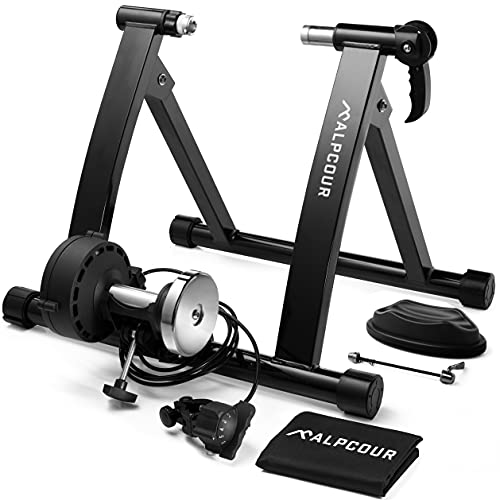
Alpcour’s trainer stand transforms any mountain or road bike into a stable indoor trainer with magnetic resistance. It emphasizes quiet magnetic technology, featuring a flywheel mechanism that reduces noise and extends tire life. Six fixed resistance levels can replicate a range of hills and intervals, controlled via a handlebars‑mounted cable. The base is extra wide with a low stance, ensuring strong balance on uneven floors. It’s a practical option for cyclists who want a simple, durable setup that stays quiet during long training blocks.
The Alpcour model is well‑suited for riders who value a straightforward, low‑noise experience without elaborate electronic metrics. Its simplicity can be a benefit for beginners and those who prefer a reliable, maintenance‑friendly trainer. While it may not offer the most granular data, it delivers steady performance with solid construction and quiet operation for routine cardio sessions and recovery rides.
Saris H3 Plus Smart Indoor Trainer

The Saris H3 Plus is highlighted for its quiet performance, advertised as the quietest model at 59 dB. It integrates smoothly with 12‑speed drivetrains, enabling a broad range of gear choices while maintaining a quiet riding experience. Precision measurements cover power, speed, and cadence with a tight margin of error of just ±2%, providing reliable data for structured workouts. The trainer also includes a virtual training app subscription, facilitating immersive workouts and access to training plans, analytics, and guided sessions.
With its emphasis on quietness, data accuracy, and app‑based training, the H3 Plus appeals to riders who want a near‑professional training environment at home. The combination of silent operation and robust data readouts supports performance tracking, pacing strategies, and consistent progress over weeks and months of indoor riding. The overall package suits enthusiasts seeking a balanced, data‑driven training platform without intrusive noise.
Buying Guide
Noise Levels And Comfort
Quietness is a major factor for apartment dwellers and late‑night riders. Look for decibel specifications or user claims of “quiet” or “spin in silence.” Magnetic and fluid resistance typically produce lower noise than some direct‑drive or mechanical systems, though the exact noise level depends on the tire, surface, and mounting. Consider whether you’ll be sharing living space and whether vibration dampening or floor mats would enhance comfort during long sessions.
Resistance Type And Realism
Trainers use magnetic, fluid, or electromagnetic resistance. Magnetic systems tend to be quiet and maintenance‑light, with a broad range of settings. Fluid resistance often provides a smoother, more natural feel at higher speeds but can be slightly louder in some models. Electromagnetic/advanced torque systems offer high watt accuracy and realistic gradients. If you train for power or suffer from hill repeats, choose a model with a wide, progressive resistance curve and good repeatable torque output.
Software Compatibility And Connectivity
Many trainers pair with apps like Zwift, Zwift with ANT+ or BLE, TrainerRoad, and other platforms. Check whether the unit supports BLE, ANT+, or dual‑mode connections, and confirm compatibility with your preferred software. Some trainers offer built‑in subscriptions or integration with virtual routes. If you value structured workouts, analytics, or multiplayer rides, prioritize models with strong software ecosystems and straightforward device pairing.
Stability, Build Quality, And Footprint
A stable base reduces wobble during sprints or high‑cadence drills. Look for extra‑wide legs, low centers of gravity, and a solid frame. Also consider the trainer’s footprint and portability if you have limited space or need to move the unit frequently. Foldable designs or compact storage options can help you maintain a tidy home gym while preserving performance integrity.
Portability And Setup
For riders who travel or commute, portability matters. Foldable trays, quick‑release front wheel blocks, and simple assembly mean less downtime between sessions. Check whether the trainer requires disassembly or if it can be stored upright. A straightforward setup reduces the barrier to daily training, especially when working around errands or family schedules.
Maintenance And Durability
Quiet operation often correlates with fewer moving parts that wear quickly. However, some trainers may require periodic maintenance on the resistance unit, bearings, or flywheel interface. Look for models with easily replaceable parts and clear maintenance guidance. Durable materials, resistant coatings, and robust frames help extend the life of the trainer and ensure consistent performance across seasons.