Choosing the right physical therapy exercise bike can support safe, low-impact rehab at home. The following five models balance stability, adjustability, and user-friendly features for seniors and users recovering from injuries. Each option below offers different strengths—from foldable portability to motorized assistance—so readers can identify a model that fits their space and therapy needs. All selections are designed to support arms, legs, and overall mobility with simple controls and clear feedback.
| Product | Brand | Key Benefit |
|---|---|---|
| Toolsempire Pedal Exerciser Bike for Seniors | Toolsempire | Sturdy frame, stable even on smooth floors with suction cups; clear LCD display |
| MERACH Under Desk Bike Pedal Exerciser | MERACH | Versatile use on desk or floor; resistance bands and app metrics |
| AGM Folding Pedal Exerciser | AGM | Foldable, compact, portable; safe, non-slip operation |
| ZIDAFIT Adjustable Pedal Exerciser | ZIDAFIT | Customizable tension and height for personalized routines |
| TODO Motorized Pedal Exerciser | TODO | Motor-assisted with six speeds for therapeutic progression |
Toolsempire Pedal Exerciser Bike for Seniors

The Toolsempire pedal exerciser features a sturdy, stable structure built to last, with thickened, widened metal tubes supporting up to 265 lbs. Stability is enhanced by four strong suction cups that secure the unit to smooth floors, preventing slips during use. Its 4-level adjustable height (34.5″-39.5″) and 6-level adjustable length (17″-21″), plus 4-position adjustable pedal straps, enable comfortable arm or leg workouts from a chair or sofa. The upper and lower resistance settings provide low-impact options for varying fitness levels, making it suitable for rehabilitation and daily mobility work.
An intuitive LCD display makes progress tracking straightforward: exercise time, distance, calories, count, and total counts are all visible at a glance. The one-button design keeps operation simple, which is advantageous for seniors or those new to home rehab devices. The bike’s compact form also supports easy storage when not in use, preserving living space while maintaining accessibility for ongoing therapy sessions.
MERACH Under Desk Bike Pedal Exerciser

The MERACH under-desk pedal exerciser is a multi-use fitness machine that suits both arm and leg workouts. It can be placed on a table for arm exercises or on the floor for leg cycles, providing versatile rehab options. The device includes resistance bands to engage additional upper-body muscles, expanding the range of therapy possibilities. A floor mat protects surfaces and reduces sliding during use, contributing to a safer workout environment.
A standout feature is the free MERACH app, which offers various training modes, target practice, and timed sessions. Live metrics help users gauge progress and stay motivated. The combination of adjustable resistance, app compatibility, and floor protection makes this model a comprehensive option for home therapy, light cardio, and ongoing rehabilitation goals.
AGM Folding Pedal Exerciser
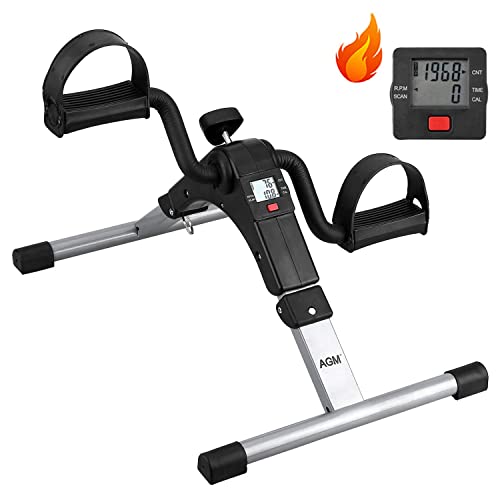
The AGM Folding Pedal Exerciser emphasizes portability and convenience. It features a foldable design that makes it easy to store under a desk or in a small space, ideal for apartment living or office use. The unit supports both arm and leg exercises, improving muscle strength, joint range of motion, and coordination. It also incorporates comfortable, non-slip pedal straps that secure the feet in place, helping users maintain proper form during sessions and reducing the risk of slipping or misalignment.
Setup is straightforward, with a quick assembly process. Its compact footprint does not compromise stability, and the non-slip design helps keep the equipment in place on various floor surfaces during use. This makes AGM a practical choice for users seeking an affordable, space-saving option for light rehab and daily activity maintenance.
ZIDAFIT Adjustable Pedal Exerciser

The ZIDAFIT rehab machine offers an adjustable tension and height system for personalized arm and leg workouts, making it suitable for seniors, stroke recovery, and physical therapy routines. Its design emphasizes safety and comfort, allowing exercises from a chair or sofa with minimal effort. Assembly is hassle-free, and all necessary tools are included for quick setup, enabling immediate use. The intuitive LCD monitor displays time, distance, calories, and counts, with a long-press reset option for easy tracking of progress across sessions.
For users who require a gradual progression, ZIDAFIT’s adjustable resistance provides the ability to increase difficulty as strength improves. The combination of ergonomic design, straightforward controls, and chair-based operation makes this model a practical choice for home therapy, daily mobility maintenance, and rehabilitation programs that emphasize low-impact movement.
TODO Motorized Pedal Exerciser

The TODO motorized pedal exerciser blends assistance with control, using a very smooth and quiet electric drive system to support arm and leg strengthening. It provides both electric and manual pedal modes, and offers forward and backward pedal motion for comprehensive rehabilitation training. With six speed settings, users can tailor intensity to match their rehabilitation stage and endurance level. A remote control or LED button allows easy adjustments during sessions, while the motorized help reduces strain for users undergoing more intensive therapy.
Designed for seniors and patients in recovery, this model enables consistent movement without excessive effort, supporting circulation and joint mobility. The motorized option complements manual use by enabling progressive resistance in a controlled manner, which can be helpful for therapists guiding home-based rehab plans and for individuals seeking a steady, low-impact activity option.
Buying Guide
Key considerations for choosing a physical therapy exercise bike
- Intended use: Determine whether you need arm, leg, or full-body workouts. Some models are optimized for seated arm movements, others for leg cycling, and a few support both with adjustable positions.
- Manual vs motorized: Manual units rely on your own effort, offering simplicity and lower price. Motorized options provide assisted resistance and consistent pacing, which can benefit certain rehabilitation programs but may require more setup and cost.
- Adjustability: Look for adjustable height, length, and pedal straps to accommodate different body sizes and seating positions. More resistance levels allow gradual progression as strength improves.
- Stability and safety: Suction cups, non-slip pads, and a sturdy frame reduce movement during use. For apartments or offices, a foldable or compact design can save space while maintaining safety.
- Tracking and feedback: An LCD display is essential for monitoring time, distance, calories, and repetitions. App-based tracking or data export can enhance motivation and progress tracking over time.
- Space and portability: If you have limited space, folding designs or compact under-desk models are advantageous. Consider floor protection for hard surfaces and ease of storage when not in use.
- Attachment options: Resistance bands or additional accessories can broaden exercise possibilities, especially for upper body workouts and rehabilitation routines.
- Durability and warranty: Check materials, weight capacity, and manufacturer warranty to ensure the device endures regular use in rehab settings.
How to compare models quickly
- Best for seniors requiring stable, low-impact workouts: prioritize sturdy frames, wide bases, and simple controls (often with arm and leg options).
- Best for desk-friendly routines: look for under-desk designs, quiet operation, and non-slip mats.
- Best for progressive therapy: choose models with multiple resistance levels and, if possible, motorized assistance or app integration to track progress.
- Best for portability: select foldable or compact units with easy assembly and under-desk compatibility.
- Best overall value: weigh build quality, available attachments (bands, clips), ease of use, and warranty against price.
When selecting a model, consider talking with a physical therapist to define specific resistance targets, supported positions, and session length that align with your rehab plan. The five bikes reviewed here cover a range of needs—from simple, space-saving options to motorized aids—helping Americans find suitable solutions for home-based therapy.