Choosing a first electric scooter for a child or teen involves balancing safety, ease of use, and value. The five models below emphasize beginner-friendly design, low top speeds, and reliable construction. They cover younger riders who need extra stability to older kids who want more range and power. Use the buying guide at the end to compare key factors like speed modes, battery life, weight, and growth potential.
| Model | Brand | Top Speed | Estimated Range |
|---|---|---|---|
| Hover-1 My First Self Balancing Scooter | Hover-1 | 5 mph | Up to 3 miles |
| Gotrax GKS Mini Kids Electric Scooter | Gotrax | 7.5 mph | Up to 3.75 miles |
| ECOROAD EK6 Kids Electric Scooter | ECOROAD | 10 mph | 5-7 miles |
| Gyroor Kids Electric Scooter With Led Lights | Gyroor | 5 mph | Not specified |
| WERHY 350W Electric Scooter | WERHY | 19 mph | Up to 12 miles |
Hover-1 My First Self Balancing Scooter

Designed for younger riders, this Hover-1 model uses dual 150W motors to reach a safe 5 mph and handle inclines up to 5 degrees. Dynamic stabilization helps beginners stay balanced, while non-slip footpads improve grip during initial rides. It also includes bright dual LED headlights to light the path ahead for dusk sessions. A built-in 24V/2Ah lithium-ion battery powers up to 3 miles per charge and recharges in about five hours, supporting short, confident sessions.
Gotrax GKS Mini Kids Electric Scooter

This model offers up to 3.75 miles of ride time with a reliable lithium-ion battery for extended outdoor fun. It is UL-2272 and CPC certified for safety and features an electronic brake plus a rear foot brake for quick, controlled stops. Beginners start slowly at about 1.5 mph and gradually accelerate with the thumb throttle, making it a gentle introduction ideal for ages 6–12. The all-metal build supports up to 121 lbs for growing kids.
WERHY 350W Electric Scooter

Powered by a 350W motor, this scooter can reach up to 19 mph and offers a 12-mile range under favorable conditions. It features three speed modes and Bluetooth app connectivity to manage riding modes, lighting, cruise control, and status display from a smartphone. Weighing about 22 lbs, it folds quickly (in around three seconds) for easy storage and transport, making it a practical option for older kids or teens who want more performance.
Gyroor Kids Electric Scooter With LED Lights

UL2272 certified for safety, this Gyroor scooter caps top speed at 5 mph to help kids learn with confidence. It grows with the rider through a two-height adjustable handlebar and supports up to 121 lbs. The design emphasizes a safe start and controlled acceleration, with LED lights enhancing visibility during evening rides. The model is lightweight and portable, balancing junior-friendly stability with modern features that appeal to kids and parents alike.
ECOROAD EK6 Kids Electric Scooter
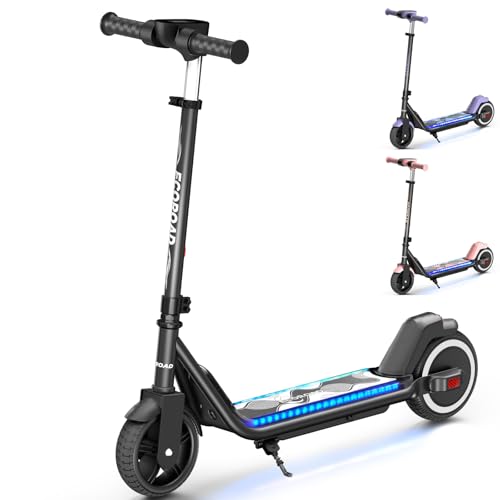
This model offers three speed settings (3/6/10 mph) and an adjustable handlebar height to grow with the child. The 21.6V battery enables 5–7 miles of riding per charge, with a smart auto-shutoff after five minutes idle to conserve power. Designed for riders roughly 4 to 5 feet tall, the EK6 provides a progressive path from beginner scooting to more confident, faster rides as skills improve.
Buying Guide
Key considerations when selecting a first electric scooter include safety certification, rider age and ability, and growth potential. Start with models that emphasize stability, limited top speed, and reliable brakes for younger riders, then move to higher-performance options as confidence develops. The following factors help compare choices across brands and price points.
- Age and skill alignment: Choose products designed for beginners with lower max speeds and intuitive controls. For older or more experienced riders, consider models with higher top speeds and longer ranges.
- Safety certifications and brakes: Look for UL2272 certification and a combination of electronic brakes and traditional brakes. A foot brake or rear brake adds an extra layer of stopping power for quick stops.
- Adjustability and growth: Adjustable handlebars and multiple speed modes support riders as they grow. A lightweight, foldable design improves portability and storage.
- Battery life and charging: Consider typical range under your riding conditions and the expected charging time. Short charging times are convenient, but plan for longer sessions if used frequently.
- Weight capacity and build quality: Ensure the scooter can safely support the rider’s weight and everyday handling, including occasional bumps and uneven pavement.
- Maintenance and warranty: Check brand reputation, available parts, and warranty terms. A solid warranty reduces long-term ownership risk.
- Safety gear and riding rules: Pair scooters with a properly fitting helmet, knee and elbow pads, and clear safety guidelines for new riders.
- Environment and use case: Consider typical riding surfaces (sidewalks, driveways, parks) and whether you need a portable, foldable model for travel or storage.
| Model | Top Speed | Approximate Range |
|---|---|---|
| Hover-1 My First Self Balancing Scooter | 5 mph | Up to 3 miles |
| Gotrax GKS Mini Kids Electric Scooter | 7.5 mph | Up to 3.75 miles |
| ECOROAD EK6 Kids Electric Scooter | 10 mph | 5-7 miles |
| Gyroor Kids Electric Scooter With LED Lights | 5 mph | Not specified |
| WERHY 350W Electric Scooter | 19 mph | Up to 12 miles |