Choosing the right mountain bike fork for a 26-inch wheel bike can dramatically affect handling, comfort, and control on varied terrain. This guide highlights top 26-inch forks available on Amazon, focusing on travel, steering size, brake compatibility, and weight. Whether you ride aggressive trails, cross-country loops, or rough urban roads, the options below balance durability, adjustability, and value. Use the buying guide to compare choices and align your pick with riding style and terrain. A quick summary table helps you scan core specs at a glance.
| Product | Type | Travel | Steerer | Brakes | Weight |
|---|---|---|---|---|---|
| Bucklos 26/27.5/29 Suspension Fork — 100mm | Suspension | 100 mm | 28.6 mm Threadless | Disc | ≈2598 g |
| Bucklos 26/27.5/29 Suspension Fork — 100mm (Variant) | Suspension | 100 mm | 28.6 mm Threadless | Disc | ≈2598 g |
| KANGXYSQ 26″ Suspension Fork — 110mm | Suspension | 110 mm | 28.6 mm Threadless | Disc/V | ≈2.45 kg |
| KANGXYSQ 26″ Rigid Forks — 1-1/8″ Threadless | Rigid | N/A | 1-1/8″ Threadless | Disc/V | ≈825 g |
| Sunlite Threaded MTB Fork — 26″ | Threaded | N/A | Threaded | Cantilever | Not listed |
Bucklos 26/27.5/29 Suspension Fork With Lockout

The Bucklos suspension fork is designed for 26-, 27.5-, and 29-inch setups, offering 100 mm of travel. It features a 28.6 mm threadless straight steerer and a 30 mm crown race, with manual lockout for on-the-fly ride adjustment. The design supports disc brakes and an offset of 36 mm, with a tube diameter of 32 mm. Weight is listed around 2598 g, making it a relatively sturdy option for riders who want robust performance without excessive weight. The fork includes a Bucklos sticker that is removable without residue, giving a clean look if you prefer a minimal aesthetic. Manual ABS adjustment lets you tailor suspension softness and stiffness to riding conditions.
Ideal for XC-oriented 26″ bikes that need a reliable, adjustable front end, this fork balances control and durability. The lockout feature helps optimize climbing efficiency on smoother sections, while the disc brake compatibility supports modern braking performance. While the weight is on the heavier end for a 100 mm travel fork, the build aims to deliver steady handling across diverse trails. Reviewers should note the non-remote lockout may affect precision for some riders, but the overall package remains well-suited for riders prioritizing value and versatility.
Bucklos 26/27.5/29 Suspension Fork With ABS
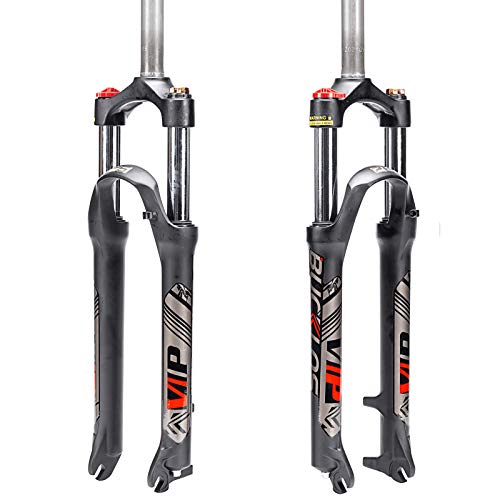
This Bucklos variant shares the core 100 mm travel and 28.6 mm threadless straight tube, with the addition of ABS-based manual adjustment for suspension feel. It preserves the Crown Race at 30 mm and a 36 mm offset, designed for 26″ to 29″ wheels with a 32 mm outer tube diameter. The weight sits in the same vicinity as the other Bucklos model, around 2598 g, so riders gain consistent stiffness and performance without sacrificing durability. The ABS adjustment supports tuning the fork to ride conditions, improving comfort on bumpy terrain or long XC sessions.
Prospective buyers should weigh the benefit of ABS customization against potential maintenance considerations. The lockout remains manual, and compatibility applies primarily to disc-brake-equipped frames. This variant is well-suited for riders who want straightforward, reliable suspension tuning without requiring hydraulic or remote components. It remains a solid option for riders who value consistent performance, easy service, and broad wheel compatibility on 26″ through 29″ setups.
KANGXYSQ 26-Inch Suspension Fork 110mm

The KANGXYSQ 26-inch suspension fork offers a slightly longer travel of 110 mm, with a 28.6 mm straight tube and a 9×100 mm QR. It supports both disc brakes and V brakes, expanding compatibility for different bike builds. A 2.45 kg weight places it in a robust category for trail use, while a left-side rebound adjustment helps fine-tune the ride to suit varied terrain. The left-side control enables riders to tailor the rebound feel, which can improve grip on uneven surfaces and reduce bottoming out on rough sections.
As a 26″ fork designed for mixed-terrain riding, this model suits riders who want more cushion on descents without compromising climbing ability. The combination of manual lockout and dual brake compatibility offers flexibility for bikes used in diverse contexts, from light cross-country to techy singletrack. Installation requires standard 1-1/8″ headsets and compatible frames. While heavier than rigid options, the suspension benefits are evident in comfort and control over rough terrain, especially on longer adventures.
KANGXYSQ 26”Rigid Forks

The 26-inch rigid forks from KANGXYSQ present a lightweight option for riders seeking simplicity and efficiency. With a 1-1/8″ straight tube on a threadless setup, the fork uses aluminum alloy to deliver strong rigidity while keeping weight low—roughly 825 g. The design accommodates both disc brakes and V brakes, offering flexibility for different braking systems. The absence of travel reduces maintenance and potential flex, making it a good match for riders prioritizing responsiveness and a straightforward upgrade from older rigid forks.
Rigid forks benefit riders who ride smoother terrains or want a no-friction front end for cross-country efficiency. They’re typically less forgiving on rough sections but excel in weight savings and direct steering feel. When pairing with 26″ wheels, ensure the frame and headset support a 1-1/8″ straight, threadless steerer. This model is well-suited for those who value a simple, durable front end and a lower overall bike weight for climbing efficiency and quick acceleration on forgiving trails.
Sunlite Threaded MTB Fork

The Sunlite threaded MTB fork is a traditional, steel-framed option built for 26″ wheels, featuring a hi-tensile steel construction and cantilever brake mounts. This fork is compatible with threaded headsets and older braking setups, offering a budget-friendly entry point for riders maintaining or upgrading classic bikes. While heavier than aluminum options, the steel construction provides durability and a familiar maintenance profile. Cantilever mounts make this fork versatile for riders using older brake systems or seeking reliable performance with a simple setup and straightforward maintenance.
For riders who prioritize compatibility with classic 26″ bikes or who value a traditional, long-lasting front end, Sunlite’s threaded fork can be a practical choice. It is best suited for riders who don’t need modern hydraulic brakes or remote dampers but want dependable steering, easy service, and a straightforward installation. Consider weight and brake compatibility when choosing this model, as it is heavier than most aluminum options and relies on cantilever braking geometry.
Buying Guide: Key Purchase Considerations And Comparisons
- Wheel Size And Frame Compatibility: Confirm the fork is rated for 26″ wheels and matches your bike’s headset standards (threaded vs. threadless). 1-1/8″ steerer tubes are common, but some rigid forks use different geometries. Check the crown race diameter (often 30 mm or compatible with your headset) and the overall stem-to-crown length to preserve geometry.
- Travel And Suspension Type: 100 mm travel suits cross-country and smoother trails, providing efficient climbing and adequate descents. 110 mm travel, as seen on some KangXYSQ models, offers more cushion for rough terrain but can slightly alter geometry and climbing efficiency. Decide between pure rigid, 100 mm, or 110 mm based on terrain and riding style.
- Lockout And Damping Controls: Manual lockouts help conserve energy on climbs and smooth sections. Rebound adjustments let you tune how quickly the fork returns after compression, affecting grip and comfort on uneven terrain. ABS-style or adjustable dampers provide further control in some models, but are not universal across all 26″ forks.
- Brakes Compatibility: Disc brakes are common and offer reliable stopping power in wet or muddy conditions. V (rim) brakes or cantilever mounts are typical on older frames or certain rigid forks. Ensure the fork’s brake mounts align with your bike’s braking system and rotor sizes (e.g., 160 mm rotors are common).
- Material And Weight: Aluminum alloy forks balance weight and stiffness, with typical weights around 800 g for rigid options and ~2.5 kg for certain suspension units. Steel forks are generally heavier but can be more affordable and durable, especially for older bikes or heavy-use contexts.
- Steerer Type And Axle Compatibility: Threaded steerers require compatible headsets and frames; threadless steerers need a compatible headset and stem. Quick-release (QR) axles are common for many 100 mm travel forks, while some models use solid axles or different QR standards. Confirm axle and hub compatibility before purchasing.
- Durability And Maintenance: Aluminum forks are corrosion-resistant and lighter, but may dent or scratch more easily than steel. Rigids have fewer moving parts and lower maintenance but may transmit more trail feedback. Suspension forks require regular air spring or damper maintenance and occasional service intervals.
- Budget And Use Case: For riders prioritizing cost-effective upgrades, rigid forks and older threaded-steerer options can offer straightforward upgrades. For riders chasing comfort and control on rough trails, a 100 mm or 110 mm suspension fork with lockout and rebound control provides more versatility and traction.
- Geometric Impacts: Switching to a longer travel fork (e.g., 110 mm) can steepen the head angle slightly and change fork rake, affecting handling. If you ride aggressively or in technical terrain, a suspension fork with appropriate travel helps maintain line choice and control without sacrificing ride quality.
- Maintenance Schedule: Regularly check the crown race, steerer bearings, and axle interfaces. Suspension forks require periodic oil and seal service, while rigid forks benefit from inspection of cracks, especially around crown and dropouts. Follow manufacturer guidelines for service intervals.
Overall, the best choice depends on riding style, terrain, and compatibility with your bike’s existing components. A 26″ bike benefits from a fork that preserves geometry, supports reliable braking, and offers tunable damping or a lightweight rigid alternative for efficiency. If you anticipate varied trails and weather, a 100 mm to 110 mm suspension fork with a sturdy 28.6 mm steerer is a versatile starting point. For riders prioritizing low weight or classic setups, consider rigid options with appropriate brake compatibility and a compatible headtube specification.