Fat-tire mountain bikes offer stability, traction, and comfort for riders who need a wider contact patch and a forgiving ride. This guide focuses on reliable models built to support heavier riders while delivering confident handling on dirt, sand, snow, and gravel. The five selected bikes combine durable steel or aluminum frames, 26-inch fat tires, and varied gearing to suit different terrains and fitness levels. They are designed for riders roughly 5’4″ to 6’2″ tall, though fit can vary by inseam and reach. Below, each model is summarized and then explored in detail.
| Product | Wheels | Tires | Frame | Brakes | Notes |
|---|---|---|---|---|---|
| Mongoose Malus Fat Tire Mountain Bike | 26-Inch | 4-Inch Wide Knobby | Steel | Disc | 7-Speed Drivetrain; Shimano Rear Derailleur |
| Mongoose Argus ST Fat Tire Mountain Bike | 26-Inch | 4-Inch Wide Knobby | Steel Hardtail | Mechanical Disc | 7-Speed; Durable all-terrain design |
| Mongoose Dolomite Fat Tire Mountain Bike | 26-Inch | 4-Inch Wide Knobby | Steel | Front and Rear Brakes | 7-Speed; Threadless headset |
| Max4out 26 Inch Fat Tire Mountain Bike | 26-Inch | 4-Inch Knobby | High-Carbon Steel | Dual Disc | 21-Speed; Front Suspension |
| Mongoose Argus Sport Fat Tire Mountain Bike | 26-Inch | 4.8-Inch Fat Tires | Tectonic T2 Aluminium | Hydraulic Disc | Medium Frame; Lightweight design |
Mongoose Malus Fat Tire Mountain Bike
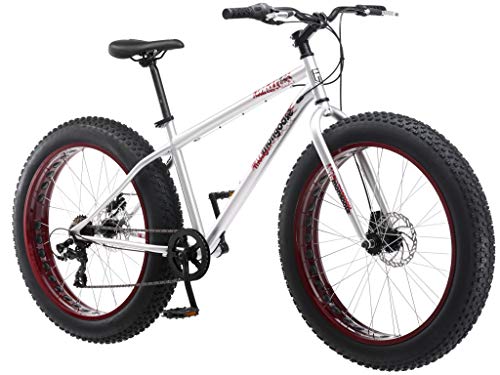
The Malus combines a sturdy steel frame with 26-inch wheels and 4-inch wide knobby tires to deliver stability across mixed terrains. Its design targets a broad rider height range, roughly 5’4″ to 6’2″, supporting riders who need a robust, confident platform. The 7-speed drivetrain enables smooth gear changes, making climbs and flats manageable while maintaining a straightforward setup for riders new to fat-tire biking. Front and rear disc brakes provide reliable stopping power in wet or loose conditions, contributing to overall safety on uneven trails.
With a steel mountain-style frame and a practical component mix, the Malus emphasizes durability and consistent performance. The Shimano rear derailleur offers dependable shifts, and the overall geometry favors a relaxed, stable ride rather than a racing stance. This model is well-suited for riders seeking a capable entry into fat-tire rides without sacrificing control on moderate to rugged terrain.
Mongoose Argus ST Fat Tire Mountain Bike
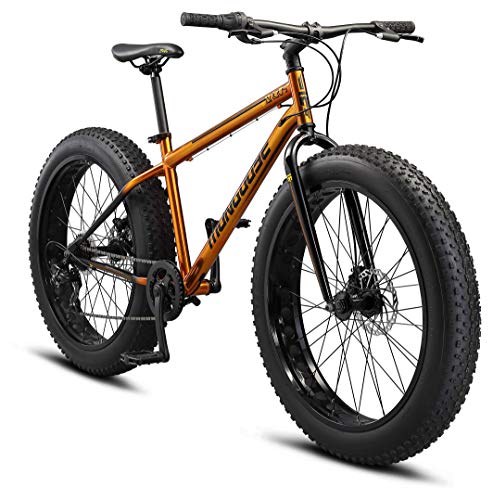
The Argus ST is built for all-terrain adventures with a 26-inch wheel setup and 4-inch-wide knobby tires that bite into loose surfaces like sand and snow. A steel hardtail frame adds rigidity and longevity, while the 7-speed setup gives riders control over gradients and diverse terrain. The mechanical disc brakes provide consistent stopping performance and are easier to service in field conditions, which is ideal for riders who value straightforward maintenance. This model is particularly suitable for riders between about 5’7″ and 6’1″ seeking dependable all-season traction.
Aluminum rims and the frame’s durability help keep weight manageable while maintaining strength for heavier riders. The Argus ST’s geometry supports a confident, upright riding position that improves balance on rough trails. For riders who want a capable fat-tire bike without hydraulic brakes, this model offers a cost-effective, rugged option with proven components.
Mongoose Dolomite Fat Tire Mountain Bike
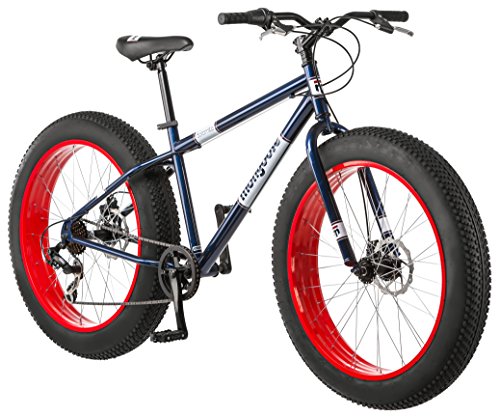
The Dolomite is built for versatile off-road adventures with a steel frame and 26-inch wheels, paired with 4-inch knobby tires that deliver traction on sand and snow. It fits riders roughly 5’4″ to 6′ tall, with a threadless headset that aids in tuning speed and responsiveness. Alloy rims help keep the overall weight in check, while front and rear mechanical disc brakes provide strong, consistent stopping power in varied conditions. This model emphasizes a comfortable ride with a robust, value-conscious setup for wider terrains.
Designed for riders who want a dependable fat-tire option without the premium price of higher-end builds, the Dolomite blends durability and performance. The combination of a steel frame, wide tires, and reliable brakes makes it suitable for daily commutes on mixed surfaces or weekend trail adventures, especially for those who appreciate straightforward maintenance and strong stopping confidence.
Max4out 26 Inch Fat Tire Mountain Bike

The Max4out Fat Tire Mountain Bike offers a 21-speed drivetrain, providing more gearing options for efficient acceleration and climbing. A front suspension fork improves impact absorption on rough trails, while a high-carbon steel frame balances stiffness with resilience. The bike uses dual disc brakes for strong and evenly distributed stopping power, which helps maintain control on steep descents and uneven terrain. This setup is well-suited for heavier riders who want versatility across hills and loose surfaces without sacrificing ride quality.
The combination of a robust steel frame, upgraded suspension, and a wide gear range supports riders seeking performance across mixed terrain. The ergonomic design prioritizes comfort over aggressive geometry, making it a practical option for longer rides or daily trail use. Maintenance is relatively straightforward, with components that are typically accessible to home mechanics.
Mongoose Argus Sport Fat Tire Mountain Bike

The Argus Sport features a 26-inch wheel setup with forgiving 4.8-inch fat tires mounted on a Tectonic T2 aluminum frame, offering a lighter yet strong build. Hydraulic disc brakes provide smooth, responsive stopping power with less lever effort—an advantage in variable weather or loose surfaces. The medium frame size suits riders seeking a balanced blend of maneuverability and stability, while the aluminum frame contributes to a lighter overall ride compared with steel options. This model is ideal for riders who value weight savings without compromising fat-tire performance.
With drilled rims and a refined geometry, the Argus Sport emphasizes agility and control on rugged trails. The combination of a capable fat-tire platform and hydraulic braking makes it a versatile choice for riders who navigate a range of conditions, from sandy paths to muddy singletrack. It represents a modern option for heavier riders who want a responsive ride with efficient braking and a lighter frame than traditional steel builds.
Buying Guide
When selecting a fat-tire mountain bike for heavier riders, several purchase considerations ensure proper fit, safety, and long-term value. Frame material, weight capacity, and geometry influence ride feel and stability. Aluminum frames reduce overall weight but may ride stiffer, while steel frames absorb bumps more readily but add weight. Confirm the maximum rider weight rating and adjustability for seat height and reach to match your height and leg length. A 26-inch wheel set is common in fat-tire bikes and provides forgiving geometry, but frame sizing remains critical for comfort and control.
Tire size and tread pattern determine traction. Four-inch tires deliver noticeable float on soft surfaces and grip on mixed terrain, while wider tires, like the 4.8-inch setup on the Argus Sport, offer extra flotation but add rolling resistance. Consider how often you ride in sand, snow, mud, or rocky trails, and select tires with tread patterns that optimize those conditions. Braking systems vary from mechanical to hydraulic discs; hydraulic brakes generally require less lever force and provide progressive control, which can be advantageous for heavier riders who need precise modulation on steep or slippery slopes.
Drivetrain options affect climbing ability and maintenance. A 7-speed setup works well for casual trails and mixed inclines, while a 21-speed system gives more options for steep terrain or varied courses. For riders who anticipate frequent hill climbs or longer rides, a broader gear range is beneficial. Front suspension improves comfort on rough terrain by absorbing impacts, whereas a rigid fork keeps the weight lower and maintenance simple. In terms of durability, steel frames are notably robust and forgiving with heavy use, though aluminum frames offer a lightweight alternative with strong performance.
Fit and adjustability are essential. Tall or long-legged riders should verify that the bike supports proper knee clearance and comfortable reach to the handlebars. A test ride can reveal if the saddle height, stem length, or handlebar width causes discomfort in the lower back, wrists, or neck. Finally, consider maintenance access and spare-part availability. Bikes from well-known brands often have broader service networks and easier access to replacement components, which reduces downtime after long rides or rough trails.