Upgrading a bicycle into an electric ride is simpler than you might think with the right motor bike conversion kit. This guide highlights five top options that balance power, compatibility, and ease of installation. From mid-drive units that maximize hill-climbing torque to hub-based kits that retrofit quickly, these selections cover 26″ to 29″ wheels and common brake types. Read on for a side-by-side overview and a practical buying guide to help you choose the best kit for your bike and riding style.
| Product | Brand | Power | Wheel Type | Bike Fit |
|---|---|---|---|---|
| BAFANG Mid Drive Kit BBS02B/BBS-HD | BAFANG | 500W/750W/1000W | Mid-Drive | 68–73mm BB |
| AW 48V 1000W Front Wheel Kit | AW | 1000W | Front Hub | 26″, 100mm spacing |
| PEXMOR 1200W Front Hub Kit | PEXMOR | 1200W | Front Hub | 26″, 100mm spacing |
| VEVOR 1000W Front Hub Kit | VEVOR | 1000W | Front Hub | 26″, standard spacing |
| LTIGOAW 1000W Rear Wheel Kit | LTIGOAW | 1000W | Rear Hub | 26″, 120mm spacing |
BAFANG Mid Drive Kit BBS02B/BBS-HD

The BAFANG BBS02B/BBS-HD mid-drive kit is a versatile powertrain designed for a range of frame styles. It supports 500W, 750W, and 1000W configurations, making it suitable for both light commuting and more demanding rides. The kit includes many essential components, such as brake levers, a chainwheel, a thumb throttle, a speed sensor, a headlight, and a tool set. Battery and LCD display are optional, allowing a DIY setup that matches your needs. Compatible with 68–73mm bottom brackets, it also works with 100mm and 120mm spacings under JIS norms. Note that 73mm screws are not included.
Performance-wise, the BBS02B/BBS-HD delivers substantial torque (up to 160 N.m depending on the model) and top speeds around 45 km/h with proper gearing and conditions. This makes hill climbing and urban acceleration notably easier while offering throttle, pedal-assist, and standard cycling modes. It’s well-suited for MTBs, city bikes, and certain recumbents, especially when paired with proper braking systems (disc or V-brake and chain-driven setups only). Careful frame compatibility checks ensure a smooth, safe installation.
AW 48V 1000W Front Wheel Kit
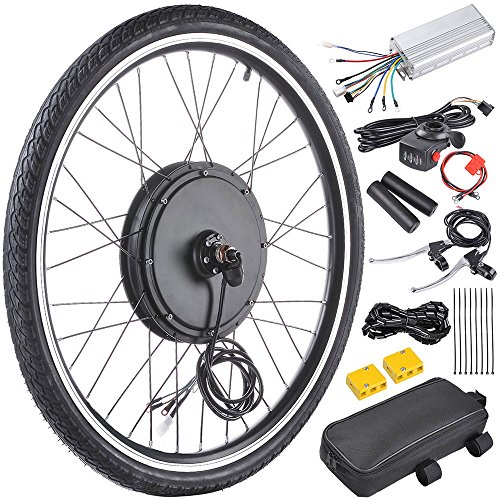
The AW 48V 1000W front wheel kit brings a powerful hub motor into a simple retrofit. The kit uses a brushless, gearless hub design for quiet and efficient operation, capable of reaching roughly 45 km/h in typical setups. It features an aluminum alloy frame for durability and supports riders up to about 220 pounds, reducing worries when carrying cargo or climbing hills. A thumb throttle with three battery-status indicators helps riders monitor power on the go. The system is compatible with 26″ bikes using standard disc or V-brakes and a 3 15/16″ (100mm) front dropout spacing.
In terms of control, AW kits integrate smoothly with a front-wheel installation that preserves drivetrain simplicity—no chain or derailleur changes needed. This makes it an attractive option for commuters and casual riders who want straightforward installation and reliable performance with minimal maintenance. While not a mid-drive, the hub approach provides solid torque and a clean, low-profile setup on compatible frames.
PEXMOR 1200W Front Hub Kit

The PEXMOR 1200W front hub kit delivers robust power with a high-wattage hub designed for faster acceleration and stronger climbs. It supports 26″ frames with a 100mm front dropout spacing and includes a three-mode controller along with PAS, LCD display, and twist throttle options. Users can switch among modes to tailor ride feel, whether for daily commuting or weekend adventures. The front-hub design keeps installation relatively straightforward, though frame compatibility and brake type should be checked to ensure smooth integration with existing wheels and frames.
Practical benefits include improved top-end speed and reliable throttle control, while the LCD and PAS features help riders manage power and energy efficiency. This kit is well-suited for riders who want noticeable performance gains without altering the rear drivetrain or cassette, making it a popular choice for conversion-friendly bikes with standard 26″ wheels.
VEVOR 1000W Front Hub Kit

VEVOR’s 1000W front hub kit emphasizes high power with practical, real-world usability. The 26-inch front hub motor delivers up to 420 rpm with a peak torque around 50 N.m, making it capable of coping with hills and urban terrain. The kit includes an upgraded speed controller, an LCD display, and a PAS system for multi-mode assistance. Copper-core motor construction supports heat resistance and durability, while a relatively quiet operation (about 65 dB) keeps rides comfortable and inconspicuous in urban settings. It pairs well with standard 26″ wheels and common disc or V-brakes.
The kit is designed for road and light off-road use, offering a reliable upgrade path for riders who want a straightforward front-hub solution with modern display and assist features. Installation success depends on frame compatibility and correct wheel alignment, but the system is generally beginner-friendly with the right tools.
LTIGOAW 1000W Rear Wheel Kit

The LTIGOAW rear-wheel conversion kit provides a robust 1000W hub motor designed for strong performance on road and light off-road surfaces. With an estimated top speed around 53 km/h and a torque of about 45 N.m, this setup suits riders who want quick acceleration and confident hill-climbing ability. The kit’s rear hub design simplifies chainline changes and drivetrain compatibility, while an LCD display helps monitor speed, battery status, and assist modes. The construction emphasizes durable materials to support riders up to about 264 pounds, making it a practical option for diverse loads.
Rear-hub configurations offer certain advantages for weight distribution and drivetrain simplicity, but they can be less efficient on very steep climbs than mid-drive systems. For riders who prefer a straightforward installation and a strong, reliable punch from the rear wheel, this LTIGOAW kit is a solid choice, especially when paired with a compatible battery and controller setup.
Buying Guide
Power, Torque, And Speed
Power ratings (250W to 1000W+) influence acceleration, hill-climbing ability, and legal speed ranges. Mid-drive kits often deliver higher torque at the crank, translating to better climbs and efficiency on varied terrain. Hub motors excel in simple installation and clean aesthetics, but torque can be frame-dependent. Consider your local regulations on wheel-motor speed limits and the intended use—daily commuting vs. off-road riding—to choose the right wattage and torque for your bike.
Front vs Rear Hub, And Mid-Drive
Front hub kits are typically easiest to install and preserve the rear drivetrain, but they can add steering inertia and push-pull forces on the front end. Rear hub kits improve traction for uphill riding, yet they alter wheel compatibility and may affect braking dynamics. Mid-drive systems utilize the bike’s gears for efficiency and range, offering strong torque but requiring a compatible bottom bracket and more mechanical know-how during installation. Your bike’s frame, brakes, and intended terrain should drive the choice.
Controller, Display, And Ride Modes
Controllers govern how power is delivered. A sine-wave controller tends to be smoother and quieter than older square-wave designs. PAS (Pedal Assist) levels, throttle options, and LCD displays aid in energy management and ride feedback. Look for multi-mode controllers (such as PAS, throttle-only, and combined modes) and clear, readable displays that provide speed, distance, battery life, and assist level at a glance.
Battery Compatibility And Range
Battery voltage (commonly 36V, 48V, or higher) and capacity (Ah) determine range and peak power delivery. Higher voltage systems can deliver more consistent torque, especially on hills, but require compatible controllers and frame clearance. When calculating range, consider rider weight, terrain, temperature, and assist level. Many kits offer battery options as add-ons; pairing a matched battery ensures optimal performance and longevity.
Installation, Maintenance, And Safety
Installation difficulty varies by kit type. Mid-drive kits demand careful alignment with bottom brackets and cranksets, whereas hub kits are generally simpler but still require proper wheel removal and brake alignment. Ensure brake systems (disc vs. rim) are compatible with the motor’s power and torque. After installation, check for frame clearances, cable routing, and braking performance. Regular maintenance, such as brake pad wear checks and torque verification, improves safety and longevity of the system.
Warranty, Support, And Value
Warranty terms vary by brand and kit components. Look for kits that include essential accessories, clear installation guidance, and responsive customer support. When evaluating value, weigh power, ease of installation, wheel compatibility, and after-sale service. A kit with robust documentation and readily available replacement parts often provides better long-term value than a lower-cost option with limited support.