Choosing a kid-friendly motor bike involves balancing safety, age, and riding goals. This guide highlights five top picks across gas-powered and electric platforms, chosen for durability, safety features, and performance. Whether your child loves off-road adventures or smooth neighborhood cruising, these models offer age-appropriate power, reliable brakes, and sturdy construction to support confident learning and growing riding skills.
Below is a quick snapshot of the five selected products. Use the Buying Guide after the product sections to compare important considerations like age suitability, motor power, battery life, braking, and maintenance. The list focuses on bikes designed for youngsters and tweens, with safety features and easy operation at the forefront.
| Product | Brand | Top Speed | Age Range | Type |
|---|---|---|---|---|
| NAKTO 50cc Dirt Bike | NAKTO | Up to 40 MPH | 5–17 | Gas-powered dirt bike |
| Hiboy DK1 Electric Dirt Bike | Hiboy | Up to 15.5 MPH | 3–10 | Electric dirt bike |
| AIII Lightweight Electric Dirt Bike | AIII | Up to 10 MPH | 3–12 | Electric dirt bike |
| ELEMARA 24V Electric Dirt Bike | ELEMARA | Up to 15 MPH | Varies | Electric dirt bike |
| KerryYoo 36V Electric Dirt Bike | KerryYoo | Up to 16 MPH | 8–14 | Electric dirt bike |
NAKTO 50cc Kids Dirt Bike
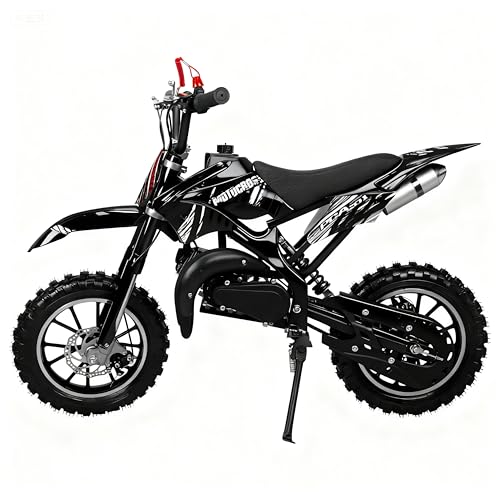
- Designed for ages 5-17 with an ergonomic structure to reduce rider fatigue.
- 2-stroke gas engine delivers stable power and smooth riding experience.
- Triple power-off protection minimizes accidental startup risks.
- High-strength steel frame offers durability and impact resistance.
- Front and rear disc brakes with suspension improve control on unpaved surfaces.
- 10-inch off-road tires enhance traction and steering confidence.
Hiboy DK1 Electric Dirt Bike

- Equipped with a high-strength shock-absorbing spring and hydraulic fork for quiet, smooth riding.
- Long-range battery delivers up to about 90 minutes of runtime; charging takes 4–5 hours.
- Three safe speed modes: 5.0 mph, 7.5 mph, and 15.5 mph to match ability.
- Designed for reduced noise and comfort during off-road play.
- Compact yet sturdy frame suitable for younger riders and light trails.
AIII Lightweight Electric Dirt Bike

- Extremely lightweight at about 23.2 lbs with a durable aluminum frame.
- Two speed settings: beginner-friendly 5 mph and advanced up to 10 mph.
- 24V 150W brushless motor with a detachable 24V 2.6Ah battery for quick swaps.
- Rapid charging: 1.5–2 hours, plus a throttle-mounted LED display for easy management.
- Professional variable-speed twist throttle supports precise control for new riders.
ELEMARA 24V Electric Dirt Bike

- 12″ air-filled tires for stable traction across terrains.
- 24V, 250W motor reaches up to 15 mph with a 150 lb weight capacity.
- LED lights and power display add visibility and ride awareness.
- Chain-driven motor and twist-grip throttle for realistic control.
- Hand-operated rear brake and spring suspension for smoother landings.
KerryYoo 36V Electric Dirt Bike
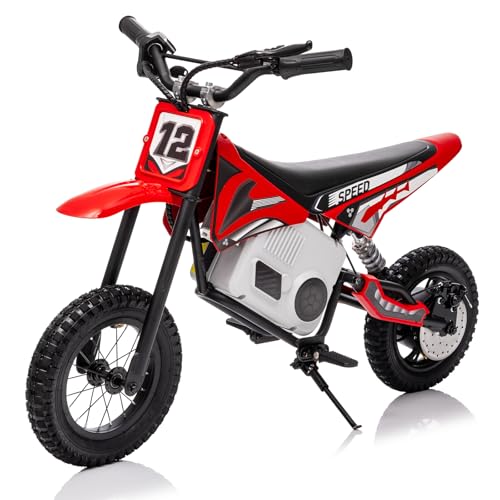
- Powerful 36V 350W motor with a top speed around 16 MPH.
- 9Ah battery provides about 1–2 hours of ride time after a long 6–9 hour charge.
- Explosion-proof tires and spring suspension improve off-road safety and comfort.
- Twist throttle with infinitely variable speed control for precise handling.
- Rugged build aimed at kids aged roughly 8–14 and capable older riders with supervision.
Buying Guide
Choosing the right motor bike for a child involves balancing power, safety, age, and intended terrain. Here are key purchase considerations and how the five picks compare across those factors.
- Age and rider size: Gas-powered models like the NAKTO 50cc are designed for a broader age range (5–17) but require supervision due to higher power and more complex operation. Electric options from Hiboy, AIII, ELEMARA, and KerryYoo typically target younger riders, with explicit age ranges in their product descriptions and safer, lower top speeds.
- Power and speed: Gas bikes generally offer higher speed and torque (NAKTO up to 40 MPH) but require more careful supervision and protective gear. Electric bikes provide safer, adjustable speeds (as low as 5 mph) and smoother starts, which is ideal for beginners and learners.
- Battery life and charging: For electric models, consider runtime per ride and charging time. Hiboy offers about 90 minutes of runtime with a 4–5 hour charge. AIII provides 40–60 minutes with rapid 1.5–2 hour charging. KerryYoo lists 1–2 hours of ride time depending on rider weight and terrain, with longer charging times.
- Brakes and suspension: A sturdy braking system and a reliable suspension reduce the risk on dirt trails. Most picks include front and rear brakes, and many use spring or hydraulic suspension to absorb bumps for safer landings and control on rough terrain.
- Durability and materials: Steel frames (NAKTO) offer rugged durability, while aluminum frames (AIII) reduce weight for easier handling by younger riders. Tire type and size (10″ or 12″) affect stability on uneven ground and off-road surfaces.
- Maintenance and safety features: Look for triple power-off protections, robust frames, and simple maintenance routines. Gas bikes require more maintenance (fuel system, air filters, and spark plugs) than electric bikes, which mainly require battery care and charging schedules.
- Terrain suitability: For serious off-road use, a bike with robust suspension and larger tires provides better control. For urban or light trail use, lighter electric bikes with good brakes and a lower top speed can be safer and more forgiving.
All five picks offer a spectrum of options—from high-tunability and higher speed (for older kids or supervised use) to safer, beginner-friendly electric models with adjustable speed modes. When selecting, align the bike with your child’s confidence, the complexity you want to manage, and the typical riding environments you anticipate. Always pair the bike with proper protective gear including a certified helmet, knee and elbow pads, and gloves to promote safe riding habits from the start.