Choosing the right mini bike speedometer kit helps you monitor speed, distance, and ride data on compact bikes, scooters, or small ATVs. The options below emphasize accuracy, easy installation, and clear displays, with both wired and GPS-based systems. Whether you prefer a simple entry-level unit or a feature-rich GPS computer, this guide highlights five reliable picks that suit American riders who want dependable performance without complicated setup.
| Product | Brand | Type | Notable Benefit |
|---|---|---|---|
| CATEYE Velo Wired | CATEYE | Wired | Auto stop/start and comprehensive stats for beginners |
| ELING GPS Speedometer Kit 160MPH | ELING | GPS | High-speed GPS gauge with quick satellite lock |
| ELING Mini GPS Speedometer Sensor Kit | ELING | GPS | Compact, flexible sensor adapter for various gauges |
| Bikevee 2.6″ Wireless GPS | Bikevee | Wireless (GPS, BT, ANT+) | Large display with modern wireless connectivity |
| ROCKBROS Wireless GPS | ROCKBROS | Wireless | Four satellite support, ANT+ compatibility, IPX6 |
CATEYE Velo Wired: Entry-Level Bike Computer

This wired bike computer provides essential ride data with straightforward operation. It displays current, max, and average speed, plus total distance, trip distance, elapsed time, a pace arrow, and a clock. The device is designed to keep data reliable even when you stop at red lights or take a break, automatically pausing time and slowing averaging to reflect actual riding effort. The Velo Wired relies on a dependable wired speed sensor, offering interference-free measurement for consistent performance across road, trail, and urban riding environments. It’s a solid choice for new riders who want clear, actionable stats without complexity.
For setup and daily use, the unit emphasizes simplicity. The wired sensor helps ensure steady readings without needing to manage batteries or intricate pairing processes. While it may lack some advanced metrics found in pricier GPS computers, its strength lies in reliability and ease of use, making it ideal for basic speed, distance, and time tracking on entry-level bikes or kids’ bikes where simplicity matters most.
ELING GPS Speedometer Kit 160MPH

This GPS speedometer kit offers a high-capacity gauge suitable for cars, motorcycles, tractors, and small vehicles. It supports up to 160 MPH and includes a backlit display for easy visibility in day or night riding. Installation requires a panel cut about 85 mm in diameter to accommodate the gauge, with behind-panel clearance of roughly 70 mm for proper mounting. A GPS antenna should be positioned outside or near a windscreen with a clear view of the sky to ensure quick satellite lock—roughly 30 seconds on first use, then sub-3-second lock times under favorable conditions. The antenna cable should remain intact for reliable signal reception.
The kit’s installation notes emphasize careful routing and mounting. Secure the antenna for stable reception and connect the antenna to the back of the gauge. If a signal drops, verify that all connections are secure and the device is oriented for optimal sky exposure. This ELING option provides a robust GPS solution with a larger, easy-to-read gauge for riders who want accurate speed data with satellite-based precision.
ELING Mini GPS Speedometer Sensor Kit
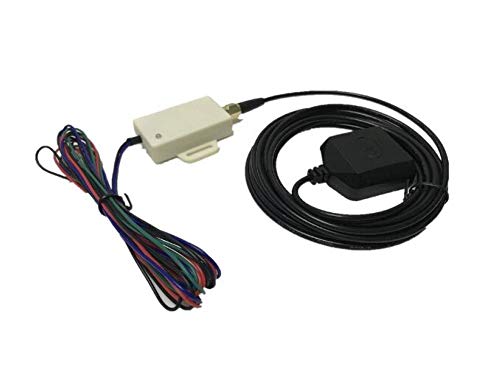
The ELING Mini GPS Speedometer Sensor Kit is designed as a compact, universal sensor adapter for various speedometers and tachographs. The unit measures approximately 4.5 cm in length with a 100 cm extended cable, offering flexible placement on many small vehicles. It uses color-coded wiring: RED for power, BLACK for ground, GREEN for speed pulse output positive, and BLUE for speed pulse output negative. This kit is ideal for DIY enthusiasts who want to retrofit or expand a GPS-based speedometer system on a compact platform. The small form factor makes it suitable for tight dashboards or experimental builds where space is at a premium.
As with any sensor integration, proper wiring and power supply are essential. Ensure DC power within 8–32V is supplied and observe correct polarity to avoid damage. The included wiring scheme helps users connect speed signals to the corresponding inputs on compatible gauges. The kit’s flexibility makes it a practical choice for hobbyists seeking a GPS-enabled speedometer option that can adapt to multiple devices and mounting configurations.
Bikevee 2.6″ Wireless GPS Speedometer
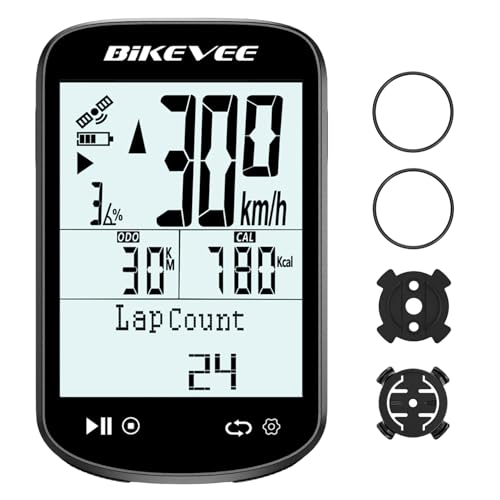
The Bikevee computer uses wireless technology (Bluetooth 5.4 and ANT+) to deliver real-time speed, distance, and ride data. Its 2.6-inch LCD screen with a manual backlight is designed for easy reading in various lighting conditions, suitable for both road and mountain biking. The device is positioned as a modern, integrated computer ideal for commuting, endurance training, and adventurous rides where wireless connectivity improves data collection and device versatility. It supports GPS-based speed and odometer readings, with app integration via Link-S for updates and additional features.
During its initial rollout, a software note warned that some metrics (like Trip Distance) could display inconsistencies until users performed a software update to version 1.4.7. This emphasizes the importance of keeping firmware current to ensure accurate data across sessions. If you encounter issues, contacting customer support can help resolve software-related glitches and optimize performance for daily use on bikes with diverse sensors and ride profiles.
ROCKBROS Wireless GPS Bike Computer

The ROCKBROS bike computer emphasizes GPS accuracy with support for multiple satellite systems, enabling reliable route tracking whether you ride through city streets or remote trails. When paired with compatible sensors and the XOSS app ecosystem, you can monitor cycling workouts with richer data, including speed and distance alongside route mapping. The device features ANT+ compatibility, a 2.5-inch anti-glare LCD screen for clear reading in sun or rain, and a robust IPX6 waterproof rating to withstand wet weather. It provides a solid balance of navigation, data tracking, and durability for varied cycling environments.
For riders seeking a full GPS experience, ROCKBROS’ dual-sensor compatibility and app integration offer expanded capabilities beyond basic speed metrics. While it may introduce a slightly higher learning curve than simpler wired units, this model rewards users with accurate tracking, better data visualization, and compatibility with a broader range of external sensors and training platforms.
Buying Guide
Choosing the right mini bike speedometer kit depends on how you ride, what data you want, and how you prefer to install and use the device. The following considerations help illuminate the differences among wired, GPS, and wireless options, and how they fit into common riding scenarios.
- Type and data needs: Wired speedometers prioritize reliability with straightforward installation and uninterrupted data. GPS-based units offer accuracy over larger distances, live mapping, and odometer history that can enhance training. If you frequently ride in areas with interference or limited satellite visibility, a wired option may still be preferable for essential stats.
- Display size and readability: Larger displays (like 2.6″ or 2.5″) improve readability on the move, especially in bright sunlight. Anti-glare screens help with legibility in various conditions. Consider backlighting or automatic brightness if you ride at dawn, dusk, or nighttime.
- Power and installation: Wired units require connection to a bike’s electrical system or to a dedicated sensor, which can involve panel mounting and sensor alignment. GPS and wireless models rely on internal batteries or rechargeable power and may require pairing with external sensors. Cable length, mounting hardware, and panel fit are practical factors for mini bike applications.
- Sensor compatibility: ANT+ and Bluetooth compatibility expands data sources beyond the core speedometer, enabling integration with heart rate monitors, power meters, and mobile apps. If you want cross-bike versatility or multi-sensor training, prioritize devices with broad connectivity.
- Durability and weather resistance: IP ratings (such as IPX6) indicate resistance to water and dust, which matters for outdoor riding in rain or spray. Anti-glare screens and sealed housings contribute to long-term reliability in tough riding environments.
- Calibration and accuracy: GPS units depend on satellite visibility; a clear sky view speeds up initial lock times. Wired sensors should be checked for proper alignment to ensure consistent speed readings. Some devices auto-stop or pause data when you’re not moving—useful for accurate trip and calorie calculations.
- App and data ecosystem: Some models pair with companion apps or vendor ecosystems for firmware updates, mapping, and ride history. If you value data trends, route planning, or training metrics, choose devices with robust app support and regular updates.
- Budget and future-proofing: Entry-level wired units tend to be the most affordable, while feature-rich GPS devices can justify higher prices with extended display capabilities, enhanced accuracy, and broader sensor support. Consider whether you’ll upgrade to new sensors or bikes soon, and pick a system with scalable features or easy component replacement.
- Maintenance and warranty: Check the manufacturer’s warranty length and the availability of replacement parts or sensors. Easy access to spare cables, mounts, and sensors reduces total ownership cost and downtime.
When evaluating the five picks above, consider your bike type (road, MTB, scooter, or small ATV), typical riding conditions (city commuting vs. off-road adventures), and whether you prioritize quick installation or long-term data richness. Each option offers a path to better ride data, with different strengths in display, connectivity, and installation complexity. By aligning your choice with your riding style and maintenance preferences, you’ll select a speedometer kit that remains reliable for years of use on your mini bike or compact vehicle.