Upgrading a standard bicycle with a hub motor kit is a practical path to electric-assisted riding. This guide highlights five high-value hub motor kits that balance power, durability, and ease of installation for American riders. Each option emphasizes reliable performance, real-time data display, and compatibility with common bike sizes. Use the quick product table below to compare core specs, then read detailed sections to understand how these kits meet different riding needs and environments.
| Product | Brand | Wheel | Motor Power | Type |
|---|---|---|---|---|
| VEVOR 1000W Front Wheel Kit | VEVOR | 26″ Front | 1000W | Front Hub |
| MOCHAG 1500W Rear Wheel Kit | MOCHAG | 20″ Rear | 1500W | Rear Hub |
| AW 1000W Front Wheel Kit | AW | 26″ Front | 1000W | Front Hub |
| DDYOOK 1000W Rear Wheel Kit | DDYOOK | 28″/29″ Rear | 1000W | Rear Hub |
| MIOUYTRT 1500W Rear Wheel Kit | MIOUYTRT | 26″ Rear | 1500W | Rear Hub |
VEVOR 1000W Front Wheel Kit

The VEVOR kit uses a 1000W DC front hub motor that delivers up to 420 rpm and at least 50 N.m of torque. It provides strong hill-climbing capability with a claimed 0°–12° climbing range, aiding riders tackling varied terrains. A high-definition LCD displays ride data in real time, including speed, distance, pedal-assist level, and remaining battery life. The motor employs copper-core windings to manage heat and maintain stability in different weather. The system runs quietly for a hub motor, at about 65 dB, while the 26-inch wheel is reinforced for durability and traction.
MOCHAG 1500W Rear Wheel Kit

The MOCHAG rear kit features a 48V, 1500W hub motor with efficiency over 82%, designed for reliable performance in commuting and short trips. Built with rust- and wear-resistant materials such as rubber, stainless steel, aluminum, and copper, the kit is durable for long-term use. A PAS sensor facilitates pedaling and climbing, while the brushless gearless design runs quietly. The included LCD displays essential data like speed, battery level, mode, and faults, enabling quick responses to changing riding conditions and simple maintenance checks. The kit is compatible with seven gears for flexible control on different terrains.
AW 1000W Front Wheel Kit
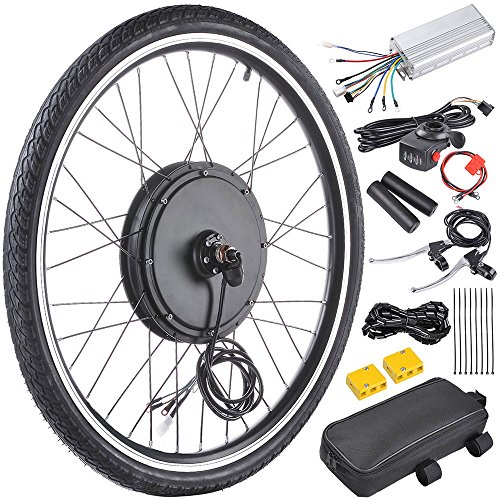
The AW kit uses a 48V, 1000W brushless and gearless front hub motor designed for efficient, quiet operation. It can reach speeds up to about 45 KM/H (28 mph), making it suitable for city commuting and light-duty mountain riding. The aluminum frame adds durability and supports riders up to roughly 220 pounds. It features a thumb throttle with three indicators for battery status and a simple, maintenance-friendly drive system. The kit fits 26″ bikes with a front dropout spacing of 3 15/16″ and is compatible with both universal disc brakes and V-brakes, broadening bike compatibility.
DDYOOK 1000W Rear Wheel Kit

The DDYOOK kit brings a 1000W brushless gearless rear hub motor with a dual-mode controller and LCD display. It supports speeds in the 45–55 KM/H range, depending on setup and gearing, and includes 5-speed adjustment plus a cruise function for longer rides. The LCD provides real-time readings such as speed, mileage, voltage, and fault codes, helping riders monitor performance and anticipate maintenance. This setup is well-suited for riders who want strong hill-climbing power from a rear-wheel configuration.
MIOUYTRT 1500W 26-Inch Rear Kit

The MIOUYTRT 26″ rear wheel kit uses a 1500W, 48V motor aimed at snow bikes and fat-tire setups. It claims top speeds up to 55 KM/H and strong hill-climbing ability on up to 30° inclines, supporting 26×4.0 tires. The kit includes a five-speed adjustment and an LCD meter with cruise control for hands-free riding on long trails. Durable construction with aluminum, copper, and steel components is designed to withstand challenging rides in snowy or rugged environments.
Buying Guide
Power, Speed, And Terrain
Motor power choices influence acceleration, hill-climbing, and ride comfort. Higher wattage (1000W vs 1500W) offers stronger torque, especially on steep grades. Front hubs can feel lighter and improve handling on smoother roads, while rear hubs often deliver better traction under load. Consider the typical terrain you ride—city streets, hills, snow, or mixed trails—when selecting between front and rear configurations.
Wheel Size And Mounting
Wheel size affects compatibility with your bike frame. Kits in 26″ are common for many road and mountain bikes, while 20″ rear setups suit compact or folding bikes, and 28″/29″ rear wheels fit larger frames. Front kits are usually easier to install on most rims and forks, whereas rear kits may require more precise alignment with the drivetrain and disc or V brakes. Confirm dropout spacing and brake type compatibility before purchase.
Controller And Display
Controllers influence throttle response, efficiency, and overall ride feel. Dual-mode controllers offer different assist profiles, while an LCD display provides real-time data such as speed, distance, battery level, mode, and faults. A pedal-assist system (PAS) helps smooth acceleration, reducing rider fatigue on longer commutes or climbs. Look for a display that’s easy to read in daylight and quick to interpret on the move.
Brakes, Compatibility, And Installation
Before buying, verify compatibility with your brakes (disc vs V) and the bike’s frame allowances. Some kits specify dropout spacings and mounting points that align with 26″ forks or 28″/29″ rear frames. Installation complexity varies; some kits are more plug-and-play, while others require wiring work or brake recalibration. Ensure you have the proper tools, and consider professional installation if you’re unsure about wiring, safety checks, and battery integration.
Durability And Weather Resilience
Look for motors with robust construction and heat management features, such as copper windings, gearless designs, and well-sealed housings. Materials like aluminum and steel contribute to longevity under daily use and adverse weather. If you ride in snow or rain, consider snow-fat-tire kits with reinforced wheels to maintain grip and stability.
Battery, Range, And Charging
A kit’s range depends on motor power, battery capacity (not always included), rider weight, terrain, and assist level. Higher-wattage motors consume more energy; pairing with a compatible battery that matches voltage (commonly 48V) helps maintain performance. Plan charging availability and consider a battery with sufficient capacity for your typical ride distance to avoid frequent recharging.
Warranty And Support
Assess warranty terms and after-sales support when choosing a kit. A strong warranty and accessible customer service can help with installation questions, component replacements, and troubleshooting after purchase. Read user reviews to gauge reliability and ease of maintenance over time.