Choosing a gas-powered dirt bike for a 10-year-old involves balancing power, safety, and ease of use. The models below are compact, built with young riders in mind, and widely available on Amazon. Each bike offers reliable braking, simple starting, and durable construction suited to beginners and growing riders. This guide highlights five strong options and provides practical buying tips to help families select a machine that fits a 10-year-old’s size, experience, and safety needs.
| Product | Engine | Max Speed | Weight Capacity | |
|---|---|---|---|---|
| FRP OGM40 40cc Kids Dirt Bike | 40cc four-stroke | 20 MPH | 132 LBS | Front & Rear Disc Brakes; No Oil Mixing; Easy Pull Start |
| Feneihe 50cc Kids Dirt Bike | 50cc engine (listed as 2-stroke; 4-stroke design noted in features) | Not specified | 330 LBS | No oil mixing; Front & Rear Disc Brakes; 10W-40 oil design; Easy Start |
| Hoverheart 50cc Gas Dirt Bike | 50cc four-stroke | Up to 25 MPH | 165 LBS | No oil mix; Off-road tires; Disc brakes; Simple pull start |
| X-PRO Hawk Mini Dirt Bike | 40cc four-stroke | 22 MPH | Not specified | Beginner-friendly; Automatic chain drive; Suitable for small riders |
| FRP GMB100 Mini Dirt Bike | 99cc four-stroke | 24 MPH | 185 LBS | Headlight & neck gaiter included; No oil mixing; Easy start |
FRP OGM40 40cc Kids Dirt Bike

The FRP OGM40 is a compact 40cc dirt bike designed for young riders. Its four-stroke engine minimizes maintenance and reduces the need for oil mixing, while the bike’s 20 MPH top speed keeps early riders within a comfortable, controllable range. Notable safety features include front and rear disc brakes and a straightforward pull-start system. With a 132-pound weight capacity, the bike accommodates a growing child while maintaining manageable handling. Built for off-road use, it emphasizes stability and predictable throttle response, making it a practical entry option for families seeking a child-friendly gas-powered dirt bike.
Feneihe 50cc Kids Dirt Bike

The Feneihe 50cc dirt bike is marketed toward kids and features a modest engine size intended to balance excitement with control. The build highlights include front and rear disc brakes, a sturdy chassis, and an easy-start design—useful for riders who are still learning throttle precision. The model’s listed weight capacity supports growing riders up to about 330 pounds, offering room for taller pre-teens. Its design emphasizes ease of maintenance and reliable operation, with notes about oil compatibility and a straightforward starting procedure aimed at younger riders and their guardians.
Hoverheart 50cc Gas Dirt Bike

The Hoverheart 50cc dirt bike targets younger riders seeking a mid-sized, gas-powered option. It uses a 50cc four-stroke engine that tends to be more forgiving for beginners. The model touts no oil-mix operation, a pull-start ignition, and protective off-road tires for varied terrain. With a stated maximum speed near 25 MPH and a 165-pound weight limit, it offers a balanced blend of nimble handling and enough acceleration to keep a 10-year-old engaged without overwhelming them. Braking and suspension are designed to support stable, confident riding across dirt and grass surfaces.
X-PRO Hawk Mini Dirt Bike

The X-PRO Hawk Mini Dirt Bike is a compact, 40cc four-stroke machine designed with beginners in mind. Its smaller engine provides smoother, more controllable power delivery ideal for new riders. The bike emphasizes reliability with a fully automatic chain drive and a top speed around 22 MPH, making it a good fit for a 10-year-old who is developing throttle control and balance. The lightweight frame and approachable power output help young riders gain confidence while progressing toward larger, more capable dirt bikes.
FRP GMB100 Mini Dirt Bike
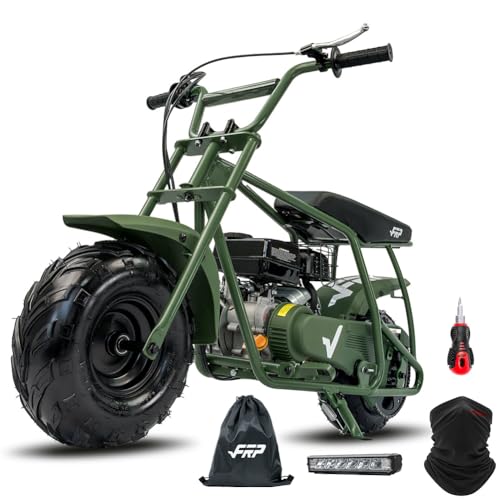
The FRP GMB100 presents a more capable option with a 99cc four-stroke engine designed to deliver robust performance while maintaining safety for intermediate riders. With a top speed up to 24 MPH and a weight capacity of 185 pounds, it suits growing children who have started to handle greater acceleration and longer off-road sessions. The bike also includes practical safety features like a headlights for visibility and easy-start mechanics. While it is more powerful than entry-level models, it remains a reasonable step up for a responsible, supervised rider around the 10-year-old mark.
Buying Guide: Key Purchase Considerations
Choosing the right gas dirt bike for a 10-year-old involves assessing rider size, skill level, and safety features. The following considerations help families compare options across the five bikes above and similar models:
Rider Size, Age, and Weight Capacity
Rider height and weight determine which bike is truly appropriate. Look for a model with a weight capacity comfortable for your child and a seat height that allows both feet to touch the ground when seated. Models in the 40cc–50cc range generally suit lighter, shorter riders, while 60cc–100cc bikes are better for taller children who have built balance and throttle control. Always verify the manufacturer’s recommended age or rider weight guidelines before purchase.
Engine Size, Power, and Transmission
Small, four-stroke engines (40cc–50cc) tend to be easier to control and require less maintenance, making them ideal for new riders. Two-stroke engines can offer more punch but may require more maintenance and careful handling. Manual vs. automatic transmissions also matter: automatic or semi-automatic setups reduce shift complexity for beginners, while manual transmissions can improve control for advancing riders. Consider your child’s comfort with throttle response and shifting when choosing.
Braking, Suspension, and Safety Features
Disc brakes on both wheels and adjustable suspensions improve stopping power and ride stability on uneven terrain. Check for reliable front and rear brakes, sturdy suspension travel, and protective gear compatibility. Some bikes include headlights or gaiters, which can improve visibility and comfort during low-light rides or dusty conditions. Always pair the bike with appropriate safety gear: helmet, gloves, knee and elbow pads, and eye protection.
Oil Type and Maintenance
Gas dirt bikes can require oil mixing (two-stroke) or be designed for four-stroke operation with specific oil requirements. Four-stroke engines generally reduce complicated oil mixed fuels and are easier for beginners to maintain. Confirm whether the bike requires oil mixing and ensure you have access to the appropriate oil type and replacement parts. For younger riders, lower maintenance complexity is a significant advantage.
Starting System and Ease of Use
Pull-start systems are common on smaller models and are generally reliable, but they can be challenging for very young riders. Some models offer electric or simplified pull-start mechanisms to reduce the effort required to start the bike. A bike with a straightforward ignition and predictable throttle response allows a child to learn throttle control safely and with confidence.
Durability, Parts Availability, and Support
Durability matters when kids ride off-road. Aluminum frames or steel frames with reinforced components help withstand tumbles and rough terrain. Check for readily available replacement parts and a service network; bikes with widely available components reduce downtime and maintenance headaches. Consider the availability of spare chains, brakes, tires, and brake pads in your area.
Safety Gear and Training
Beyond selecting the bike, invest in proper safety gear and rider education. A certified helmet, protective pads, and eye protection are essential. Supervise initial riding sessions, teach safe operating practices, and establish clear rules for riding areas and boundaries. Progressive practice—starting on flat, open spaces before tackling hills or rough terrain—helps build skills while minimizing risk.
Budget, Resale Value, and Longevity
Gas dirt bikes vary in price based on engine size, features, and brand. Consider not only the purchase price but also potential maintenance costs and the bike’s expected lifespan as your child grows. Some parents choose mid-range bikes that can be adjusted with throttle caps or gear options to extend usable life as the rider gains experience. Keep in mind that a well-maintained bike with common spare parts will hold better resale value if you decide to upgrade later.
Each of the five bikes above offers a different balance of power, weight capacity, and ease of use. For a 10-year-old, starting with a lighter, more controllable model with reliable braking and straightforward maintenance is usually the best approach. As skill grows, you can reassess whether a higher-displacement model remains appropriate or if a transition to a larger bike is warranted, under careful supervision and with appropriate safety protocols.