Choosing the right fat tire fork can lift traction, control and comfort across winter beaches, snow trails and rugged terrain. This guide highlights five top fat tire forks from BUCKLOS, ZTZ, and RUJIXU, selected for travel, weight and compatibility with 20-inch and 26-inch fat bikes. Use the quick comparison table to spot key specs at a glance, then explore detailed profiles to compare installation notes, performance and suitability for American riders.
| Product | Brand | Tire Size | Travel (mm) |
|---|---|---|---|
| Bucklos 20-Inch Fat Tire Suspension Fork | BUCKLOS | 20×4.0 | 180 |
| Bucklos 20-Inch Fat Tire Suspension Fork | BUCKLOS | 20×4.0 | 180 |
| ZTZ 20-Inch Fat Tire Air Suspension Fork | ZTZ | 20×4.0 | 130 |
| Rujixu 20-Inch Fat Fork 4.0 | RUJIXU | 20×4.0 | 140 |
| Bucklos 26-Inch Fat Tire Suspension Fork | BUCKLOS | 26×4.0 | 180 |
BUCKLOS 20-Inch Fat Tire Suspension Fork

The BUCKLOS 20-inch fat tire air suspension fork is designed for 20×4.0 fat tires used on snow bikes, beach bikes and E-bikes. It features a 180 mm travel tube that delivers a forgiving ride over sand, snow and rough pavement while maintaining control. The fork weighs approximately 2645 g, about 1.8 pounds lighter than many oil-spring alternatives, which helps improve acceleration and handling. It supports a 9 mm quick-release (QR) axle with a 135 mm spacing and a crown lockout for on-demand firmness. A double shoulder design adds stiffness and durability, and disc brakes are supported. Before ordering, verify your crown lockout, QR width and brake type to ensure proper fit. This fork blends performance with a lighter feel for confident riding in extreme conditions.
BUCKLOS 20-Inch Fat Tire Suspension Fork (Variant)

This BUCKLOS variant mirrors the same 20×4.0 fat tire compatibility and 180 mm travel, offering a similar lightweight profile optimized for snow and beach riding. Weighing around 2645 g, it remains about 1.8 pounds lighter than standard oil-spring forks, aiding agility and speed on soft surfaces. It uses a 135 mm spacing with a 9 mm QR axle and includes crown lockout. The fork is designed to accommodate disc brakes and a 1-1/8″ straight steer tube. As with the other BUCKLOS options, confirm model compatibility with your frame and brake system before purchase.
ZTZ 20-Inch Fat Tire Air Suspension Fork

The ZTZ air suspension fork is built for 20-inch fat bikes with 4.0″ tires, offering 130 mm of travel for a lighter, more responsive feel on snow and sand. Specifications include a 28.6 mm (1-1/8″) threadless steerer, 220 mm length, and 34 mm inner tube with a 9×135 mm QR axle. It supports a 74 mm disc brake type and ships with a star nut for easy setup. The fork provides adjustable air pressure for rider weight and terrain, delivering a balanced mix of comfort and control. Ensure your bike’s head tube and brake standard align with these specs before purchase.
RUJIXU 20 Inch Fat Fork 4.0
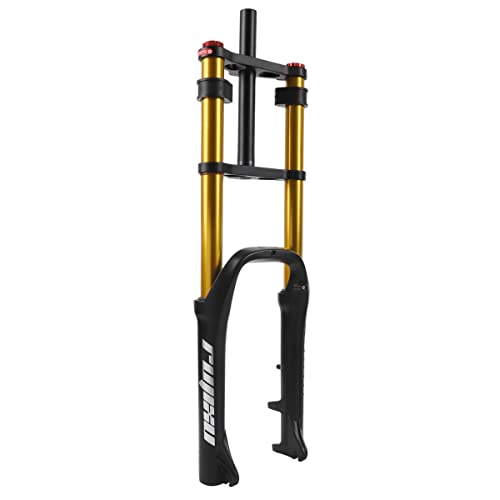
The RUJIXU fat bike fork is designed for 20-inch wheels with a 4.0″ tire, featuring 140 mm of travel and a 9×135 mm QR axle. It employs a double shoulder disc brake front fork design and offers damping adjustment to suit different terrains. The steer tube is 1-1/8″ (threadless) with a 270 mm length, and the fork includes a disc brake mounting area. Compatible with many 26.0 or 28.6 mm headsets, this fork emphasizes versatile fit and straightforward setup for riders targeting snow, beach and mixed-terrain adventures.
BUCKLOS 26-Inch Fat Tire Suspension Fork

The 26-inch version from BUCKLOS expands fat tire performance to larger wheel setups. It features a 180 mm travel tube, 135 mm spacing and a 9 mm QR axle for quick wheel changes. The fork weighs roughly 3960 g, which remains lighter than many oil-spring forks by about 1.8 pounds, aiding maneuverability and acceleration on snow and beach surfaces. Its crown lockout and double shoulder design provide rigidity and ride stability, with disc brake compatibility. As with other BUCKLOS forks, verify your frame’s compatibility with crown lockout, QR width and brake type before ordering.
Buying Guide
Compatibility And Sizing
Start by matching wheel size (20″ vs 26″), tire width (commonly 4.0″) and axle spacing (135 mm standard with 9 mm QR). Check steer tube type: threadless 1-1/8″ is common for modern forks, while threaded systems require different headsets. Crown lockout assists on-the-fly firmness, while disc-brake mounting compatibility ensures braking performance with your frame. Inspect whether your frame and headset can accommodate the crown height, steerer length and brake caliper position.
Travel, Damping, And Lockout
Travel (130–180 mm in these options) determines ride quality over rough terrain. Air suspensions offer tunable air pressure for weight and terrain, while oil-spring units emphasize consistent support. Lockout (manual or crown) lets you firm up the fork for efficient climbs or flat sections. Damping adjustments, when present, tailor how the fork responds to bumps. Consider how often you ride on snow or sand; higher travel helps absorb sharp impacts, but adds weight and complexity.
Weight, Materials, And Build Quality
Weight affects acceleration and handling, particularly on soft surfaces. Aluminum or alloy bodies preserve stiffness while reducing weight. Heavier options may feel steadier on technical terrain but can tax pedaling efficiency. Compare weights closely with travel and overall fork length to avoid overloading the front end or harming balance on large-fat-tire setups.
Brakes And Mounting
Most fat-tire forks in this group support disc brakes, but check the brake type (hydraulic vs mechanical) and mounting standards. Some forks specify a 74 mm disc brake standard; others may require different mounts or adapters. Ensure caliper compatibility with your rotor size and that the brake hose/line routing will fit your frame geometry without interference with wheel or tire clearance.
Installation And Compatibility Checks
Before purchasing, measure your frame’s head tube length, crown race height, and fork clearance. Confirm the steerer tube length, end caps and crown race are compatible with your headset. If you are swapping from a rigid fork, prepare for minor alignment work, including headset preload and brake alignment. For air-sprung forks, set the correct air pressure after installation and recheck seals for leaks post-assembly.
Cost, Warranty, And Support
Prices vary with wheel size, travel and build materials. While evaluating value, consider warranty terms and the vendor’s customer support responsiveness. A robust warranty and accessible support can help with installation questions and potential seal replacements over time. Review return policies and ensure the seller provides accurate product specifications to prevent incompatibility surprises after order placement.