Electric fat tire bikes pair rugged traction with motorized assistance, delivering confidence on city streets and rough trails alike. The following five models focus on fat-tire versatility, stability, and practical features for adult riders. Each option blends strong power, long-range batteries, and thoughtful design to handle varying terrains. Use the quick-spec table below to compare core capabilities at a glance, then explore deeper in the product sections that follow.
Summary table highlights core specs for quick comparison. The data reflect listed motor power, battery capacity, range in common modes, and tire sizing to help identify the best fit for urban commuting, gentle off-roading, or all-terrain adventures.
| Product | Brand | Motor / Torque | Battery | Range (Approx.) | Tire Size |
|---|---|---|---|---|---|
| NARRAK Fat Tire Trike | NARRAK | 750W (up to 1350W peak) | 48V 13Ah | Up to ~50 miles (PAS) | 20″ x 4.0″ |
| CroSight Fat Tire Tricycle | CroSight | 650W (up to 1200W peak) | 48V | Extended use across terrains | 20″ x 4.0″ |
| TST 1500W Fat Tire E-Bike | TS TST GRP LLC | 1500W peak | 48V 15Ah | Up to ~60 miles | 20″ x 4.0″ |
| Meetone Breeze 3-Wheel Trike | Meetone | 1000W | 48V | Up to ~100 miles | 20″ x 4.0″ |
| INVANTI 20-In Fat Tire E-Bike | INVANTI | 1000W peak | 48V 10.4Ah | Up to ~45 miles assist | 20″ x 3.0″ |
NARRAK Fat Tire Trike 750W

The Narrak Electric Tricycle for Adults combines a robust 750W motor with a peak output reaching 1350W, paired with a rear central hub motor and a differential system. This design enables different speeds for the rear wheels, improving maneuverability and stability through turns and on uneven terrain. The fat tires contribute to confident handling on a variety of surfaces, while the three-wheel configuration offers a stable ride for riders who value balance from the outset.
Battery life and safety are prioritized with a UL Certified 48V 13Ah pack, delivering up to about 50 miles in pedal-assist mode. The trike supports multiple riding modes, including pedal-assist, walk mode, and full-electric, allowing riders to choose the level of assistance needed for different trips. An onboard LCD M5 display provides essential data—speed, distance, and battery status—so riders can stay aware and in control throughout the journey.
NARRAK Fat Tire Trike 750W (Variant)

Note: This product mirrors the Narrak trike family with the same 750W motor and differential rear-wheel setup, offering consistent power delivery and stability. It emphasizes the same safety credentials, battery range, and riding modes, making it a strong option for riders who want a proven fat-tire trike for daily commuting and recreational use.
CroSight Fat Tire Electric Tricycle

The CroSight Fat Tire Electric Tricycle is built for versatile environments, featuring 3 modes—electric, pedal assist, and manual—and a sturdy 7-speed gearing system. Its 20×4″ anti-puncture tires and a durable frame, combining stainless steel and aluminum alloy, provide stability across varied terrains. The tricycle ships with safety-focused design considerations, including a reliable braking system suitable for quick stops in mixed conditions. A foldable frame adds convenience for storage and travel, particularly for commuters with limited space.
Safety is reinforced with UL certification and a comprehensive protection system, ensuring reliability during extended use. The front and rear geometry is designed to minimize flex under load, while the rear differential helps manage traction during turns, offering a confident ride on slopes, sidewalks, or rough roads.
Meetone Breeze Folding Electric Tricycle

The Meetone Breeze is a folding, three-wheel electric trike that pushes power with a 1000W motor, delivering up to 20 mph and an impressive claimed range of about 100 miles. It features a rear differential and reverse gear to assist maneuvering in tight spaces and when backing out of parking spots. The UL certification signals adherence to safety standards, while the 3-wheel layout and wide fat tires contribute to stability on uneven surfaces or light off-road conditions.
Payload handling is a standout, with a stated load capacity up to 450 lbs, making the Breeze suitable for a broad range of riders and cargo. The folding design supports easy storage in vehicles or apartments, and the combination of a fat-tire footprint, reliable braking, and comfortable seating makes it a suitable option for long neighborhood rides or errands across urban landscapes.
INVANTI Fat Tire E-Bike
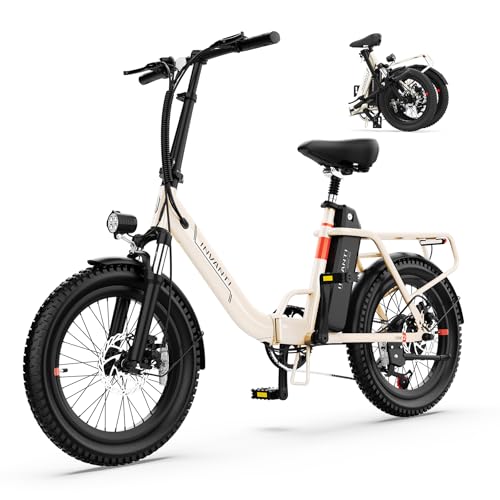
The INVANTI electric bike emphasizes a balance of performance and comfort with a 1000W peak motor and a top speed range around 20-25 mph. Its fat tires (20″ x 3.0″) provide confident grip across varied surfaces, from pavement to light trails. The 48V 10.4Ah removable battery can deliver roughly 25 miles in full electric mode or up to 45 miles in pedal-assist. Front suspension and rear rack add ride stability and utility for commuting or light hauling, while a 7-speed drivetrain supports adapting to hills and different terrains.
Riders benefit from a dual-suspension approach that smooths bumps and keeps the ride comfortable on imperfect roads. The bike also offers a practical balance of weight capacity, range, and maneuverability for riders seeking a versatile fat-tire option for daily travel or weekend adventures.
Buying Guide
Choosing the right fat-tire electric bike or trike involves weighing motor power, range, tires, frame geometry, and intended use. Below are essential considerations to help compare options and select a model that matches riding goals and terrain needs.
Motor Power and Support Matching
Look at continuous power versus peak output. Higher peak power can aid acceleration on steep grades or when carrying cargo, but sustained power matters for long rides. Fat-tire designs often pair a mid-range motor with a larger battery to balance performance and range. If you expect frequent hills, prioritize models with higher peak capability and a robust battery that supports longer pedal-assist sessions.
Tire Size, Traction, and Handling
19–21 inch approximations are common for fat tires, with width around 3–4 inches. Wider tires improve stability and grip on loose surfaces, but can add rolling resistance on pavement. Consider whether you need 3-wheel stability (trikes) or 2-wheel agility with a strong stance. The presence of a rear differential or torque management system can improve traction during turns on uneven surfaces.
Battery Capacity, Range, and Charging Convenience
Battery capacity affects range. Removable batteries simplify charging indoors and allow for extra packs on longer trips. Note the voltage (48V in these models) and amp-hour rating (Ah) to estimate range under pedal-assisted versus full-electric modes. UL certification or equivalent safety standards indicate adherence to rigorous safety criteria during charging and operation.
Frame, Comfort, and Ergonomics
Step-through designs and padded or adjustable saddles increase rider comfort, particularly for longer rides. Suspension—front, rear, or both—helps absorb shocks, improving control on rough surfaces. For three-wheel trikes, stability is a key benefit, but ensure the frame geometry supports easy mounting, dismounting, and safe braking under load.
Safety Features and Practical Extras
Disc or hydraulic brakes, reliable lighting, reflectors, and horn or bell contribute to visible, safer riding. A built-in LCD display, ride modes, and a user-friendly interface help monitor speed, battery status, and distance. Additional features such as reverse gear, foldability, rear racks, or baskets can enhance practicality for errands or commuting.
Portability, Storage, and Maintenance
Folding frames and removable batteries simplify storage in apartments or small garages. Consider service networks, availability of spare parts, and warranty coverage. Regular maintenance of brakes, tires, and battery health extends the life of fat-tire e-bikes and trikes, ensuring dependable performance across seasons and terrains.
Value, Range, and Use-Case Fit
Match your primary use case—urban commuting, light off-road, or long-range weekend rides—with features that support that goal. If all-terrain capability matters, prioritize models with sturdy frames, larger battery capacities, and tires designed for loose surfaces. For daily commuting, ease of mounting, foldability, and reliable safety features may take precedence.
Across these five models, riders can weigh the balance of motor power, battery life, tire footprint, and frame design against personal terrain and riding style. Whether seeking a stable three-wheel platform for beginner riders or a capable fat-tire e-bike for mixed surfaces, the options reviewed here provide a spectrum of choices designed to deliver confident, adaptable performance in American neighborhoods and beyond.