This guide highlights five top wheel-motor kits that convert a standard bicycle into an electric ride. Each product features a 48V system or higher, with wheel sizes spanning 20″ to 29″. You’ll learn how these kits perform, what bikes they fit, and installation considerations. By comparing motor power, wheel compatibility, and controller options, you can pick a kit that matches your riding style—whether you’re commuting, tackling hills, or seeking light off-road capability.
| Product | Brand | Wheel Size | Power | Type |
|---|---|---|---|---|
| AW 26-Inch Front Wheel Conversion Kit | AW | 26″ | 1000W | Front Wheel |
| LTIGOAW 26-Inch Rear Wheel Kit | LTIGOAW | 26″ | 1000W | Rear Wheel |
| DDYOOK 28″/29″ Rear Wheel Kit | DDYOOK | 28″/29″ | 1000W | Rear Wheel |
| LOYALHEARTDY 20-Inch Front Hub Kit | LOYALHEARTDY | 20″ | 1000W | Front Wheel |
| PEXMOR 26-Inch Front Wheel 1200W Kit | Bonnlo / PEXMOR | 26″ | 1200W | Front Wheel |
AW 26-Inch Front Wheel Conversion Kit
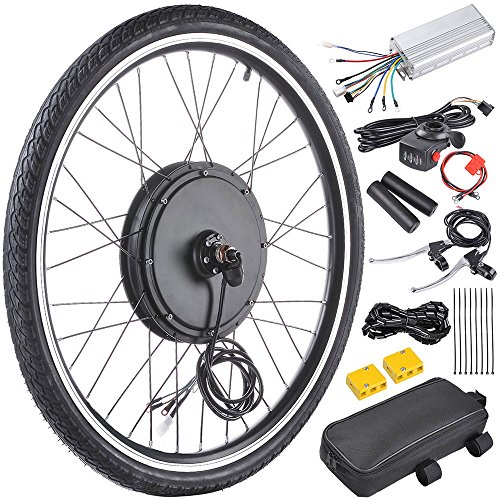
The AW front wheel kit uses a 48V 1000W brushless, gearless hub motor to deliver strong throttle response and reliable acceleration on a 26″ bicycle. It supports a top speed that suits city riding and light trails, with a compact, simple drive system designed for straightforward installation. The kit’s design emphasizes stability and compatibility with common braking systems, including both disc and V-brakes. A thumb throttle plus battery-status indicators helps riders manage power on the go.
- Motor: 48V 1000W brushless, gearless hub
- Wheel size: 26″
- Brake compatibility: Disc and V-brake ready
- Control: Thumb throttle with battery indicators
- Frame fit: 26″ bikes with standard dropout spacing
Installation notes indicate broad compatibility with many 26″ frames and front dropout spacing around 3 15/16″. The kit aims for safe, predictable performance, making it suitable for daily commuting or light recreational rides when paired with appropriate braking and a compatible battery setup.
LTIGOAW 26-Inch Rear Wheel Kit

The LTIGOAW rear-wheel kit equips a 48V 1000W hub motor with a focus on speed and climbing ability, capable of reaching up to 53 km/h (about 33 mph) depending on rider weight and terrain. The setup supports a maximum rider load around 120 kg and emphasizes a smooth power delivery with a minimal drivetrain footprint—ideal for converting a regular bike into a capable commuter or urban explorer. It also integrates with common braking options, including disc and V-brakes.
- Motor: 48V 1000W rear hub
- Top speed: up to 53 km/h
- Load capacity: ~120 kg
- Brakes: Compatible with disc and V-brakes
- Frame fit: Standard 26″ bikes with compatible dropout spacing
Designed for straightforward installation, this kit prioritizes stability and a balanced ride with rear-wheel propulsion, making it a strong choice for riders who want more traction and control on hills and longer commutes.
DDYOOK 28″/29″ Rear Wheel Kit

DDYOOK’s 28″/29″ rear-wheel kit brings a robust 48V 1000W hub motor into a larger wheel format, supporting higher speeds on roads and light trails. It emphasizes user-friendly operation with a three-mode controller and a display that shows speed, distance, and battery status. A cruise function helps maintain steady speeds on longer rides, while the 5-speed adjustment allows riders to tailor performance to incline and wind conditions.
- Motor: 48V 1000W rear hub
- Speed range: 45–55 km/h (approximately 28–34 mph)
- Controller: 3 riding modes with LCD display
- Cruise function for steady speeds
- Fit: 28″/29″ wheel bikes with compatible dropout spacing
Great for riders who want higher-speed capability with adjustable power profiles, and it remains compatible with standard braking systems while offering straightforward assembly on compatible frames.
LOYALHEARTDY 20-Inch Front Hub Kit

The LOYALHEARTDY 20″ front hub kit brings a compact 48V 1000W motor to smaller wheel bikes, enabling efficient city commuting and recreational rides on compact frames. Front-hub motors typically offer easy installation and predictable steering dynamics, which can be appealing for riders who prefer simpler projects. This kit emphasizes a balance between power and control, with compatibility for disc or V brakes and straightforward throttle or pedal-assist configurations as supported by the controller.
- Motor: 48V 1000W front hub
- Wheel size: 20″
- Brake compatibility: Disc and V-brake ready
- Controller features: Compatible with throttle/assist options
- Frame fit: 20″ bikes with standard dropout spacing
Front-hub installations like this are often favored by riders who want a less invasive upgrade and quick installation, though rear-wheel kits can offer improved traction on hills and uneven terrain.
PEXMOR 26-Inch Front Wheel 1200W Kit

PEXMOR’s 26-Inch front wheel kit delivers a higher-powered 1200W brushless hub motor, paired with a sophisticated controller that supports three modes (PAS, throttle, and manual). The kit emphasizes silent operation and efficient performance at highway speeds for a front-wheel setup. It’s designed to fit most 26″ bikes with a standard 100mm/3.93″ dropout spacing, and it includes a PAS/twist-throttle option with battery indicator to help riders manage assist and energy use.
- Motor: 48V 1200W brushless hub
- Wheel size: 26″
- Controller: 3-mode (PAS, throttle, manual) with LCD indicators
- Dropout spacing: 100mm/3.93″
- Weight capacity and braking compatibility: fits standard brakes
Front-wheel, high-power configurations like this one are ideal for riders who want brisk acceleration and responsive throttle control, especially on longer commutes or hilly terrain, while maintaining compatibility with common braking systems and display features.
Buying Guide
- Wheel compatibility and frame fit: Check that the wheel size (20″, 26″, 28″/29″) matches your bike’s frame and dropout spacing. Front-wheel kits tend to be easier to install and preserve steering feel, while rear-wheel kits often provide better traction uphill.
- Motor power and top speed: Higher wattage (1000W–1200W) generally yields stronger acceleration and better hill-climbing capability. Consider your local terrain, desired top speed, and the legal limits for electric assistance in your area.
- Controller and display: Look for a controller that supports pedal-assist (PAS) and throttle modes, plus a readable display that shows speed, distance, and battery level. Sine-wave controllers can be quieter and smoother than older designs.
- Braking compatibility: Ensure the kit is compatible with your braking system (disc or V-brake). Some kits specify universal compatibility, but you may need adapters or new rotors depending on your setup.
- Battery and range considerations: Most kits include or assume a 48V system with varying amp-hour ratings. Battery capacity affects range; pairing the kit with a suitable battery that fits your bike’s geometry is crucial for balanced weight distribution and handling.
- Installation effort: Front-wheel kits are typically simpler to install, while rear-wheel kits require more alignment and may involve chain or derailleur considerations. Check included mounting hardware and any required tools.
- Legal and safety considerations: Regulations for e-bike speed, power, and usage vary by state and country. Verify local rules and ensure compliance with speed limits and insurance requirements before upgrading.
- Warranty and support: Choose kits from brands with clear warranty terms and accessible customer support. This matters for ongoing maintenance, compatibility updates, and parts availability.
- Overall value and weight: Higher-power kits can add significant weight to the bike. Compare total system weight, ease of installation, and anticipated maintenance when evaluating cost versus performance.