Riders looking to convert a regular bicycle into an electric bike face choices between mid-drive kits and hub motor kits. The following five kits represent top options for different budgets, frame types, and riding goals. This guide compares power, compatibility, and ease of installation to help you pick the right kit for urban commuting, trail riding, or heavy-duty hauling.
| Product | Brand | Type | Wheel/Bottom-Bracket | Power |
|---|---|---|---|---|
| BAFANG Mid Drive Kit 750W/1000W | BAFANG | Mid-Drive | 68-73mm BB, 33.5-36mm ID | 500W/750W/1000W |
| VEVOR 1000W Front Wheel Hub Kit | VEVOR | Front Hub | 26″ | 1000W |
| PEXMOR Front Wheel Conversion Kit 1200W | PEXMOR | Front Hub | 26″ | 1200W |
| MOCHAG 1500W Rear Hub Kit | MOCHAG | Rear Hub | 26″ | 1500W |
| AW 1000W Front Wheel Kit | AW | Front Hub | 26″ | 1000W |
BAFANG Mid Drive Kit 750W/1000W

The BAFANG BBS02B/BBS-HD mid-drive kit integrates with bottom brackets from 68 to 73 mm and supports multiple power levels (500W, 750W, 1000W). It delivers high torque—up to about 100–160 N.m—facilitating steep climbs and varied terrain. The kit typically includes brake levers, a chainring, a throttle, a speed sensor, and mounting hardware, with optional battery and LCD display. It is designed to work on mountain bikes, city bikes, and other disc-brake-compatible, chain-driven frames. Installers can tailor output using multiple riding modes and gear selection to suit their terrain and pace.
- Motor: BBS02B/BBS-HD mid-drive (500W/750W/1000W)
- Compatibility: 68–73 mm BB, 33.5–36 mm ID
- Torque: 100–160 N.m
- Top speed: Up to 45 km/h
- Includes: brake lever, throttle, sensor options (battery/display optional)
VEVOR 1000W Front Wheel Hub Kit

The VEVOR front-wheel kit pairs a 1000W hub motor with a 26-inch wheel and a high-definition LCD display to monitor speed, distance, PAS level, and battery status. The motor is copper-core, designed for heat and cold resistance, and runs with low noise (about 65 dB). This setup is ideal for riders seeking a straightforward, wheel-based conversion that preserves the bike’s drivetrain and offers a smooth, quiet ride on urban streets or light trails. The kit emphasizes reliability and real-time ride data for safer daily commutes.
- Motor: 1000W hub motor
- Speed: 420 rpm; Torque ≥50 N.m
- Climbing: 0°–12°
- Noise: ~65 dB
- Wheel: 26-inch
PEXMOR Front Wheel Conversion Kit 1200W

The PEXMOR 1200W front-wheel kit provides a robust 48V motor with integrated PAS, LCD display, and a three-mode controller. Design emphasizes efficient performance with a quiet, sine-wave controller that helps extend motor life. It is compatible with 26-inch frames and 100 mm/3.93-inch front dropout spacing. The kit supports throttle and pedal-assist modes, enabling riders to customize effort for daily commutes or weekend rides while maintaining a lightweight, simple installation path compared with mid-drive setups.
- Motor: 1200W brushless hub
- Voltage: 48V
- Controller: 3-mode (including PAS)
- Wheel: 26-inch front hub
- Displays: LCD included
MOCHAG 1500W Rear Hub Kit

The MOCHAG 1500W rear-hub kit delivers high torque and efficient performance with a brushed brushless gearless design. The kit emphasizes a long lifespan through durable metallurgy and corrosion resistance, including rust-resistant components. It features a PAS system and an LCD display for ride data such as speed and battery status, enabling riders to optimize power use on commutes or adventures. The 26-inch rear wheel makes it suitable for bikes built for cargo, fitness, or daily travel with enhanced acceleration and climbing ability.
- Motor: 1500W brushless gearless hub
- Voltage: 48V
- Display: LCD (speed, battery, mode)
- Pedal Assist System (PAS)
- Wheel: 26-inch rear hub
AW 1000W Front Wheel Kit
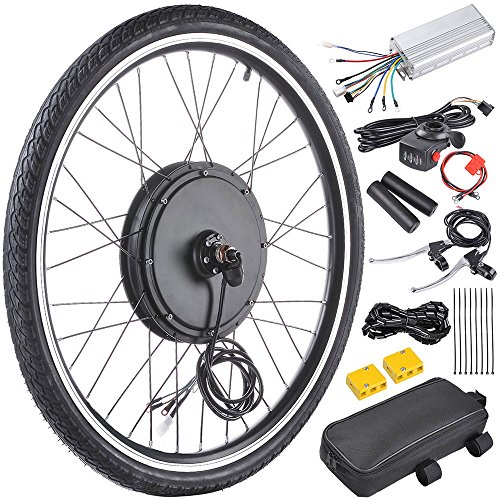
The AW 1000W front-wheel kit is a robust front-hub solution featuring a 48V 1000W motor suitable for 26-inch bikes. The kit uses a gearless brushless design for quiet operation and includes a throttle with battery indicators, along with compatibility for both disc and V-brakes. It supports simple installation and provides reliable performance for riders who want a straightforward drivetrain-free conversion that preserves chainline while delivering steady acceleration and comfortable cruising speeds on urban routes.
- Motor: 1000W front hub
- Voltage: 48V
- Wheel: 26-inch front hub
- Throttle indicators
- Brake compatibility: Disc or V-brake
Buying Guide
Motor Type: Mid-Drive vs Hub
Mid-drive kits, like the BAFANG option, leverage pedal power and gear ratios to maximize torque on steep climbs. They tend to feel more natural on hilly terrain and preserve wheel integrity on rough trails, but they can be more complex to install and maintain. Hub motors, both front and rear, offer simpler installation and quieter operation at cruising speeds. Front-hub kits are typically easiest to install, while rear-hub kits can provide good traction for payloads. Consider your typical terrain, bike frame, and maintenance willingness when choosing.
For urban riders with mixed surfaces, a mid-drive kit balances performance and frame compatibility, whereas a front-hub kit offers a fast, simpler upgrade for flat-city riding. Ensure your frame and braking system are compatible with the chosen motor type.
Wheel Size, Frame Compatibility, and Brakes
Check wheel diameter and dropout spacing, as well as bottom-bracket compatibility for mid-drive kits. Hub motors require compatible wheel rims and meeting dropout widths (often 135–150 mm for rear hubs and standard front dropouts for front hubs). Confirm brake compatibility—disc brakes are commonly needed for high-power systems, but some builds can work with V-brakes if the hub kit supports it. If your bike uses a non-standard frame size or unusual dropout spacing, verify compatibility with the kit’s specs before purchasing.
Power, Torque, Range, and Efficiency
Power figures (wattage) influence acceleration and top speed, but range depends heavily on battery capacity (Ah) and motor efficiency. A higher-watt kit may demand more energy, reducing range if the battery isn’t proportionally sized. For mixed-use riding, a 750–1000W mid-drive or 1000W hub kit is typically adequate, while 1200–1500W kits suit aggressive riding or heavy loads. Consider real-world range expectations based on rider weight, terrain, and assist level, and plan for a matching battery upgrade if needed.
Controls, Display, and Ride Feedback
Look for kits with an intuitive display showing current speed, distance, battery level, and PAS level. LCD displays with multiple assist levels help manage energy use and tailor the ride feel. Throttle control adds immediate power, which is convenient for starting from a stop or navigating obstacles. Some kits offer optional LCDs or remotes; ensure compatibility with your preferred control layout and mounting position on your handlebars.
Installation Ease and Support
Pre-installed options and accessory inclusions (brake levers, sensors, throttle, display, and battery options) simplify installation. Mid-drive kits generally require more mechanical alignment but offer a more integrated feel. Hub kits may come with more built-in components, enabling quicker on-bike upgrades. Availability of installation manuals, customer support, and warranty terms can significantly affect your long-term satisfaction, especially for first-time builders.
Safety, Legal Considerations, and Maintenance
Electric-bike regulations vary by region, including speed and power limits on public roads. In the U.S., many areas restrict e-bikes to certain wattage or top speeds, so plan for compliance. Regular maintenance of brake systems, motor mounting hardware, and electrical connectors is essential, particularly on mid-drive systems where torque is transferred through the drivetrain. Choose a kit with robust hardware and accessible service channels to reduce downtime.
Cost-Performance and Long-Term Value
High-power kits generally command higher upfront costs but can offer better long-term performance for demanding users. Balance the price against expected usage, maintenance needs, and the availability of replacement parts. If you expect to upgrade multiple components over time, consider kits with modular options, easy battery upgrades, and broad compatibility with common bike sizes and components.