Choosing the right charger is essential for keeping an e-bike battery healthy and ready to ride. With varying voltages, connector sizes, and safety features, a charger that matches your battery’s specs can reduce charging time while protecting cells from damage. This guide highlights five well-regarded models that cover common 36V, 48V, and 54.6V systems, focusing on safety certifications, versatility, and reliability for everyday riders.
The table below provides a quick snapshot of the selected chargers, making it easier to compare key specs at a glance before diving into detailed product sections.
| Product | Brand | Voltage Range | Key Feature |
|---|---|---|---|
| EVAPLUS 54.6V Fast Charger | EVAPLUS | 54.6V | UL Certified, 1.5A output, dual DC connector sizes |
| Brokeir 54.6V 2A Fast Charger | Brokeir | 54.6V | UL Certified, 5 universal connectors, auto protection |
| Suptopone 54.6V 2A Universal Charger | Suptopone | 54.6V | 5-in-1 connectors, 100–240V input, smart charging |
| HEXWATT 42V 2A Charger | HEXWATT | 42V | 6 connectors, aluminum housing, safety protections |
| Jucuwe 42V 2A DC Charger | Jucuwe | 42V | 5 connectors, charging indicators, wide input |
EVAPLUS 54.6V Fast Charger For 48V Bikes

The EVAPLUS 54.6V charger is designed for 48V electric bikes and scooters, offering a 54.6V output at up to 1.5A. Its wide input range of 120V–240V makes it suitable for home use and international travel. UL certification indicates adherence to recognized safety standards, while built-in protections guard against overvoltage, overcurrent, and short circuits. The DC output uses a common 5.5×2.5mm or 2.1mm connector, so you should verify your battery’s port before purchasing. This model emphasizes speed without sacrificing safety, helping riders reach full capacity faster than standard chargers.
For compatibility and safety, ensure your battery is a 48V Li-ion pack (or similar) that accepts a 54.6V charging profile. This charger is not intended for lead-acid packs. The compact design makes it a practical option for riders who want a dedicated, fast-charging solution for city commutes or weekend rides. If the item arrives damaged or nonfunctional, contact the seller for a replacement or refund, per the listing terms. Overall, it blends standard consumer protections with straightforward, effective charging.
Brokeir 54.6V 2A Fast Charger

The Brokeir charger delivers a 54.6V output at 2A, positioned as a fast-charging option for 48V e-bike batteries. It is UL certified to meet safety standards and accepts 100–240V input, making it versatile for different regions. A standout feature is its universal connector setup, including DC 5.5-2.1/2.5mm, a 12mm aviation plug, and a Cannon-style option, providing broad compatibility across many models. It’s built to stop charging automatically when the battery is full, helping protect battery life while preventing overcharge damage. The device is not designed for lead-acid packs.
Users should verify their battery’s port size and compatibility with the listed connectors before purchase. The charger also includes protection against overvoltage, overcurrent, short circuits, over temperature, and reverse connection, plus a fuse for added safety. This model suits riders who own multiple e-bikes or scooters with different connector standards, offering flexibility alongside solid safety features. As with any high-current charger, ensure adequate ventilation during charging to maintain performance and safety.
Suptopone 54.6V 2A Universal Charger

The Suptopone charger offers a universal 54.6V, 2A output with five connectors, including a 5.5×2.5mm DC plug and a variety of other common plug sizes. It is designed for 100–240V input, enabling global compatibility for home charging or travel. The device emphasizes smart charging and features a charging indicator that shifts from red to green when the battery reaches full capacity, simplifying user monitoring. It is recommended for Li-ion batteries and not suitable for lead-acid packs. The 5-connector approach makes it a flexible choice for riders who own multiple e-bikes or scooters with different connector types.
Safety features include overvoltage, overcurrent, overheating protections, short-circuit protection, and fuse protection. The build aims for reliable performance with a focus on user-friendly operation and battery health maintenance through proper shut-off behavior. Users should confirm their battery’s voltage and connector compatibility to maximize performance. When choosing among options, consider whether a 5-plug setup aligns with your current bikes’ charging ports and whether you value a straightforward LED status indicator for quick checks.
HEXWATT 42V 2A Charger For 36V Batteries
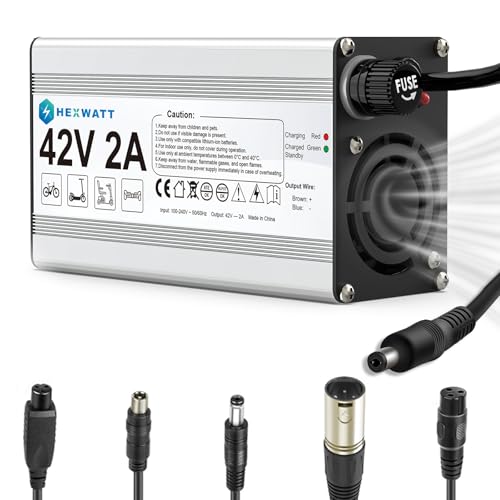
The HEXWATT 42V 2A charger targets 36V Li-ion packs common on smaller e-bikes and scooters. It emphasizes safety and efficiency, using an aluminum housing, a silent cooling fan, and high-quality components. The charger relies on flyback technology with a replaceable fuse, delivering a safe and stable charging experience suitable for long-term use. Smart energy tuning via PWM control reduces energy waste while maintaining fast charging for appropriate packs. It also includes comprehensive protections against over-voltage, over-current, overheating, and short circuits, with automatic shut-off to protect both the battery and charger during operation.
Six interchangeable connectors expand compatibility beyond a single model, which benefits riders with multiple devices, such as different 36V bikes or scooters. As with other high-voltage devices, ensure the battery’s voltage and connector size match the charger’s outputs before use. When used correctly, this charger offers a strong balance of safety, speed, and adaptability for 36V systems, making it a practical tool for urban riders, commuters, and hobbyists alike.
Jucuwe 42V 2A DC Charger For 36V Ebikes
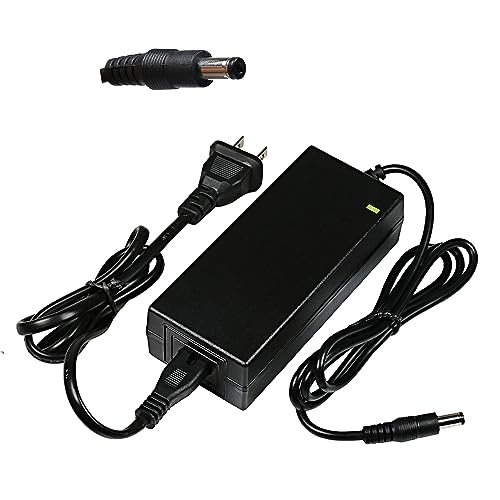
The Jucuwe charger is a 42V, 2A DC adapter intended for 36V lithium battery packs. It supports 100–240VAC input and uses a 5.5×2.1/2.5mm connector diameter (with variations noted), allowing compatibility with several 36V bikes and scooters. The design includes a two-color charging indicator—red during charging and green when full—providing a quick visual cue for riders. It’s important to verify the connector size and voltage compatibility with your battery before plugging in, as incorrect pairing can affect charging efficiency and battery health. This model suits riders seeking a versatile, affordable option for common 36V systems.
Note that the Jucuwe charger is not suitable for batteries below 36V nominal or for significantly different chemistries without confirmation from the manufacturer. The charger’s simple safety features (basic overvoltage and overcurrent protection) are designed for standard Li-ion packs, making it a practical entry-level option for everyday use. If you own multiple 36V devices, this model’s connector options and clear charging indicator can simplify managing several packs with a single charger.
Buying Guide
Key considerations help you choose a charger that matches your e-bike’s battery and riding needs without compromising safety or battery life.
- Battery compatibility: Confirm your pack’s nominal voltage (36V, 48V, or 54.6V) and ensure the charger’s output voltage aligns with it. Mismatches can reduce charging efficiency or damage cells. Some models advertise 54.6V as a maximum, which is suitable for many 48V systems but verify your pack’s specifications.
- Connector type and size: Compatibility with DC connectors is critical. Chargers in this guide feature common sizes like 5.5×2.5mm and 2.1mm, plus multiple adapters on 5-in-1 or 7-in-1 models. Before purchasing, measure your bike’s charging port and confirm the included connectors match.
- Current rating and charging speed: Chargers range from about 1.5A to 2A. Higher amperage reduces charging time but may produce more heat; ensure your battery can safely accept the current without stressing cells or the BMS.
- Safety features: Look for overvoltage (OVP), overcurrent (OCP), short-circuit protection, and over-temperature safeguards, plus a fuse where available. UL or equivalent certifications indicate adherence to recognized safety standards.
- Input voltage range: International travelers benefit from chargers that accept 100–240V input. Some models; however, are tied to a narrow voltage window, so check your typical usage scenario if you travel or move between regions.
- Build quality and cooling: Chargers with aluminum housings and active cooling tend to dissipate heat more effectively, supporting long-term reliability. Quiet operation is also a plus for home charging.
- Indication and user experience: A clear LED system (red/green) helps gauge charging progress. Some models use multi-color indicators or status displays to simplify monitoring.
- Lead-acid vs. Li-ion compatibility: The majority of these chargers are designed for Li-ion/Li-poly packs. They are not suitable for lead-acid batteries, which require different charging profiles and hardware.
- Warranty and support: Check the manufacturer’s warranty terms and return options. A responsive seller or brand can be valuable if you encounter compatibility issues or defective units.
- Practical use case: If you own multiple e-bikes or scooters, a universal or multi-connector charger can reduce clutter and simplify charging across devices. Prioritize models with a broad connector set if you regularly switch between bikes.
In summary, pick a charger that clearly matches your battery’s voltage and connector, includes robust safety protections, and offers reliable performance within your typical charging routine. A well-chosen charger protects battery health, shortens downtime between rides, and reduces the risk of hazardous charging conditions. For most daily riders, a 2A charger with universal connectors and UL safety certification provides a strong balance of speed, safety, and versatility.