Choosing the right dirt bike tire pressure gauge helps riders maintain optimal traction, tire wear, and handling on rugged trails. For off-road use, gauges with low PSI ranges, rugged construction, and reliable, battery-free readings are essential. This guide highlights five top picks that balance accuracy, durability, and ease of use. The selections cover both analog and specialized low‑pressure options suitable for dirt bikes, ATVs, and trailers. Use the buying guide below to compare features and decide which gauge fits your riding style and maintenance routine.
| Product | Brand | PSI Range | Type |
|---|---|---|---|
| JACO Elite Low Pressure 15 PSI Gauge | JACO Superior Products | 0-15 | Analog |
| JACO Elite Low Pressure 30 PSI Gauge | JACO Superior Products | 0-30 | Analog |
| Joes Racing Glow Gauge 0-30 PSI | Joes Racing | 0-30 | Analog |
| JACO ElitePro 60 PSI Gauge | JACO Superior Products | 0-60 | Analog |
| JACO ElitePro 100 PSI Gauge | JACO Superior Products | 0-100 | Analog |
JACO Elite Low Pressure 15 PSI Gauge
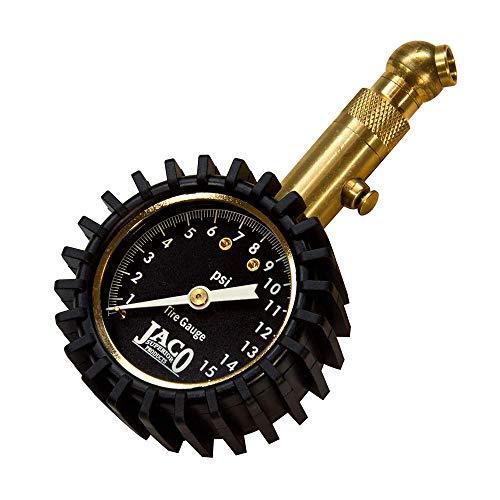
Designed for low tire pressures common on dirt bikes and ATVs, this analog gauge provides quick, battery-free readings with ANSI-calibrated accuracy within ±1.5%. The brass stem is protected by a rugged, shock-resistant guard, enhancing durability in rough terrain. A 360-degree swivel chuck and a long HybridFlex hose enable easy access to the valve from any angle, while a built-in air bleeder helps deflate overinflated tires precisely. The 0-15 PSI range makes it particularly suitable for front and rear dirt bike tires, as well as other low-pressure applications.
This gauge emphasizes reliability over electronics. No batteries are required, and the tool’s compact, robust construction keeps it functional in muddy, dusty environments. For riders who frequently adjust tire pressures on the trail, the combination of accuracy, deflation capability, and maneuverability offers a clear advantage when dialing in grip and ride feel.
JACO Elite Low Pressure 30 PSI Gauge

With a 0-30 PSI range, this gauge covers the broader spectrum of low-pressure tires used on dirt bikes, ATVs, and off-road equipment. It combines ANSI-standard accuracy with a rugged brass build and a shock-resistant guard to handle drops and vibration. The tool includes a built-in air bleeder for quick deflation and a 360-degree swivel chuck that reaches tight or awkward valve stems from any angle. Its design prioritizes long-term usefulness in rough environments while maintaining precise readings without relying on batteries.
Riders benefit from the gauge’s durable mouthpiece and hose assembly, which resists kinking and leakage during rapid pressure changes. The combination of a precise scale and practical deflation capability helps maintain optimal traction on variable terrains, from rocky paths to loose soil. This model is well-suited for frequent field adjustments where a lightweight, reliable gauge is essential.
Joes Racing Glow Gauge 0-30 PSI

This analog gauge focuses on readability and simplicity, featuring a glow-in-the-dark dial for visibility in low light conditions common on early morning or late-night trail runs. Its 0-30 PSI range makes it suitable for dirt bike tires and other low-pressure configurations, with a 2-1/2 inch diameter dial and 1 PSI increments for fine control. The compact, robust construction keeps the tool accurate under vibration and impact, while the straightforward display reduces guesswork during field adjustments.
Ideal for riders who value quick checks without electronics, this gauge delivers dependable mechanical readings that require no batteries. The glow feature helps ensure you can verify pressure quickly in dim environments, while the durable build supports frequent outdoor use. For hobbyists and weekend riders, the Joes Racing gauge offers a practical, low-maintenance option for dirt bike maintenance kits.
JACO ElitePro 60 PSI Gauge
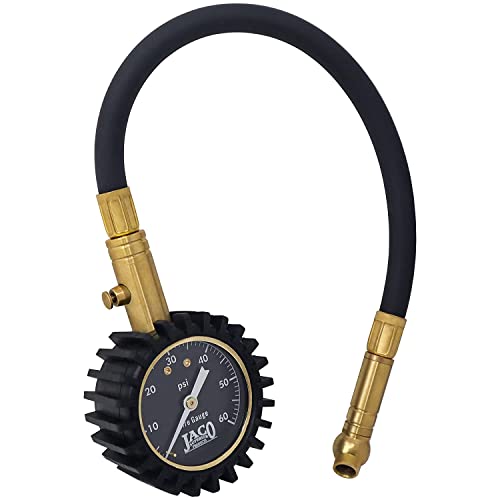
The JACO ElitePro 60 PSI Gauge emphasizes durability and precision across a mid-range PSI. Built from solid brass and protected by a shock-resistant guard, it resists damage from drops and vibrations encountered on rough trails. The gauge includes a built-in air bleeder for rapid deflation and a 360-degree swivel chuck to reach valve stems from difficult angles. With ANSI accuracy standards, it provides dependable readings without relying on batteries, making it a solid choice for riders who prioritize robustness and repeatable performance.
The 60 PSI range covers the common pressure window for many off-road tires when riders experiment with traction on varying terrain. The integrated deflation feature helps fine-tune tire pressure for changing conditions, improving grip on steep descents or sandy sections. This model favors riders who want a rugged, maintenance-friendly gauge that remains accurate over time.
JACO ElitePro 100 PSI Gauge
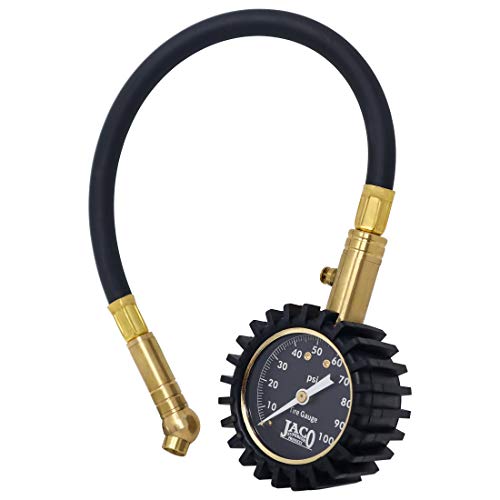
For riders needing a broad range, the JACO ElitePro 100 PSI Gauge combines shop-grade accuracy with rugged construction. The tool uses a full brass-and-steel build shielded by a protective guard and a high-quality HybridFlex hose for strength and flexibility. An air bleeder deflates tires in real time, and the 360-degree swivel chuck enables access from any angle. The gauge maintains ANSI-standard accuracy without batteries, delivering consistent readings for motorcycles, dirt bikes, trucks, and larger tires where higher pressure ranges are necessary.
In practice, the 100 PSI model supports more than off-road bikes, offering versatility for maintenance on trailers, RVs, or multi-vehicle setups. The blend of durability, ease of deflation, and consistent readouts makes this gauge suitable for both routine checks and on-trail adjustments, where precise targeting of tire pressures contributes to handling, braking, and tire wear management.
Buying Guide
Key considerations when selecting a dirt bike tire pressure gauge include PSI range, readout type, and durability. Dirt bikes commonly use low-pressure ranges, but riders may encounter higher pressures on trailers or support vehicles. A gauge that covers 0-30 PSI handles most off-road tires well, while a broader range (such as 0-100 PSI) adds versatility for other vehicles. Analog gauges are battery-free and straightforward, whereas digital gauges offer quick, precise readouts but require battery replacement over time. Choose based on your maintenance style and reliability needs.
Readout type matters in field conditions. Analog gauges with a well-lit dial are quick to read and robust in dusty environments, but digital models provide decimal precision and hold readings until reset. If you prefer electronics, ensure the gauge uses a reliable battery type and includes a clear low-battery indicator. Durability is crucial: look for solid brass or stainless-steel components, a protective guard, and a shock-resistant housing to endure drops and vibrations on loose trails or rocky surfaces.
Valve compatibility and ease of access can save time on the trail. Most gauges support standard Schrader valves; some models include adapters for Presta valves or other valve types. A 360-degree swivel chuck and a flexible hose (10 inches or longer) improve access to awkward stems, especially on dirt bikes with limited clearance. Built-in deflation (bleeder) valves allow you to fine-tune pressure without removing the gauge, a handy feature when chasing precise traction on different surfaces.
Accuracy and calibration are foundational. Look for ANSI or NIST traceability, or explicit calibration within a narrow tolerance (such as ±1.5% or better). Regular recalibration helps maintain reliability across seasons and varied temperatures. If you ride in extreme weather, digital gauges with thermal compensation can offer stability in cold or hot conditions, though this often comes with battery considerations. Balance these factors with your budget and preferred workflow to pick a gauge that best fits your dirt-bike routine.
Portability and maintenance also drive value. Analog gauges tend to be compact, battery-free, and low-maintenance, while digital gauges offer features like programmable units (PSI, Bar, or kPa) and easy readability. Consider hose length and chuck design; a longer hose and a 360-degree swivel chuck reduce the effort needed to attach the gauge to the valve in cramped spaces. Finally, reviews and field tests can reveal real-world durability, battery life, and consistency under dirt and vibration, helping you choose a dependable companion for off-road adventures.