Riding with camera gear requires a bag that blends weather protection, secure mounting, and smart organization. The right bag keeps your camera gear safe from rain, dust, and bumps while staying out of the way during pedaling. This guide highlights five durable options that pair bike-friendly design with camera-ready storage. Each choice emphasizes weatherproofing, modular organization, and secure mounting so riders can shoot on the move without compromising gear safety or ride quality.
Below is a quick at-a-glance look at the chosen products, including brand and stated capacity. Note that some bags prioritize flexible interiors over fixed liter measurements, which can still translate to ample space for a camera body, lenses, and accessories on the go.
| Product | Brand | Capacity |
|---|---|---|
| MOSISO Bike Rack Bag With Camera Inserts | MOSISO | 11-12.6 L |
| Rhinowalk Bike Front Bag Camera Bag | Rhinowalk | Not specified |
| Tookie 8L Rear Carrier Bike Bag | Tookie | 8 L |
| TAAOKA Camera Sling Bag | TAAOKA | Not specified |
| MOSISO Camera Backpack | MOSISO | Not specified |
MOSISO Bike Rack Bag With Camera Inserts

The MOSISO Bike Rack Bag offers a primary 11-liter chamber with expansion to 12.6 liters, sized at 14.57 x 6.1 x 7.87 inches. Its design supports dual use as a rear-rack bag or a dedicated camera bag, aided by two removable modular inserts that create adjustable dividers for cameras, flashes, and lenses. A soft foam layer cushions gear, while waterproof polyester enhances protection against wet conditions. This setup encourages flexible interior layouts for a compact ride with gear within easy reach.
Weather protection extends to a included rain cover, keeping rainwater from soaking the bag’s contents. Four hook-and-loop straps secure the bag to the backseat, reducing movement on rough terrain. The combination of secure mounting, expandable capacity, and customizable dividers makes this option well suited to riders who shoot on urban streets or light trails while maintaining gear safety on the move.
Rhinowalk Bike Front Bag Camera Bag
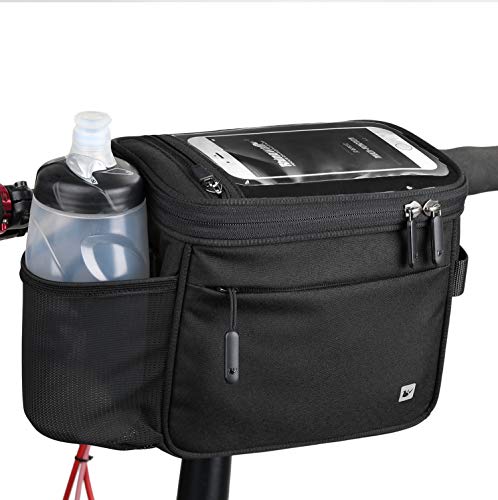
The Rhinowalk bag is built with Twill Fabric and a thermal insulation layer, offering wear resistance and temperature management for casual shoots during varied weather. It doubles as a bike handlebar bag and a shoulder bag, with buckles on the sides for quick attachment to the handlebars. Inside, a large transparent top pouch is designed for phones or maps, while additional net pockets and a water-resistant zipper bag help organize small items and protect them from the elements. Reflective elements on the bag improve visibility during night rides.
Although not labeled with a fixed liter capacity, the bag delivers ample space for essential gear and daily photography needs. The dual-use design supports quick access while cycling, making it a practical option for city riders who want a hands-on approach to shooting without removing gear from the bag. The interface between handlebar mount and shoulder carry also enhances versatility for short shoots and everyday commutes.
Tookie 8L Rear Carrier Bike Bag
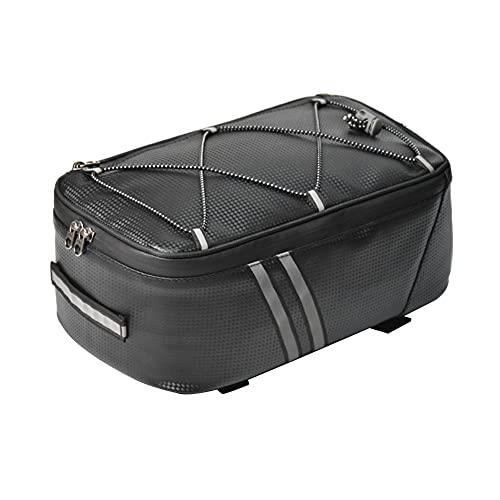
The 8-liter rear carrier bag by Tookie is crafted from abrasion-resistant, water-resistant PU leather and includes a reflective stripe for added nighttime visibility. Its main compartment, plus a dedicated zipper pocket, is designed to carry essential items with room for compact camera gear and accessories. The bag’s rear positioning helps balance the bike’s center of gravity while riding, and a secure mounting design keeps it stable on rough roads. This bag emphasizes practical storage and durability, making it a solid option for riders who want a versatile trunk bag that can also accommodate camera essentials when needed.
Installation is straightforward with multiple attachment points to secure the bag to a rear rack. The durable construction resists wear over long rides, and the reflective detail enhances safety after dark. While primarily a general-use trunk bag, its capacity and stability make it suitable for photographers who need reliable space for camera gear during urban rides and day trips without compromising ride quality.
TAAOKA Camera Sling Bag
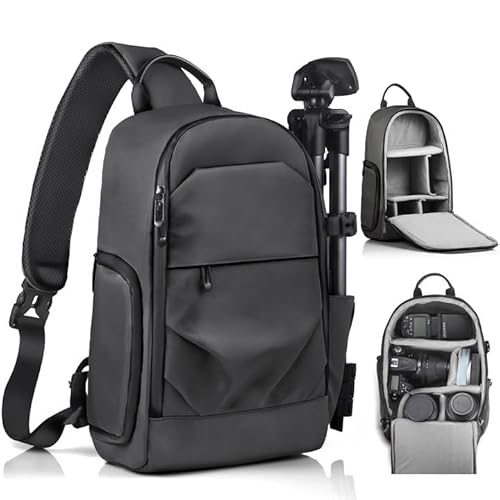
The TAAOKA Camera Sling Bag is designed for photographers who need quick access to gear while on the move. It features premium waterproof nylon with thick inner padding (more than 8mm) to protect a camera and up to three lenses, supported by four padded removable dividers. The interior can be customized by removing dividers to fit different configurations, including a compact mirrorless setup or a DSLR with lenses. The bag’s compact footprint integrates easily with biking activities, and the sling design allows you to swing the bag from your back to the front for rapid changes in composition.
Dimensions at 12.6 x 9.06 x 5.12 inches and a weight of about 0.55 kg keep the bag lightweight enough for daily rides. The sling design supports one-handed access on the go, and a side pocket provides space for small accessories. This model is well-suited for cyclists who prioritize accessibility and modular interior layouts when carrying cameras and lenses on short trips or urban shoots.
MOSISO Camera Backpack

The MOSISO Camera Backpack is a larger, two-compartment solution built for serious gear. It includes padded, removable modular inserts in the upper compartment (roughly 16.54 x 11.42 x 5.5 inches) to tailor space for cameras, flashes, lenses, and drones. A separate laptop compartment accommodates up to 16-inch laptops. Additional pockets on the back provide space for cables, SD cards, and power banks. A tripod or monopod can be carried with a secure external holder, and a back anti-theft pocket helps protect valuables. The front features waterproof PU leather hardshell protection and a soft foam layer for shock absorption.
While primarily a backpack, this MOSISO model can support bike trips when the rider uses the right straps and secure mounting. The combination of modular inserts, weather resistance, and a dedicated tripod solution makes it a strong option for riders who also serve as on-the-go photographers or videographers on longer rides or day trips. The backpack design improves comfort on extended shoots and can double as a versatile carry option beyond biking use.
Buying Guide
- Capacity and interior layout: Choose a bag with adjustable dividers or modular inserts to fit your camera body, lenses, and accessories. Bags like 11-12.6 L provide expansion space, while sling bags favor quick-access organization for smaller kits.
- Protection and weatherproofing: Look for water-resistant materials, rain covers, and padded interiors to protect against rain, splashes, and road shocks. A foam or padded liner reduces impact from vibrations on uneven surfaces.
- Mounting system and stability: Ensure the bag’s mounting method matches your bike setup (rear rack, handlebars, or frame). Four or more secure straps help keep the bag from shifting during rides on rough terrain.
- Accessibility and workflow: Consider how you’ll access gear while riding. Sling bags and front-mounted pouches offer fast, one-handed retrieval, while larger backpacks prioritize capacity over quick access.
- Weight and balance: Heavier bags affect handling. Balance weight distribution by using rear-mounted options for heavier gear and keeping lighter, frequently used items in easy reach.
- Durability and brand reliability: Durable fabrics (PU leather, nylon, ripstop) and reinforced seams extend bag life. Reputable brands offer better warranty coverage and customer support.
- Versatility and multi-use: Some bags double as everyday commutes gear or backpack options, which can maximize value if you alternate between biking and urban shooting.
- Security and safety features: Look for anti-theft pockets, reflective elements, and reliable fasteners. Reflective strips improve visibility for nighttime cycling.
- Size compatibility with your camera gear: If you carry large lenses or bulky bodies, prioritize bags with internal room and rigid dividers to prevent gear shifting during motion.
- Price and value: Compare build quality, protection level, and feature sets. A higher upfront cost may be justified by longer-term durability and gear protection.