Choosing the right brake line or cable is essential for reliable stopping and safe cycling. This guide highlights five reliable options that cover common needs for mountain and road bikes, including universal cable sets and complete kits with housing, ferrules, and end caps. Each product is designed for durability, easy installation, and compatibility across popular bike models. Read on to compare lengths, materials, and included accessories, and then use the buying guide to select the best option for your ride.
| Product | Brand | Key Feature |
|---|---|---|
| Mamakoi 4-Piece Brake Cable Set | mamakoi | 2 front and 2 rear cables; 19-wire construction; includes end caps, ferrules, and O-rings |
| Deapher Premium Brake Cable Kit | Deapher | Front and rear cables with housing; sturdy PVC and stainless steel; multiple lengths |
| Boao Universal Bicycle Cable Kit | Boao | 4 mm shell; long front and rear sections; compatible with mountain and road bikes |
| Hapleby Premium Bike Brake Cable Kit | Hapleby | 19-wire corrosion-resistant cables; includes ferrules and end caps; varied lengths |
| Shimano Universal Brake Cable Set | Shimano | Stainless inner wire; 5 mm housing; MTB or road bike compatibility |
Mamakoi 4-Piece Brake Cable Set
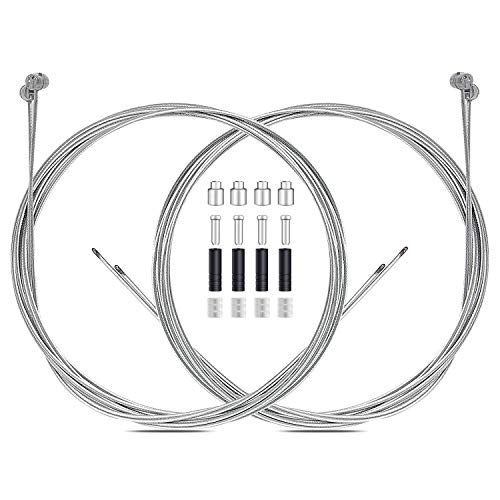
The Mamakoi 4-Piece Brake Cable Set provides a complete replacement solution for both front and rear brakes on mountain and road bikes. Each cable uses a zinc-coated construction and features 19 strands for strength and smooth operation. The kit includes two front cables (2000 mm) and two rear cables (2000 mm), all with a 1.5 mm diameter. This setup supports versatile compatibility across many bikes and brake styles.
In addition to the cables, the package includes 4 end caps, 4 sheath ferrules, and 4 O-rings to help secure and tidy the wiring at each end. The design allows trimming to shorter lengths if needed, so riders can customize routing for flat or compact frames. The combination of durable materials and included accessories makes this kit suitable for regular maintenance or a full cable replacement during a bike overhaul.
Deapher Premium Brake Cable Kit

The Deapher Premium Brake Cable Kit offers a robust replacement option for mountain, vintage, and 20-inch kids bikes. The kit uses high-quality PVC housing with stainless steel cables to ensure strong braking power and smooth operation. Front cable length is approximately 23 inches, and rear cable length is about 61 inches, with corresponding housing lengths to match. The kit’s straightforward sizing makes it a practical choice for riders seeking reliable, easy-to-install cables for a variety of bike styles.
Designed for durability, these cables are built to resist wear and corrosion, helping prolong braking performance. The kit’s lengths are tailored to accommodate common bike geometries, while the PVC housing provides a lightweight, weather-resistant path for the cables. Installation is straightforward for DIYers, with guidance for replacing both front and rear sections as needed during maintenance or upgrades.
Boao Universal Bicycle Cable Kit
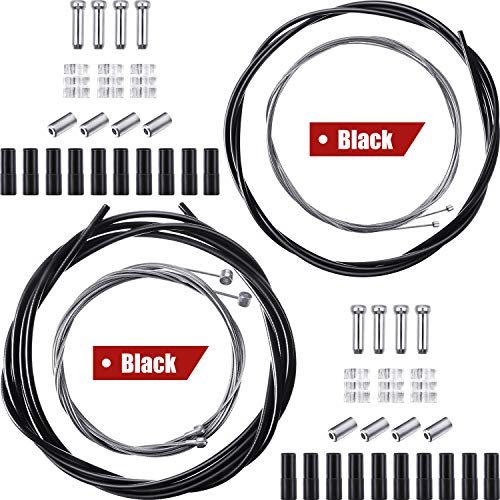
Boao’s Universal Bicycle Cable Kit targets riders seeking a versatile option for mountain and road bikes. The set features PVC and stainless steel materials with improved heat and rust resistance, promising longer life in all-weather riding. The transmission cable shell measures about 4 mm in thickness, with front length around 1.55 meters and rear length around 2.2 meters. The kit also includes a 2.5-meter brake cable housing, along with front brake cable length of roughly 1.1 meters and rear length about 1.8 meters, allowing for varied frame layouts and cable routing.
Because this kit includes both transmission and brake cables, it offers a convenient all-in-one solution for mixed braking systems or riders upgrading multiple components at once. The robust construction is designed to maintain braking responsiveness under regular use, while the supplied cables can be trimmed to fit most standard frames. This makes Boao a practical option for riders who value compatibility and straightforward replacement.
Hapleby Premium Bike Brake Cable Kit
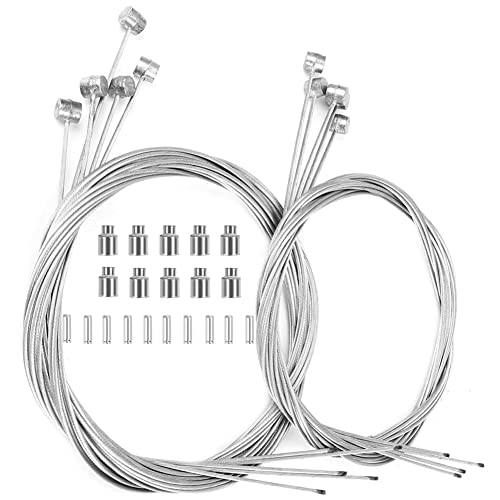
The Hapleby brake cable kit emphasizes corrosion resistance and durability. Each cable uses a zinc-coated construction with 19 strands to deliver smooth movement and longer life. The kit includes enough sheath ferrules and end caps to outfit multiple brakes, and it provides two different lengths for front and rear cables to fit a wide range of bike geometries. This flexibility makes it suitable for tandem bikes and other multi-brake configurations where length variation matters.
Hapleby highlights ease of replacement, noting that you should replace the shorter front cable first and then the longer rear cable. A Dremel tool can be used to trim excess tubing if needed, and riders are advised to wear the end caps during installation to prevent scratching. The combination of corrosion resistance and included hardware makes this kit a dependable, cost-effective upgrade for many bicycles.
Shimano Universal Brake Cable Set

The Shimano Universal Brake Cable Set is designed for both MTB and road bikes, offering a dependable, widely compatible option. The inner wires are stainless steel, providing smooth movement and improved resistance to corrosion. The package includes one 5 mm diameter brake cable housing with a total length of 2200 mm, suitable for many common frame sizes. Shimano’s reputation for precision and durability makes this kit a strong choice for riders who want a trusted brand with broad compatibility across bike types.
With a universal fit in mind, this set accommodates a range of braking configurations and lever styles. The stainless inner wire and long housing help ensure consistent braking performance, while the straightforward design supports quick installation and reliable maintenance. This makes Shimano a practical option for riders seeking a balance of performance, durability, and brand assurance.
Buying Guide
Key Purchase Considerations
- Bike type and braking system: Confirm whether your bike uses rim brakes, disc brakes, mechanical cables, or hydraulic lines. Cable sets and housings are typically for rim and some disc systems, while hydraulic hoses require different components.
- Length and fit: Measure front and rear cable routes on your bike. Front cables are usually shorter than rear cables. Ensure the kit’s lengths align with your frame geometry to avoid excess slack or tight routing.
- Material and durability: Stainless steel cables resist corrosion, while zinc-coated variants offer good longevity at a lower cost. Housing thickness (often 4–5 mm) impacts protection and stiffness in routing.
- Included accessories: Ferrules, end caps, and O-rings improve installation quality and cable termination. A kit with these extras reduces the risk of improper assembly.
- Installation and tooling: Some cables can be cut with basic tools, while others benefit from a cable cutter and crimping tool for ferrules and end caps. Consider ease of installation for your skill level.
- Replacement frequency and maintenance: Regular inspection for fraying, rust, or stiffness helps maintain braking performance. Clean and lubricate cables as needed to maintain smooth operation.
Practical Comparisons
- Cable sets vs. hydraulic lines: Cable sets are generally cheaper and easier to replace, but hydraulic systems can offer smoother, stronger braking with consistent feel. Choose based on your bike’s braking design and maintenance preferences.
- All-in-one kits vs. individual parts: All-in-one kits provide a convenient upgrade with compatible lengths and accessories, while purchasing individual parts may save money for targeted replacements.
- Length flexibility: Some brands provide longer front and rear cables to accommodate larger frames or unusual routing. If you ride a small or large frame, verify that the kit has adjustable lengths to fit your bike.
Installation Tips
- Prep your bike: Remove old cables and inspect the housing for wear or damage. Replace any frayed or corroded components to ensure reliability.
- Measure twice, cut once: If your kit requires trimming, measure routing paths carefully and cut only what you need to avoid excess waste.
- Protect sensitive components: Use end caps and ferrules to protect the cable ends and paintwork. This helps prevent scratches during installation and use.
- Test and adjust: After installation, test braking performance in a safe environment. Ensure there is no rubbing or binding and that the lever feel is consistent across front and rear.
- Maintenance routine: Periodically inspect cables for wear, clean with a mild solvent if needed, and lubricate sparingly to maintain smooth movement without attracting dirt.
Selecting the right brake cable or line kit involves balancing bike type, compatibility, length, material durability, and included hardware. The five options highlighted here cover a broad spectrum of bikes and riding styles, from universal cable sets to complete maintenance kits. Use the buying guide to identify your priorities—whether that’s the quickest installation, the longest lifespan, or the most versatile compatibility—and choose a solution that aligns with your bike’s braking system and your maintenance preferences.