Turning a standard bicycle into a capable electric ride can transform daily commutes, weekend adventures, and hill climbs. A motor kit adds pedal-assisted power, extending range and reducing effort without buying a new bike. This guide highlights five top Amazon options chosen for power, reliability, and install ease. Whether you ride city streets, light trails, or snowy lanes, these kits cover front-hub, rear-hub, and mid-drive configurations across common wheel sizes. Use the quick table below to compare fundamentals, then read detailed sections to learn how each kit performs in real-world scenarios.
| Product | Brand | Wheel Type | Power | Highlights |
|---|---|---|---|---|
| AW 48V 1000W Front Hub Kit | AW | Front Hub | 1000W | Disc/V brake compatible; 45 KM/H top speed |
| VEVOR 1000W Front Wheel Kit | VEVOR | Front Hub | 1000W | HD LCD, 65 dB, 420rpm |
| BAFANG Mid Drive Kit BBS02B/BBS-HD | BAFANG | Mid-Drive | 750W/1000W | Complete accessories; 68-73mm BB fit |
| MOCHAG 48V 1500W Rear Hub Kit | MOCHAG | Rear Hub | 1500W | PAS, LCD, 20″ wheel option |
| LTIGOAW 26″ 48V 1000W Rear Hub Kit | LTIGOAW | Rear Hub | 1000W | 53 KM/H top speed; 120 kg load capacity |
AW 48V 1000W Front Hub Kit
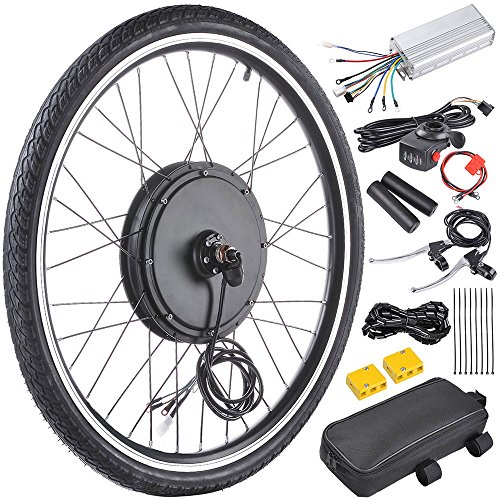
The AW kit uses a 48V, 1000W brushless, gearless front hub motor designed for smooth, quiet operation. It enables a top riding speed up to about 45 km/h and is suitable for most 26-inch bicycles, including mountain and commuter frames. The aluminum frame of the hub provides durability and stable support up to 220 pounds. The system uses a simple drive setup without chains or gears, which reduces maintenance. A thumb throttle with three battery indicators helps riders monitor remaining power and plan charging, while the kit tolerates both disc and V brakes for versatile braking options.
Ideal for upgrading an older bike for urban commuting or light off-road use, this front-hub kit installs by replacing the front wheel and wiring to a dual-mode controller. Front-hub motors place weight toward the front, which can improve traction on loose surfaces but may influence steering feel at higher speeds. Proper battery selection determines range and acceleration, so pairing a suitable 48V battery with this kit is important. Before purchasing, verify your bike’s front dropout spacing (3 15/16″) and confirm clearance around brake rotors and tires to ensure a clean fit.
VEVOR 1000W Front Wheel Kit

The VEVOR kit pairs a 1000W motor with a 420 rpm rating and more than 50 Nm of torque, making hill climbing and terrain handling approachable. The 26-inch wheel is reinforced, and the system includes an LCD display to monitor speed, distance, PAS level, and battery life. A quiet, copper-core motor maintains lower noise levels (around 65 dB), which enhances comfort on longer rides. The kit supports both disc and V brakes, delivering solid braking performance under varying conditions and weather.
This kit suits riders who frequently encounter hills or mixed terrain on road bikes or light off-road setups. The LCD provides real-time ride data, helping manage energy use and planning charging needs. Installation requires aligning the wheel, routing cables to the controller, and pairing throttle with PAS. Ensure your front dropout spacing matches the standard 3 15/16″ and select a compatible 48V battery with adequate capacity to meet your range goals. Front-hub kits can affect steering feel at high speeds, so practice caution during initial rides.
BAFANG Mid Drive Kit BBS02B/BBS-HD

BAFANG’s BBS02B/BBS-HD mid-drive kit places the motor around the bike’s crank area, boosting efficiency by leveraging the drivetrain. It supports 68-73mm bottom brackets and 33.5-36mm inner diameters, with motor power options ranging from 500W to 1000W depending on configuration. Torque reaches up to 160 N.m, enabling strong acceleration and climbing performance, with top speeds around 45 km/h. The package includes a comprehensive set of accessories, including brake levers, a display, throttle, and more, though 73mm screws are not included.
Mid-drive systems excel on varied terrain because motor power is fed through the drivetrain, preserving wheel grip and optimizing gearing for climbs. This kit is well suited for mountain bikes and road bikes that use disc or V brakes and want strong torque for steep grades. Installation demands careful alignment with the bottom bracket and frame; verify compatibility with your frame width, crankset, and brake configuration. A suitable high-capacity battery and charger are essential to maximize range and performance.
MOCHAG 48V 1500W Rear Hub Kit

MOCHAG’s kit delivers a high-torque 1500W rear-hub motor with a focus on efficiency—claimed at over 82%—and robust performance for commuting or short trips. The system includes a PAS sensor for pedal assistance and an LCD display to show speed, battery level, mode, and fault indicators. The unit is designed for durability, using rust-resistant materials and a strong rear wheel to handle daily riding and occasional adverse weather. The 20-inch wheel option makes it a good fit for compact bikes and youth-friendly builds, while still offering substantial power.
This rear-hub configuration emphasizes straightforward installation and reliable power delivery from the back wheel. The included PAS and LCD provide intuitive control and feedback, while the high-torque motor supports confident acceleration and climbing on urban grades. When pairing with this kit, confirm frame compatibility with 20-inch wheels and ensure you have an appropriately sized battery. Battery choices influence range, charging frequency, and overall system balance, so plan for a battery that meets your typical riding needs.
LTIGOAW 26″ 48V 1000W Rear Hub Kit

The LTIGOAW rear hub kit offers a 48V, 1000W system with performance that tops out around 53 km/h and torque approximately 45 Nm. The 26-inch wheel is designed to handle riders up to about 120 kg, and the setup includes a rear-wheel hub that supports efficient, smooth power transfer. A rear-hub arrangement helps maintain a balanced ride on many street bikes and is complemented by a rear suspension-friendly design and three LED lights to improve visibility.
Rear-hub kits like this are often the easiest to install, especially for non-technical riders, since the motor is attached directly to the wheel. They provide straightforward power delivery and compatibility with disc or V brakes. When selecting this kit, verify your frame’s dropout spacing, brake type, battery compatibility, and the overall wheel footprint to ensure a clear fit and stable handling under load. Consider how weight distribution will affect handling at speed and on slopes.
Buying Guide: Key Purchase Considerations
Motor Type And Placement
Front-hub kits are typically easy to install and provide immediate pedal assist, but they shift weight to the front of the bike, which can influence steering at higher speeds. Rear-hub kits offer balanced traction and simple installation, making them a popular choice for beginners. Mid-drive kits place the motor near the crank, leveraging the chainring for efficient power and superior hill-climbing performance. They require careful frame compatibility and precise installation but often deliver the best overall ride feel on varied terrain.
Power, Torque, And Speed
Power is usually listed in watts (W); 750–1000W is common for reliable street and trail use, with some kits offering 1500W. Torque determines climbing capability, often expressed in Nm. Higher torque helps on steep grades but can increase strain on the drivetrain. Speed targets should align with local regulations and riding goals. If you frequently ride hills or want brisk acceleration, a mid-drive or high-torque hub kit may be advantageous; for simple upgrades, a solid 1000W hub kit can suffice.
Bike Compatibility
Before purchasing, confirm wheel size (20″, 26″, 28″), dropout spacing (front or rear), and brake type (disc or V-brake). Bottom-bracket compatibility matters for mid-drive kits, typically requiring a 68–73 mm BB shell. Ensure your frame can accommodate the motor’s weight distribution, wiring routing, and battery mounting. Some kits include universal brackets and mounting hardware, but others expect you to source compatible parts separately. Always verify rotor size, tire clearance, and fork/frame clearance to avoid fit issues.
Battery, Controller, And Display
The battery must match the kit’s voltage (typically 48V) and provide sufficient capacity for your range goals. Controllers manage power delivery and may include dual-mode operation, cruise control, or integrated displays. A high-quality LCD or LED display helps monitor speed, distance, battery level, and PAS level in real time. Look for systems with PAS (pedal-assist sensor) for natural assistance and a throttle option for manual power input when needed.
Installation, Maintenance, And Support
Installation difficulty varies by kit type. Front-hub kits are generally simpler, while mid-drive systems require careful alignment with the crank and chainline. Expect some wiring, fuse protection, and calibration steps. Maintenance needs include brake adjustments, torque checks on motor mounts, and battery care. Warranties and seller support are important for DIY owners; review return policies, service availability, and compatibility documentation before purchase.
Value, Warranty, And Real-World Use
Value depends on power, reliability, and included accessories. Mid-drive kits often carry a premium but offer superior climbing and efficiency on diverse terrain. Hub kits tend to be more affordable and easier to install but may require compromises in weight distribution. Consider how you plan to ride, your bike’s compatibility, and whether you prefer a plug-and-play option or a modular setup. A solid warranty and accessible customer support can save time and money if issues arise.