Choosing the right seating option for a one-year-old combines safety, comfort, and family riding habits. This guide covers rear-mounted bike seats and beginner balance bikes designed for early riders, focusing on secure restraints, adjustable seating, and stable wheels. The selections below show practical choices for 12- to 24-month-olds and beyond, helping families decide when a parent-assisted ride makes sense versus a child-led balance practice. Use the summary table to get a quick compare-and-contrast before diving into each product detail.
| Product | Brand | Age Range | Key Benefit |
|---|---|---|---|
| Schwinn Deluxe Child Bike Carrier | Schwinn | 1+ years | Secure rear seat with 3-point harness and padding |
| Umatoll Colorful Lighting Baby Balance Bike | Umatoll | 12-24 months | Adjustable seat; glow wheels; safety controls |
| Gamfeiny Colorful Lighting Balance Bike | Gamfeiny | 10-36 months | Glow wheels; no-pedal design; safe for toddlers |
| SEREED Baby Balance Bike Green | SEREED | 12-24 months | Sturdy 4-wheel design; turning limit; gravity steering |
| allobebe Baby Balance Bike | allobebe | 12-36 months | Lightweight; adjustable seat; indoor/outdoor use |
Schwinn Deluxe Child Bike Carrier

The Schwinn Deluxe Child Bike Carrier is a rear-mounted seat designed for a single child aged 1 year or older, with a maximum rider weight of 40 pounds. It emphasizes immediate safety on family rides by using a quick-release 3-point harness and padded cross bar, complemented by leg restraints with safety straps to keep a child securely in place during movement. The seat features custom padding to support the child’s back and cushioned pads for comfort. Adjustable footwells and a removable headrest provide additional support as the child grows, promoting longer, steadier outings.
From a safety perspective, the carrier’s restrained design helps minimize wobble and unintended shifts during turns or bumps. The padding and foot accommodations enhance comfort, which is important for longer excursions. This option is well-suited for caregivers who want a tried-and-true rear seat that aligns with common bicycle setups and offers straightforward installation and removal when the ride ends or during transport. It represents a practical step into toddler-focused cycling for families who already own a bicycle compatible with a rear seat.
Umatoll Colorful Lighting Baby Balance Bike

The Umatoll balance bike targets 12- to 24-month-olds with a 3-position adjustable seat that fits growing children. Its no-pedal design helps early walkers focus on balance and steering while remaining close to the ground for safety. A standout feature is the glow rear wheel that lights up when spun, without the need for batteries, adding visual interest during practice sessions. The bike includes a 135-degree steering limiter to prevent dangerous tipping and fully enclosed wheels to reduce the risk of foot entrapment. A TPU handle provides a firm, child-friendly grip for little hands.
Emphasizing safety and ease of use, this model supports a gradual transition from crawling to independent steering. The lightweight frame and simple assembly are ideal for caregivers who want a low-maintenance option that works well in diverse settings—living rooms, driveways, or parks. Its combination of protective design features and engaging lighting makes it a credible choice for early balance training and confidence-building rides.
Gamfeiny Colorful Lighting Balance Bike

The Gamfeiny balance bike is designed for children aged 10-36 months and uses a no-pedal, four-wheel configuration. The rear wheel features a colorful lighting effect that glows when spun, powered without batteries, which helps attract a child’s attention and encourage movement. A widened closed wheel and a 135-degree steering limit reduce the risk of side falls, while the absence of sharp parts makes it safer for curious toddlers exploring with fingers and toes exposed. The bike’s soft seat and sturdy construction support extended practice sessions on varied surfaces.
Balance bikes like this one promote early balance, steering, and confidence without the complexity of gears or pedals. They are often chosen as transitional riding gear because they allow a child to focus on posture and balance before introducing pedals. The design prioritizes durability for indoor and outdoor use and is easy to clean after outdoor play, making it a practical option for families seeking a simple, child-centered introduction to riding.
SEREED Baby Balance Bike Green
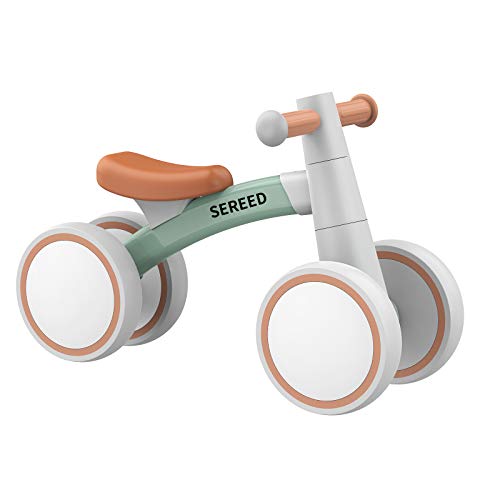
The SEREED four-wheel balance bike is built for children 12-24 months with a sturdy aluminum alloy frame and a softly padded seat. It uses a no-pedal design and a wide wheelbase to encourage stability during early riding attempts. A 135-degree turning limit and gravity steering help prevent tipping, while non-slip, wear-resistant wheels enable safe use on a variety of surfaces. A non-slip TPU handle adds a secure grip for small hands, supporting controlled practice and reducing the risk of accidental slips during initial balancing sessions.
This model emphasizes a straightforward, durable learning path: balance first, then propulsion. The four-wheel setup provides dependable stability, making it a strong option for caregivers who want to minimize falls and build a child’s confidence with gradual progression. The green finish also aids visibility, which can be beneficial for outdoor play in busy yards or parks.
allobebe Baby Balance Bike

The allobebe balance bike is aimed at children aged 12-36 months and weighs about 3.85 pounds, with an adjustable seat height from 10.2 to 11 inches. This no-pedal design supports early mobility by encouraging children to push off and learn balance. A lightweight frame enhances portability for caregivers who need to transport the bike between buildings or carry it in a car trunk. The four-wheel base offers a stable platform for new riders, while the seat adjustment accommodates growth from roughly one to three years old as balance and confidence improve.
In terms of practicality, the allobebe model emphasizes ease of use and versatility. Its compact size makes it suitable for apartments and small living spaces, while its low weight reduces user fatigue during setup and breakdown. The design focuses on foundational motor skills—balance, coordination, and safe steering—before introducing pedals, which aligns with many families’ gradual approach to early riding experiences.
Buying Guide
Choosing the right seating solution for a 1-year-old requires balancing safety, growth potential, and everyday practicality. The options range from rear-mounted seats that let an adult control speed and cadence to balance bikes that emphasize independent balance training with no pedals. Understanding the trade-offs helps families select a setup that fits their lifestyle, riding environments, and child’s development pace.
Safety And Weight Capacity
Rear seats typically include a weight limit and a secure harness to keep the child in place during rides. Balance bikes rely on a low center of gravity and stable platforms to reduce tipping risk. Always confirm weight limits and inspect harnesses, buckles, and tires regularly to maintain safety and performance as your child grows.
Seat Adjustability And Comfort
Look for adjustable seating and footrests, along with padded seating where applicable. For balance bikes, ensure the seat height and handlebar position can be tuned to match leg length and reach, enabling hips and knees to bend at natural angles and supporting longer practice sessions without discomfort.
Type Of Ride And Use
Rear seats are best for families who want companionship and ease of use on longer rides, especially when a parent controls pace. Balance bikes encourage independent practice and can be a natural progression toward pedal bikes, but they require supervision and a safer, open space to avoid obstacles during early rides.
Durability, Materials, And Maintenance
Sturdy frames, durable wheels, and reliable restraints contribute to longer product lifespans. Lightweight materials ease transport, but ensure they are strong enough to withstand drops and frequent handling by toddlers. Regular cleaning and inspection help prevent wear from impacting safety features.
Budget, Longevity, And Practicality
Rear seats may offer longer compatibility with different bikes but can be pricier and heavier to install. Balance bikes usually cost less upfront but may require eventual transition to pedals. Consider how often you ride, where you ride, and how long you expect to use the product as your child grows when evaluating value and practicality.