As urban sidewalks evolve, securing bicycles without cramping pedestrian space becomes essential. The following selections focus on in-ground and sidewalk-friendly racks that deter theft, resist the elements, and accommodate varying bike counts. Each option is chosen for durability, ease of installation, and suitability for sidewalks, apartment complexes, campuses, and industrial areas. Below is a quick overview of the five models best suited for sidewalk use.
| Product | Capacity & Key Benefit |
|---|---|
| Sandbaggy Commercial Bike Racks (2 Bike) | One-piece, anti-theft design; in-ground stability |
| Sandbaggy Loop Wave (7 Bike) | High capacity; robust indoor/outdoor use |
| Otoolling 7 Bike Wave Rack | Long length; heavy-duty galvanized steel |
| Sandbaggy U Shaped In-Ground (1 Loop) | Compact footprint; straightforward installation |
| Otoolling 2 Bike Post & Ring | Dual-locking positions; solid ground mounting |
Sandbaggy Anti-Theft In-Ground 2 Bike Rack

The Sandbaggy Commercial Bike Rack uses an anti-theft, one-piece design that ships fully assembled, eliminating assembly steps that create vulnerability. Its solid construction deters disassembly and bike theft, especially in busy sidewalk or apartment exterior areas. The single-piece format reduces maintenance and simplifies deployment in corridor-like spaces along sidewalks where security and speed matter.
Durability is a core feature: the steel rack is rust-resistant and finished with a rugged powder coating to withstand rain, snow, and sun exposure. In-ground installation provides the highest stability for upright bikes and minimizes the risk of accidental tipping. Fasteners are not included, so install with 1/2″ concrete wedge anchor bolts as recommended. This model accommodates two bicycles and fits compact urban footprints well, making it suitable for narrow sidewalks or entryways where space is at a premium.
Final considerations include its weather-ready design and low-profile aesthetics, which blend into many urban streetscapes. Its higher stability and limited number of moving parts help reduce theft-related concerns in pedestrian-heavy zones while offering predictable bike parking for residents and visitors alike.
Sandbaggy Loop Wave In-Ground 7 Bike Rack
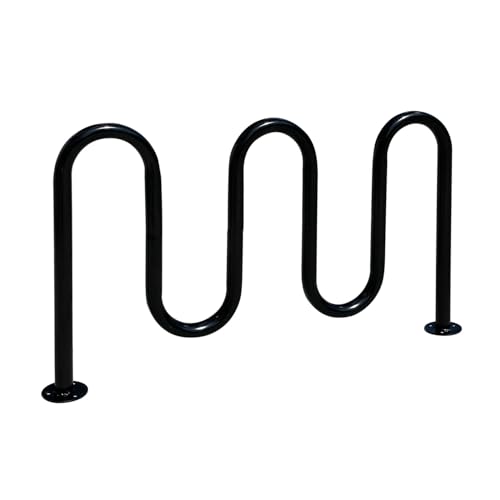
The Sandbaggy Loop Wave Bike Rack features an anti-theft, one-piece design that ships assembled, reducing the risk of theft through assembly gaps. The loop configuration supports multiple contact points for each bicycle, helping to organize spaces along sidewalks and reduce clutter near entrances or transit stops. This arrangement is particularly useful for sidewalks with high vehicle or foot traffic where quick parking is advantageous.
Constructed from long-lasting steel with powder coating, this model resists rust and weathering over years of outdoor exposure. It is designed for in-ground installation to maximize stability and minimize bike movement, with 1/2″ concrete wedge anchors recommended (fasteners not included). The 5-loop design provides capacity for up to seven bikes in a single row, making it an excellent option for schools, apartment complexes, or industrial campuses seeking high capacity with a compact footprint on sidewalks.
Operational considerations include maintenance simplicity, stable locking points, and the ability to manage crowds without creating visual clutter. The durable build also supports long-term use in urban environments, where sidewalk size can be limited yet bike parking demand remains high.
Otoolling 7 Bike Capacity Wave Rack

The Otoolling 7 Bike Capacity Wave Bike Rack offers a long, wave-shaped layout (68 inches) that accommodates multiple bicycles along sidewalks, campuses, and outdoor spaces. The design provides distinct spaces to minimize bike-to-bike contact while maintaining clear access for riders. This makes it a practical choice for sidewalks near schools or workplaces where bike parking is frequent but space-conscious layouts are necessary.
Durability comes from heavy-duty galvanized steel with a scratch-resistant coating, designed to withstand rust, UV damage, and corrosion. Installation uses complete expansion bolts for deep, secure anchoring; the wide base (4.5 by 4.5 inches) distributes weight evenly to prevent wobble or tipping even under heavy loads. The combination of robust materials and lasting finish makes this rack suitable for long-term outdoor use in sidewalks or streetscapes, with a focus on theft resistance through strong joints and reinforced bases.
This model emphasizes stability and resilience in busy environments, enabling easy maintenance and consistent performance across seasons while providing reliable bike parking for residents, employees, and visitors alike.
Sandbaggy U Shaped In-Ground Rack

The Sandbaggy In Ground Bike Rack in a U-shaped, single-loop design offers a compact footprint ideal for sidewalks with limited space. The inverted U shape provides straightforward locking points, making it easy to secure a bike with a lock through the frame and wheel. This configuration is well-suited for narrow walkways and entryways where parking options must be neatly organized without obstructing pedestrian flow.
In-ground installation emphasizes stability; the rack is built to stay put once anchored. It features a 3.8 mm thick square bottom and four pre-drilled holes for straightforward mounting. Concrete anchor bolts are not included, allowing you to select the most appropriate fasteners for your site. The rust-resistant, powder-coated steel ensures durable performance in varied weather while offering a restrained, practical aesthetic for sidewalk environs.
With a modest footprint and solid performance, this model is a reliable choice for small business storefronts, apartment complexes, and community spaces where simple, dependable bike parking is needed along busy sidewalks.
Otoolling 2 Bike Capacity Post And Ring Rack

The Otoolling 2 Bike Capacity Post and Ring Bike Rack uses a practical post-and-ring design that keeps up to two bicycles upright with reliable locking points. Its compact length makes it suitable for sidewalks, schools, and residential yards where space is at a premium. The design balances accessibility with security, offering straightforward parking without crowding adjacent spaces.
Durability stems from heavy-duty galvanized steel and a scratch-resistant coating that resists rust and UV exposure. Installation uses five high-strength expansion bolts and a broad base (4.5 x 4.5 inches) to distribute weight and reduce tipping under load. The structure is designed to be more theft-resistant than multi-component racks due to its solid joints and reinforced baseplates, making it a durable option for long-term sidewalk use. It remains a practical choice for both temporary setups and more permanent sidewalk installations.
Buying Guide
Choosing the right bike rack for sidewalks involves balancing capacity, security, and installation practicality. The following considerations help compare options across in-ground, post-and-ring, and loop configurations, while aligning with sidewalk space and local conditions.
- Installation type: In-ground racks offer the strongest stability but require concrete anchors; post-and-ring designs provide flexibility and can be easier to relocate; floor or surface-mounted racks may be better for paved or indoor spaces but tend to be less stable outdoors.
- Capacity needs: Assess typical usage—one to two bikes for narrow sidewalks, up to seven or more for schools or apartment complexes. Consider future growth and whether you want a single row or multiple rows to manage space efficiently.
- Security features: Look for welded, one-piece constructions and loop or ring designs that resist tampering. Anti-theft features can include minimal movable parts and robust joints; ensure bolts and anchors are appropriate for the site and are compatible with local codes.
- Durability and weather resistance: Materials such as galvanized steel with powder coatings resist rust, UV damage, and corrosion. Check warranty terms and whether the finish is designed for salt exposure if near coastal areas or winter road treatment.
- Space and layout: Measure sidewalk width, curb cuts, doorways, and ingress/egress paths. Ensure there is adequate clearance (at least 3 feet) around parked bikes for safe passage of pedestrians and wheelchairs.
- Maintenance and accessibility: Choose a design that is easy to clean and inspect. Anti-theft designs with fewer moving parts generally require less ongoing maintenance and fewer theft-related components to replace.
- Anchoring requirements: Many in-ground racks require 1/2″ concrete wedge anchors or similar fasteners (not included). Verify site conditions and local building codes, and consider consulting a professional for installation in public spaces.
- Aesthetics and regulations: Match the rack’s style and color with surrounding infrastructure. Check any municipal codes or HOA rules that may influence acceptable materials, height, and placement.
Comparisons: In-Ground, Post And Ring, Or Floor Mount
In-ground racks maximize stability and are excellent for high-traffic sidewalks but demand proper anchoring. Post-and-ring designs offer flexible placement and easier relocation, suitable for evolving landscapes or temporary deployments. Floor or surface-mounted racks can be more affordable and simpler to install in paved areas or indoor garages, yet they may be less resistant to shift or displacement in windy or crowded environments. When choosing, weigh long-term durability, potential need for relocations, and the amount of sidewalk real estate you can dedicate to bike parking.