Choosing the right bike disc brake caliper is essential for reliable stopping power across terrains. The following five products represent a range of mechanical and hydraulic calipers compatible with common disc brake mounts. Each item includes notable features, mounting options, and compatibility notes to help riders compare options quickly.
Summary of selected products:
| Product | Brand | Mount Type | Notes | Notable Feature |
|---|---|---|---|---|
| LOOEEL Mechanical Disc Brake Calipers | LOOEEL | IS 51mm / Post 74mm | Mechanical Caliper Pair | Aluminum alloy, easy install, good heat dissipation |
| HB-100 Hydraulic Disc Brake Calipers (Black) | Hycline | Hydraulic Front & Rear | Front/Rear kit | Built-in brake oil, smooth braking in varied conditions |
| TOBWOLF Mechanical Caliper Set | TOBWOLF | Post Mount (74mm/51mm) | 1 Pair Calipers, Rotors included | Lightweight aluminum, easy service & adjustment |
| HB-100 Hydraulic Disc Brake Calipers (Red) | Hycline | Hydraulic Front & Rear | Front/Rear set | Cable-pull hydraulic design, two-way pad movement |
| TOBWOLF Hydraulic Disc Brake Kit | TOBWOLF | Left Front / Right Rear (hydraulic) | With rotors | Ceramic pads, high-temperature resistance |
LOOEEL Mechanical Disc Brake Calipers

LOOEEL’s mechanical disc brake calipers are constructed from aluminum alloy, delivering a compact, lightweight design with durable, anti-corrosion features. The calipers support two widely used mounting standards: 51mm IS and 74mm Post mounting, enabling compatibility with many mountain, road, folding, and hybrid bikes. The kit includes mounting screws and a long rectangular opening to simplify pad replacement, reducing maintenance time. The internal fine-tuning screw helps adjust pad clearance accurately, ensuring reliable engagement with the rotor without rubbing. Because these calipers are mechanical, riders benefit from straightforward setup and consistent performance even in adverse conditions.
Installation is straightforward for riders upgrading from rim brakes or those seeking a low-maintenance option. While mechanical systems are typically less expensive and easier to service than hydraulic setups, they may require more frequent adjustment after heavy use, mud, or debris. The LOOEEL calipers emphasize heat dissipation and corrosion resistance, making them a sensible choice for riders who ride in varied climates and terrains. They pair well with 160mm rotors on most cross-country setups, though rotor size should be confirmed against the frame and fork clearances.
HB-100 Hydraulic Disc Brake Calipers (Black)

The HB-100 calipers from Hycline are designed as a hydraulic disc brake system suitable for both mountain bikes and road bikes, including electric scooters in some configurations. This setup features a line-pull hydraulic design with a built-in oil cartridge in the caliper block, allowing smooth, progressive braking and reduced lever effort. Front and rear compatibility ensures balanced stopping power on different terrains, while aluminum construction keeps weight manageable. The hydraulic mechanism provides consistent performance in wet or dry conditions, reducing the chance of disc squeal and improving brake modulation on steep descents.
Key considerations for this system include ensuring proper hydraulic line routing and using the correct rotor sizes (commonly 160–180mm, though check your frame’s clearance). Because the HB-100 uses a hydraulic oil inside the caliper, maintenance involves regular checks for leaks and proper oil levels. This makes it well-suited for riders seeking strong braking with less lever force and improved consistency across weather and mileage. It is important to confirm compatibility with existing levers and mounting standards on your bike before purchase.
TOBWOLF Mechanical Caliper Set
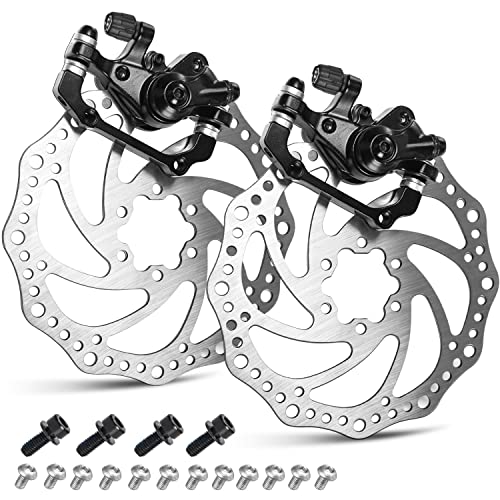
TOBWOLF’s mechanical disc brake caliper set provides a practical upgrade path for riders who want reliable stopping power with simple maintenance. The kit is designed with both 74mm and 51mm mounting bolt spacings, making it compatible with a wide range of frames. It includes 2 rotors at 160mm with 6-bolt mounting, plus bolts and titanium hardware to facilitate installation. The calipers are described as having excellent stopping power and ease of servicing, ideal for riders who prefer straightforward cable-actuated brakes with dependable performance in varied riding conditions.
For riders who want a complete mechanical solution, this TOBWOLF kit offers value with rotors and mounting hardware included. The aluminum construction keeps weight down, while the 2-rotor setup supports front and rear braking with balanced feel. As with other cable-actuated systems, performance can be affected by cable tension and pad wear; regular inspection ensures consistent stopping power. The note on mounting orientation and alignment helps ensure proper pad-disc clearance during setup.
HB-100 Hydraulic Disc Brake Calipers (Red)

This Hycline HB-100 variant emphasizes a hydraulic system with a striking red finish. The design uses a built-in brake oil cylinder and a two-way brake pad movement mechanism, enabling smooth braking and reliable control on both front and rear calipers. Aluminum construction contributes to a favorable weight-to-strength ratio, while the hydraulic setup generally offers stronger, more controllable braking than mechanical systems, especially on long descents or wet conditions. Riders should verify rotor compatibility (typically 160–180mm) and ensure their fork and frame can accommodate hydraulic lines and mounting standards.
Because hydraulic systems require more careful maintenance than mechanical ones, users should routinely check hose integrity, oil levels, and bleed lines if needed. This variant’s emphasized aesthetic can be combined with performance, but attention to compatibility remains essential. For riders seeking a premium hydraulic option with strong modulation and reduced lever effort, this HB-100 configuration is a solid choice when fit and compatibility are confirmed.
TOBWOLF Hydraulic Disc Brake Kit

The TOBWOLF hydraulic disc brake kit combines hydraulic calipers with rotors and mounting hardware to deliver a ready-to-install braking solution. The kit specifies left-front and right-rear operation, which is a common arrangement for hydraulic systems, and includes 160mm rotors along with the necessary bolts and additional hardware. The package highlights upgraded ceramic brake pads, which can offer improved braking performance and reduced wear compared with standard pads. Built from high-grade aluminum, these calipers are designed to resist heat buildup and maintain braking performance under demanding riding conditions.
When selecting a hydraulic kit like this, riders should confirm lever compatibility and ensure the frame has adequate clearance for the rotor size and hydraulic components. Bleeding and servicing are required for maintaining hydraulic performance, so buyers should be prepared for periodic maintenance. The included rotors and hardware simplify the upgrade path for riders moving from mechanical to hydraulic systems, offering stronger, more consistent braking in a wide range of riding contexts.
Buying Guide
Choosing the right bike disc brake caliper involves weighing mounting standards, braking technology, rotor compatibility, and maintenance requirements. This guide synthesizes key considerations to help riders compare options across mechanical and hydraulic systems.
- Brake type: Mechanical calipers use cable actuation, offering simple installation and lower cost, but may require more frequent adjustment and can lose modulation as pads wear. Hydraulic calipers deliver stronger, more modulated braking with less lever effort, but require more maintenance and bleeding when necessary.
- Mounting standards: IS (International Standard) 51mm and PM (post mount) 74mm are common. Verify your frame’s compatibility before purchasing, and ensure the caliper alignment matches your rotor size and brake lever.
- Rotor compatibility: Most modern discs use 160–180mm rotors, though some models support 140–160mm or 180–203mm. Check rotor size, weight, and clearance with the fork and frame to prevent rubbing or interference.
- Materials and heat management: Aluminum alloy calipers are lightweight and corrosion-resistant, while ceramic pads can reduce wear and noise. Consider heat dissipation especially for long descents or aggressive riding styles.
- Maintenance and serviceability: Mechanical systems are easier to service and adjust without specialized tools. Hydraulic systems require periodic bleeding, oil checks, and line inspections, but provide consistent performance in adverse conditions.
- Installation complexity: Mechanical setups are typically quicker to install and adjust. Hydraulic kits may involve more steps, including bleeding and line routing, but yield superior braking feel and control when set up correctly.
- Compatibility with levers and levers’ reach: Ensure your existing brake levers are compatible with the caliper type (mechanical vs hydraulic) and with the caliper’s mounting type and rotor size to avoid mismatches in reach and bite.
- Cost-to-performance balance: Mechanical calipers generally cost less and are easier to repair, suitable for casual riders or budget builds. Hydraulic systems offer enhanced braking performance and modulation, appealing to riders who demand reliability on rough terrain or long days of riding.
Overall, choose a system that aligns with your riding style, frame compatibility, and maintenance preferences. For riders prioritizing ease of installation and lower upkeep, mechanical calipers are a solid choice. For those who demand consistent braking in varied conditions and smoother modulation, a hydraulic set with properly matched rotors and levers is worth the investment.