| Product | Brand | Key Feature |
|---|---|---|
| Park Tool CC-3.2 Chain Checker | Park Tool | Measures wear on 1/2″ chain pitch; supports 5–12 speed chains; go/no-go at 0.5% and 0.75% |
| Zuoyou Chain Wear Indicator | Zuoyou | Carbon steel; about 140.5 mm long; detects accelerated wear |
| Park Tool Chain Checker | Park Tool | Quick wear check to decide if a chain is good or bad |
| BikeHand Chain Checker Tool | BIKE HAND | 7–12 speed compatibility; reads 0.75% and 1.0% wear thresholds |
| KIEVODE Chain Checker Tool | KIEVODE | Fast, accurate wear assessment; works with all speed chains |
The following review highlights top bike chain stretch tools designed to help riders maintain drivetrain performance and maximize chain life. Each tool provides a clear way to assess chain wear, so you can replace a worn chain before it impacts shifting, efficiency, or sprocket wear. This guide focuses on tools that cover a wide range of speeds (from 5 to 12, as well as all-speed compatibility) and are suitable for hobbyists and enthusiasts alike. Read on to compare reliability, ease of use, and practical features across five well-regarded options.
Selecting a chain stretch checker depends on your riding style, bike type, and maintenance routine. If you frequently service a variety of bikes or want a simple, shop-grade gauge, you’ll prioritize readability and clear wear thresholds. If you ride high-mileage setups or own multiple bikes with different drivetrain configurations, a robust, all-speed tool with a compact form factor may be preferable. The reviewed models balance precision, durability, and user-friendliness to help you schedule chain replacements effectively and avoid costly drivetrain wear.
It’s common for riders to underestimate chain wear, but a worn chain can stretch unevenly and wear sprockets faster, compromising shifting performance. A reliable chain checker should read consistently, indicate a clear replacement point, and be built to withstand field use. The tools below are widely used by cyclists, techs, and repair shops for dependable wear assessment without requiring specialized calibration. Consider your preferred workflow, whether you want a dedicated gauge or a 2-in-1 tool set that includes a chain breaker or master link pliers.
Park Tool CC-3.2 Chain Checker
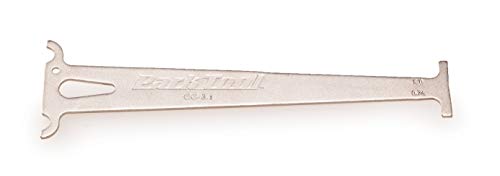
The Park Tool CC-3.2 is a widely trusted chain wear gauge designed for 1/2″ pitch chains and compatible with most 5-12 speed chains. Its go/no-go gauge clearly indicates wear at the 0.5% and 0.75% thresholds, providing a straightforward signal for replacement. The tool is compact, durable, and simple to read, making it suitable for both home mechanics and professional shops. Its robust construction ensures accurate readings across frequent use, and the gauge is built to withstand the rigors of field maintenance without requiring recalibration.
Users benefit from its fast assessment capability: place the gauge on a chain link and read the result with a quick, intuitive indication. The CC-3.2 emphasizes reliability and consistency, two qualities cherished by casual riders and experienced technicians alike. While it offers essential wear indicators, it remains a straightforward, no-frills tool that prioritizes clarity and repeatability over additional features. This makes it a dependable baseline choice for routine chain maintenance and planning timely replacements.
Zuoyou Chain Wear Indicator

Zuoyou’s chain wear indicator is constructed from carbon steel and measures about 140.5 mm in total length, with a width around 47 mm. The tool serves as a practical gauge that helps identify when a worn chain may shift poorly and accelerate sprocket wear. Its robust material delivers durability for long-term use, and its mid-range size makes it portable enough for on-bike or in-box field checks. The indicator emphasizes straightforward interpretation, enabling quick decisions about chain replacement to maintain shifting quality and drivetrain efficiency.
While easy to grip and read, the Zuoyou indicator focuses on wear detection rather than a multi-threshold scale. This makes it an excellent complement to routine checks or as a supplement to other wear indicators you might own. The tool is particularly useful for riders who want a dependable, low-maintenance gauge that provides clear confirmation of chain wear status without complex readings or calibration. It pairs well with standard chain maintenance routines for road, mountain, and hybrid bikes.
Park Tool Chain Checker

This Park Tool Chain Checker provides a quick assessment of chain stretch and general wear, helping determine if a chain is in good condition or needs replacement. The gauge is designed for reliability and ease of use, making it a staple in many repair shops and home workbenches. It’s particularly valued for its straightforward readouts and minimal maintenance requirements, which support consistent results across multiple uses and various chain brands.
Designed for practical use, the tool emphasizes speed and clarity rather than additional bells and whistles. It suits riders who want a dependable, low-cost option for routine wear checks and for those who service multiple bicycles with different chain types. This checker can be a reliable first step in a broader chain maintenance plan, especially when combined with a periodic inspection schedule and a look at chain replacement thresholds recommended by manufacturers.
BikeHand Chain Checker Tool

The BikeHand chain checker tool is designed to measure wear on 7–12 speed chains and to indicate when replacement is necessary at 0.75% or 1.0% wear. This 2-in-1 kit includes a chain wear indicator and a chain breaker component, plus master link pliers, making it a compact maintenance solution for a comprehensive toolkit. The tool’s design emphasizes readability; the checker sits flat on the chain to confirm wear status with a simple tilt or flat assessment, streamlining decision-making for riders and technicians alike.
Constructed with precision, the BikeHand tool uses pro-quality materials and straightforward operation to support longevity. Its compact size (about 140 mm in length) and lightweight build make it easy to store and transport. This makes it a practical choice for enthusiasts who prefer an all-in-one setup or who want a dedicated wear indicator that complements a full-chain repair kit for on-the-go maintenance and routine upkeep of road, mountain, and hybrid bikes.
KIEVODE Chain Checker Tool

KIEVODE’s chain checker tool offers fast and accurate assessment of chain stretch for nearly any bike chain, including all major brands. It emphasizes broad compatibility with speed variations and is designed to help riders determine replacement timing to avoid poor shifting and excessive drivetrain wear. The tool is positioned as a reliable option for both hobbyists and professionals who service multiple bikes or seek a dependable read of chain condition across different drivetrain configurations.
In addition to speed-agnostic performance, the KIEVODE checker prioritizes user-friendly operation and durable construction. Its precise measurements and straightforward results support consistent maintenance decisions and help prevent cascading wear on derailleurs and sprockets. This makes it a versatile choice for riders who value accuracy and simplicity in a compact, portable tool suitable for on-bike use or workshop setup.
Buying Guide
Key purchase considerations help you choose the right chain wear tool for your needs. First, assess compatibility: some gauges cover 5–12 speed chains, while others read across all-speed chains. If you own multiple bikes or expect varied gear setups, an all-speed tool or a model with broad compatibility is advantageous. Readability matters too; select a tool with clear, easy-to-interpret wear indicators and minimal ambiguity on when to replace a chain.
Next, consider the wear thresholds. Tools like 0.5%/0.75% signal clear replacement points, while others use 0.75%–1.0% thresholds. Balance precision with practicality: tighter thresholds can prompt earlier replacements, preserving sprockets but increasing replacement frequency. For everyday riders, a straightforward go/no-go indicator is often sufficient; for enthusiasts and shops, a tool that logs or visually distinguishes thresholds may be helpful.
Durability and build quality are important, especially for field use. Look for stainless steel or carbon steel bodies, robust gauges, and precision machining. Compact, lightweight designs facilitate transport and storage, particularly for cyclists who travel with tools. A 2-in-1 kit that includes a chain breaker or master link pliers can add value, reducing the number of separate tools you need to carry or store.
Brand reliability also plays a role. Established brands with decades of cycling-tool experience, such as Park Tool, tend to offer consistent accuracy, durable construction, and broad compatibility with a wide range of chains. If price is a constraint, evaluate the essential features you need—threshold clarity, speed compatibility, and readability—before considering add-ons like a built-in chain breaker.
Finally, assess your workflow. For home maintenance, a simple gauge that clearly indicates when to replace a chain works well. For shop use or multi-bike households, a scalable solution with multiple thresholds, durable materials, and a compact form factor can streamline assessments and standardize maintenance routines. The five tools reviewed here provide a spectrum—from straightforward indicators to versatile, all-purpose gauges—so you can align your choice with your riding habits and service cadence.