Powered mobility depends on choosing the right battery chemistry, capacity, and size. This guide highlights five popular options, spanning sealed lead acid, AGM, and lithium chemistries. Each product fits common scooter models from Pride, Go-Go, Vive, and Drive Medical lines, with notes on voltage, capacity, and installation. The goal is to help buyers choose a long-lasting, safe, and easy-to-replace solution. A quick summary table appears below, followed by detailed product sections and a comprehensive buying guide to consider beyond price.
| Product | Brand | Voltage | Capacity (Ah) | Type | Notes |
|---|---|---|---|---|---|
| WEIZE 12V 35Ah Deep Cycle Battery | WEIZE | 12V | 35 | SLA | Two-pack; 24V option possible in series |
| Casil 12V 12Ah Replacement Battery | Casil | 12V | 12 | SLA | Compact 12Ah with F2 terminal; battery only |
| CWUU 24V 24Ah Mobility Scooter Battery | CWUU | 24V | 24 | Lithium | High-performance lithium design; two-pack option |
| Sugogo 24V 18Ah Spare Battery | Sugogo | 24V | 18 | Lithium | Spare battery for extended range; pairs to add up to ~30 miles |
| Mighty Max 12V 35Ah SLA Battery | Mighty Max Battery | 12V | 35 | SLA | Pack of 2; UL certified; screws included |
WEIZE 12V 35Ah Deep Cycle Battery

The WEIZE two-pack provides 12V, 35Ah deep-cycle sealed lead-acid (SLA) batteries designed for mobility aids, including scooters and electric wheelchairs. Each unit measures about 7.68 x 5.12 x 7.09 inches and ships with mounting screws but without a wire harness or mounting frame. The two batteries use a left-side positive (+) terminal (red) and a right-side negative (-) terminal (black), which helps installers connect them correctly in the system.
When wired in series, these two 12V cells deliver 24V, broadening compatibility with 24V electric wheelchairs and higher-voltage scooters. They are commonly positioned as replacements for 31–36Ah packs, though actual device requirements vary. In practical use, the twin-pack setup can serve as a straightforward upgrade for longer-range needs, or as a dependable supply for other equipment such as solar storage or small trolling motors.
These batteries embrace the low-maintenance, sealed design typical of SLA systems, reducing the risk of leaks and simplifying care. However, proper mounting is essential to avoid movement or jostling during operation. Weight is a consideration for some scooters, so verify the available space, payload limits, and connector compatibility before upgrading or replacing your pack.
Casil 12V 12Ah Replacement Battery

The Casil 12V 12Ah sealed lead-acid replacement battery is a compact, maintenance-free option suited for lighter mobility devices. It utilizes an F2 terminal and measures roughly 5.95 x 3.88 x 4 inches. The listing covers the battery alone, with no wire harness or mounting hardware included. This makes it a practical choice for models that use a 12V 12Ah pack, but buyers should confirm exact fitment and connector compatibility with their scooter or alarm system before purchasing.
With a modest footprint and 12Ah capacity, this Casil battery is ideal for compact scooters, basic backup power, or custom projects where a small, reliable 12V pack is needed. Ensure your device’s wiring and charger are compatible with the F2 terminal arrangement and that the new battery can physically fit within the existing enclosure without crowding other components.
CWUU 24V 24Ah Mobility Scooter Battery
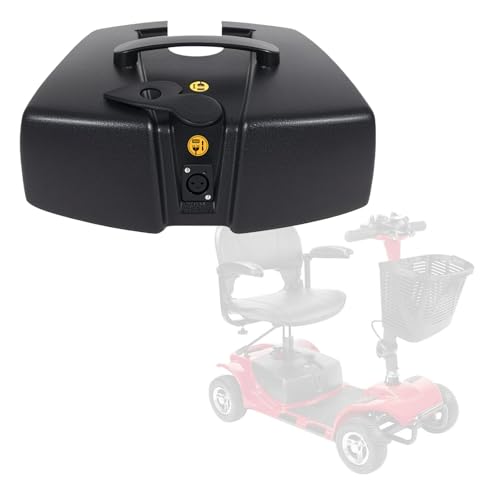
The CWUU option offers a 24V, 24Ah lithium battery designed to deliver higher endurance with lighter weight than conventional lead-acid packs. The listed dimensions are 340 x 250 x 180 mm (about 13.39 x 9.84 x 7.09 inches). The description notes a two-pack configuration, which can help with weight distribution and easier installation, particularly for models that benefit from modular packs.
Compatibility claims include several popular scooter families, such as cebihy 3/4-wheel units, Vive models, and VOCIC seating scooters. The claim of approximately 1000 full-charge cycles suggests a substantially longer lifecycle than SLA packs. Buyers should verify charger compatibility and ensure the scooter’s BMS and wiring are suited to lithium chemistry to maximize lifespan and safety in daily use.
Sugogo 24V 18Ah Spare Battery

The Sugogo spare lithium battery provides a 24V, 18Ah pack designed to extend range for the YL-985 mobility scooter. A spare battery can add about 18 miles of range per unit, and using two batteries can push total range to roughly 30 miles depending on riding conditions. This setup is practical for riders who regularly travel longer distances or want a quick swap when the main pack nears depletion.
As a spare, it’s important to confirm the scooter’s spare-battery compartment size and connector type. Lithium packs are lighter and longer-lived than lead-acid equivalents, but they require proper charging and storage, especially in extreme temperatures. Adhering to charging recommendations and using compatible chargers helps maximize cycle life and performance in daily use.
Mighty Max 12V 35Ah SLA Battery

Mighty Max ML35-12 is a 12V, 35Ah sealed lead-acid (SLA) battery sold as a two-pack. It carries UL certification and measures about 7.76 x 5.12 x 7.01 inches. The listing specifies the batteries and screws only, with no wire harness or mounting accessories included. SLA chemistry provides dependable, maintenance-free power with a broad operating temperature range and a long service life when properly maintained.
Two-pack configurations are convenient for upgrading existing scooters or stocking spare packs. Replacements can fit a range of Pride and similar-brand scooters that use 31–36Ah packs, depending on the exact model. Before installation, verify the scooter’s connector type (commonly F2) and ensure the new packs fit within the enclosure without interfering with other components. Proper torque on screws and secure mounting help ensure stable operation in daily use.
Buying Guide
Key considerations when choosing a mobility scooter battery include chemistry, voltage, capacity, fit, weight, and charging requirements. Lead-acid options like SLA/AGM are robust and inexpensive but heavy and space-consumptive. Lithium options—including LiFePO4 and other lithium chemistries—are lighter, offer longer cycle life, and can deliver longer ranges per charge, but require compatible chargers and Battery Management Systems (BMS).
- Voltage and compatibility: Most scooters operate at 12V or 24V. If your scooter uses two 12V packs, you may connect them in series to achieve 24V, but verify the device’s voltage tolerance and wiring before proceeding.
- Capacity and range: Higher Ah generally extends range but adds weight. Choose a capacity that matches your daily distance and recharging opportunities.
- Physical fit and terminals: Confirm battery dimensions and terminal type (for example, F2 or left/right polarity) to ensure a clean fit and proper connections.
- Weight and installation: Heavier SLA packs can affect handling and mounting. Lithium packs reduce weight but may require different mounting and charging considerations.
- Charger compatibility: A charger designed for the specific chemistry (SLA, Li-ion, LiFePO4) prevents damage and prolongs life. Some models require a BMS-managed lithium pack for safe operation.
- Durability and safety: Look for UL or equivalent certifications, spill-proof design, and adequate ventilation for lead-acid packs.
- Warranty and support: Longer warranty terms and responsive customer support add value, especially for critical mobility equipment.
- Maintenance: SLA packs are relatively maintenance-free but heavier; Li-ion or LiFePO4 options demand proper storage and charging practices but offer superior cycle life and portability.
When comparing options, consider both current needs and potential future use. For daily commutes, a higher-capacity lithium pack may justify the higher upfront cost with longer life and better weight distribution. For occasional trips or budget-conscious upgrades, a reliable SLA two-pack can deliver solid performance. Always verify model compatibility, connector types, and enclosure fit before purchasing, and consult the scooter manufacturer’s guidelines to avoid voiding warranties or compromising safety.