Choosing a balance bike helps kids gain confidence, balance, and coordination before moving to a pedal bike. The best models combine lightweight frames, adjustable seats and handlebars, and durable tires to handle different surfaces. The five picks below were chosen for a range of ages from toddlers to early elementary, with attention to safety, ease of use, and growing-with-your-child features. Each product includes a no-pedal design, appropriate wheel size, and reliable construction. Use the Buying Guide at the end to compare important factors such as grow-with-me adjustments, weight, and tire performance.
| Product | Brand | Suitable Age | Notable Benefit |
|---|---|---|---|
| Ridego 14-Inch Balance Bike | Ridego | 3-7 years | All-terrain air tires; lightweight frame |
| SEREED Toddler Balance Bike | SEREED | 2-5 years | Quick-adjust seat and handlebars; personalization plate |
| 14 Inch Balance Bike By Bicystar | Bicystar | 3-7 years | Lightweight 10 lb design; adjustable height |
| Strider 12-Inch Sport Balance Bike | Strider | 1-4 years | Tool-free adjustments; never-flat tires |
| Bobike Toddler Balance Bike | Bobike | 2-5 years | Durable carbon steel; adjustable seats and handles |
Ridego 14-Inch Balance Bike

The Ridego balance bike is designed for children aged 3 to 7, offering a 14-inch wheel size and a pedal-free experience to build balance and confidence. It does not require training wheels, and its lightweight frame makes it easy for kids to maneuver while parents can carry the bike with minimal effort. The air-filled tires provide superior shock absorption, delivering a smooth ride on sidewalks, trails, or backyards. A glass-reinforced nylon frame offers strength comparable to steel while remaining lighter, supporting up to 110 pounds. This combination makes learning to ride approachable and enjoyable.
With no pedals, kids focus on scooting, balancing, and steering. The tires’ deep anti-slip tread helps maintain grip on various surfaces, expanding the riding environment from grass to pavement. At about 8.16 pounds, the bike is easy for small riders to handle, and its corrosion-resistant frame is built for long-lasting use. The Ridego model is well suited as an early stepping stone toward a traditional pedal bike, helping children transition with reduced frustration and increased success.
SEREED Toddler Balance Bike

The SEREED toddler balance bike features a sturdy wide carbon steel frame that supports up to 110 pounds. It incorporates a 12.6-inch starting seat height with quick-release adjustment ranging from 12.6 to 17.1 inches, and handlebars adjustable from 19.6 to 22.5 inches, enabling a smooth fit as your child grows. A safe footrest pad, rubber grips, and a soft saddle contribute to rider comfort and safety. The no-pedal design helps little ones learn balance and steering early, easing the transition to a pedal bike later on. A bonus plate and stickers let kids personalize their bike for added engagement.
Parents benefit from the tool-free adjustment system, allowing quick height changes without specialized tools. This feature is especially valuable as your child’s inseam length changes during the growth years. The combination of robust construction, adjustable geometry, and playful personalization options makes the SEREED model a versatile choice for families prioritizing durability and long-term usability in a single, lightweight package.
14 Inch Balance Bike By Bicystar
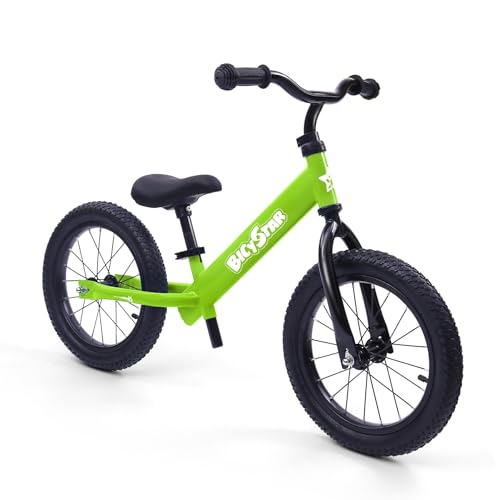
This 14-inch balance bike from Bicystar is built for kids aged 3 to 7 and operates pedal-free to accelerate balance development. It weighs about 10 pounds, keeping it light enough for young riders to handle independently. The seat height adjusts from 15 to 22 inches, and the handlebars range from 25 to 28 inches, enabling growth without outgrowing the bike too quickly. The no-pedal design promotes balance and coordination, giving children a head start before moving on to a pedal bike. The model emphasizes a simple, enjoyable learning process on a compact frame.
As children grow, the Bicystar balance bike remains a good fit thanks to its adjustable geometry and lightweight construction. The bike’s light weight reduces fatigue for both kids and parents, while the adjustable range supports a variety of inseams and heights. The balance-first approach helps kids build confidence through successful, self-directed rides, whether on paved driveways or grassy yards, fostering a positive first biking experience.
Strider 12-Inch Sport Balance Bike
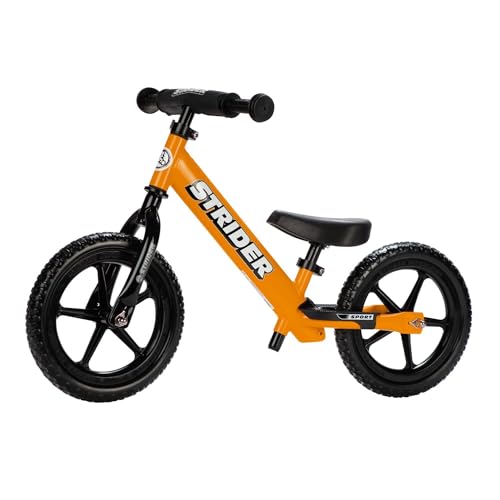
The Strider 12-Inch Sport Balance Bike is Strider’s versatile all-around model, designed for children from about 12 months up to 4 years. It features a starting seat height of 11 inches and an adjustable range up to 17 inches, with handlebars similarly adjustable to fit a broad range of inseams. Foam rubber tires deliver a maintenance-free ride—they never go flat—reducing obstacles to practicing balance and steering. A safety pad and padded seat add a layer of comfort and protection as toddlers experiment with rhythm and control.
One notable advantage is tool-free adjustments, enabling quick changes as a child grows. The no-pedal design keeps the focus on balance, steering, and confidence-building, making this model a reliable option for families seeking a straightforward, low-friction introduction to biking. Its durability and ease of use support repeated practice, helping kids progress toward pedals with familiarity and fewer hiccups in the transition phase.
Bobike Toddler Balance Bike

Bobike offers a toddler balance bike designed for children aged 2 to 5. The two-wheeled car-like frame uses a strong carbon steel body, with adjustable seats and handles to accommodate growth. The kit is straightforward to assemble, typically taking only a few minutes, and requires no specialized tools. The emphasis is on a stable learning platform that mirrors the feel of riding a bicycle, helping kids develop balance and early riding skills in a safe, durable package that’s well suited for daily use and exploration.
Bobike’s design prioritizes a beginner-friendly riding experience, with an emphasis on safety and longevity. The adjustable components let families keep the bike aligned with a child’s changing height, while the robust construction supports active play both indoors and outdoors. The result is a dependable first bike that pairs simplicity with dependable performance as children gain confidence on two wheels.
Buying Guide
When selecting a balance bike for a child, consider growth, weight, tire type, and adjustability. The right bike should adapt as your child grows, remain easy to handle, and provide a safe learning environment. The following considerations help compare the options above and identify the best fit for your family.
- Age range and inseam fit: Look for wheel size and seat height that accommodate your child’s current height and anticipated growth. Seek models with adjustable seats and handlebars to extend usable years.
- Bike weight and materials: Lighter frames are easier for young riders to maneuver, while sturdy materials (carbon steel, reinforced nylon) offer durability. Balance bikes typically prioritize light weight for easy handling during early learning.
- Tire type and terrain performance: Air-filled tires provide better shock absorption on uneven surfaces, while foam tires stay maintenance-free and resist flats. All-terrain capability supports outdoor exploration beyond smooth sidewalks.
- Adjustability without tools: Tool-free height adjustments simplify growth spurts and frequent changes, reducing setup time and encouraging continued practice without frustration.
- No-pedal to pedal transition: A pedal-free design promotes balance and steering first; ensure the bike supports a smooth progression to pedals when your child is ready.
- Weight limit and safety features: Check the rider weight limit and safety components such as footrests, grips, padding, and protected handlebar ends to reduce injury risk during practice.
- Assembly and maintenance: Easy assembly and minimal maintenance contribute to a positive riding experience and more frequent practice sessions.
- Brand reputation and warranty: Brands with durable designs and clear warranties offer greater long-term value and confidence when choosing a first bike.
- Price and value: While prices vary, prioritize long-term usefulness and adjustable features over the initial cost to maximize value.
- Environment and usage: Consider where your child will ride most—indoors, driveways, or grassy yards—and pick a wheel size and tire type that suits that environment.