Balance bikes teach young riders essential steering and coordination without the distraction of pedals. For a 7-year-old, the right size and features can balance safety with growth, letting them transition to a standard bicycle smoothly. This guide highlights five top picks that fit older kids, focusing on lightweight frames, adjustable sizing, and reliable tires for mixed terrains. Each product below includes a brief spec snapshot in the summary table and a detailed look at why it helps kids build confidence. Use the Buying Guide after the reviews to compare options side-by-side.
| Product | Brand | Size/Age | Key Feature |
|---|---|---|---|
| Ridego 14-Inch Balance Bike | Ridego | 14″ | Ages 3-7 | Lightweight frame, air tires; no pedals |
| 14 Inch Balance Bike (Bicystar) | bicystar | 14″ | Ages 3-7 | Adjustable height; ultra-light design |
| GASLIKE 16 Inch Balance Bike | GASLIKE | 16″ | Ages 4-8 | Sturdy carbon steel frame; pneumatic tires |
| Bikeboy 3-in-1 Balance Bike | bikeboy | 12/14/16″ | Ages 2-7 | Dual-use; quick mode switch; pedals option |
| OHIIK 2-in-1 Balance Bike | OHIIK | 12/14/16″ | Ages 3-7 | Adjustable, pedal kit included; 360° handle |
Ridego 14-Inch Balance Bike

The Ridego 14-Inch Balance Bike is designed for children aged 3 to 7, offering a first step toward confident riding with no pedals. It weighs about 8.16 pounds and supports up to 110 pounds, making it easy for kids to manage and for parents to carry. The lightweight glass-reinforced nylon frame delivers durability while remaining simple to handle, and the air-filled tires absorb shocks for a smoother ride on sidewalks, trails, and lawns.
With its pedal-free design, the bike emphasizes balance and control, helping kids transfer their skills to a traditional bicycle later. The deep anti-slip tread on the tires enhances grip on varied surfaces, while the corrosion-resistant frame stands up to outdoor adventures. This model is a practical option for families seeking a long-lasting starter bike that grows with a child’s abilities.
14 Inch Balance Bike By Bicystar
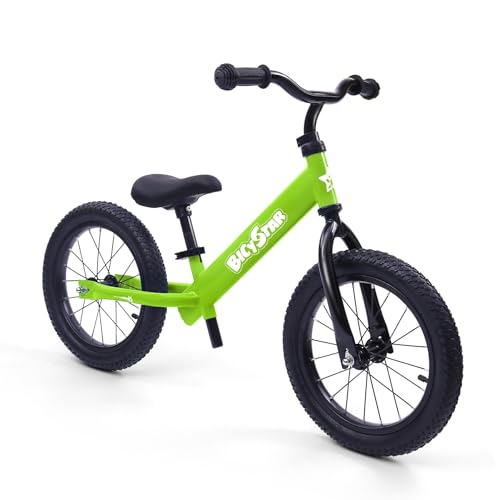
This 14-inch balance bike by Bicystar focuses on learning balance and coordination, setting kids up for a smooth transition to pedal bikes. It grows with the child from ages 3 to 7, featuring an adjustable seat height (15-22 inches) and handlebar height (25-28 inches). Weighing roughly 10 pounds, it remains highly maneuverable for smaller riders while still supporting growth into older ages.
The bike’s light weight makes it easy for children to lift and maneuver, promoting independence. The adjustable design ensures a comfortable riding position as legs lengthen and reach improves, contributing to longer, more confident practice sessions on different terrains.
GASLIKE 16-Inch Balance Bike

The GASLIKE 16-Inch Balance Bike is built for bigger kids, ages 4 to 8, with a triangular carbon steel frame that enhances stability and durability. The 16-inch pneumatic tires deliver a smoother ride on a variety of surfaces, from pavement to grass, helping older children develop balance and confidence at a more advanced size.
Designed for growth, this balance bike supports a natural transition toward pedal bicycles. The robust construction and larger wheel size deliver more stability at speed, making it a solid option for kids who are ready to take on longer rides and more challenging terrain while still learning balance without pedals.
Bikeboy 3-in-1 Balance Bike

Bikeboy’s 3-in-1 balance bike offers a versatile setup that grows with a child, featuring 12/14/16-inch options and a quick switch between toddler balance bike and kids bicycle modes. This flexibility supports a progressive learning path as kids develop balance, coordination, and confidence. The design emphasizes safe, effective learning, helping children overcome initial uncertainty and gradually master riding skills ahead of their peers.
The balance bike mode focuses on core motor skills and body responses, while the pedal-enabled mode provides a controlled transition to standard biking. Parents can enjoy extended use across multiple kids or as a child grows, thanks to its adjustable sizing and adaptable learning theory.
OHIIK 2-in-1 Balance Bike

OHIIK’s 2-in-1 balance bike offers a convenient transition from balance to pedaling with a pedal kit and optional training wheels. The seat and handlebar are adjustable without tools, allowing the bike to grow with the child. A 360-degree rotating handle and a rear-wheel brake provide enhanced control and safety for young riders as they build confidence on a wider range of surfaces.
The 2-in-1 design supports early exploration of pedaling while keeping the balance-focused practice intact. This model is particularly suitable for families seeking a two-stage path from balance to pedal biking without buying multiple bikes or accessories separately.
Buying Guide: How To Choose The Right Balance Bike
Size And Growth Fit
Size is the primary determinant of comfort and safety. For a 7-year-old, look for bikes with wheels in the 14–16 inch range. Consider adjustable seat heights and handlebar positions to ensure a secure stance with feet flat on the ground when seated. Models that grow with the child—via adjustable seats, handlebars, or multi-size wheels—offer the best long-term value.
Adjustability And Longevity
Choose bikes that provide easy adjustability without tools, or that include 2-in-1 or 3-in-1 configurations. This supports continued use as kids grow taller and gain more riding experience. A bike that can transition from balance mode to pedal mode (with pedals added later) provides a structured progression and reduces the need for a new bike every few years.
Weight And Frame Material
Lightweight frames are easier for kids to handle, especially during starts and stops. Materials like aluminum or glass-reinforced nylon offer good strength without excess weight, while steel frames can be sturdy but heavier. Heavier bikes may slow growth and make practice more tiring for younger riders.
Wheels, Tires And Terrain Adaptability
Air-filled tires provide better shock absorption and traction on varied surfaces, including grass and gravel, which suits outdoor play. Some models use smaller 12-inch wheels that are suitable for younger toddlers, while 14–16 inch wheels better serve older children with longer legs and more room to balance at speed.
Safety Features And Braking
Look for bikes with reliable brakes (rear brakes on pedal-enabled models), non-slip pedals (if included), and a stable design with a low center of gravity. Safety-focused features such as hand brakes, rounded frame edges, and easy-to-grip handlebars help reduce falls and make learning more comfortable for both kids and parents.
2-in-1 Models And Value
Two-in-one options that convert from balance bikes to pedal bikes or include training wheels can offer significant long-term value. They let a single bike cover multiple stages of development, potentially saving money and storage space while teaching skills progressively.
Across these five top picks, the balance between weight, adjustability, and growth potential matters most for a 7-year-old. If your child is still refining balance but already approaching longer rides, prioritizing a larger wheel size and robust tires can enhance stability. For younger-than-7 riders who will still benefit from a growth path, a 2-in-1 or 3-in-1 model may be the best overall investment. Each option below represents a solid balance of safety, durability, and growth potential for older kids.