Choosing a balance bike for an 18-month-old focuses on safety, adjustable growth, and ease of use. The five models below are well-suited for early riders, offering pedal-free designs, stable wheels, and frames that adapt as your child grows from walking to confident riding. Each option emphasizes balance and coordination while keeping little feet supported. Use this guide to compare features, durability, and setup to find the best match for your family’s space and your child’s development.
| Product | Brand | Age Range | Key Benefit |
|---|---|---|---|
| SEREED Baby Balance Bike For Toddlers | SEREED | 12-24 months | Four-wheel stability; no-pedal learning with foot protection |
| KRIDDO Toddler Balance Bike | KRIDDO | 18 months-5 years | Removable customizable plate; sturdy frame |
| Retrospec Cub 2 Balance Bike | Retrospec | 18 months-3 years | Airless tires; adjustable seat and handlebars |
| Yvolution Y Velo Junior Balance Bike | Yvolution | 18 months-4 years | Dual rear wheels for stability; grows with child |
| EveStone 5-in-1 Toddler Bike | EveStone | 18-48 months | Five riding modes; transitions from guided trike to balance bike |
SEREED Baby Balance Bike For Toddlers
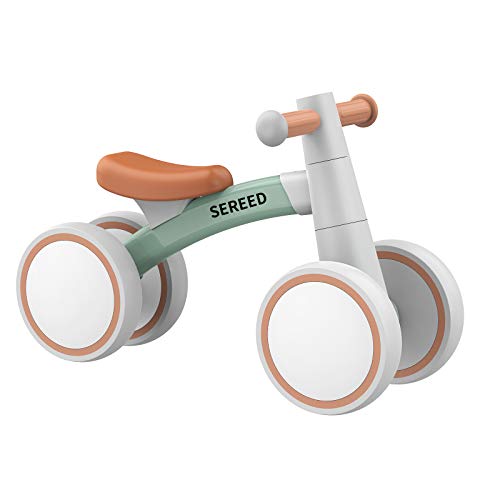
The SEREED balance bike is designed for ages 12-24 months, providing a safe step into riding with a no-pedal format and four widened wheels to stabilize early steps. By keeping feet on the ground and reducing the chance of clamping, it supports cautious toddlers as they learn balance and steering.
- Age range: 12–24 months
- No-pedal design with widened closed wheels to protect little feet
- 135° turning limit and gravity steering for controlled moves
- Sturdy aluminum alloy frame, non-slip TPU handles, and a softly cushioned seat
- Non-slip wheels suitable for indoor and outdoor use
Ideal for indoor play or small outdoor spaces where stability and foot-propelled progression are beneficial.
KRIDDO Toddler Balance Bike

KRIDDO’s 12-inch push bike targets children from 18 months to 5 years, offering a sturdy frame and a friendly design to promote early balance, standing, and gentle riding. It includes a removable customizable plate enabling kids to personalize their bike with stickers, encouraging engagement and ownership.
- Ages 18 months to 5 years
- Removable customizable plate with included stickers
- Soft grip handlebars and a soft PU seat for comfort
- Durable carbon-steel frame rated up to 110 lbs
- Safe for outdoor exploration as confidence grows
The ability to personalize the plate adds a playful element that motivates youngsters to practice balance and steering.
Retrospec Cub 2 Balance Bike

Retrospec Cub 2 is designed for toddlers 18 months and up, with an easy-mount frame that builds confidence as children glide and explore independently. The bike grows with your child thanks to an adjustable seat height from 11 to 14.5 inches and quick-release handlebars, ensuring an ideal fit from first steps to confident strides.
- Ages 18+ months; suitable through early preschool
- Adjustable seat height 11–14.5 inches and quick-release handlebars
- Maintenance-free airless tires for smooth rides on various surfaces
- Durable frame designed for growing riders
The low-maintenance design helps parents minimize upkeep while supporting a child’s evolving balance skills.
Yvolution Y Velo Junior Balance Bike

The Y Velo Junior balances the need for stability and growth. It features a dual rear wheel design that helps early riders practice balance with confidence before transitioning to a single-wheel setup. The seat and handlebar heights are adjustable to accommodate a child from approximately 18 months to 4 years, supporting a ride height up to about 14 inches.
- Dual rear wheel stability for new riders
- Adjustable seat height 11”–14.17”
- Grows with your child from 18 months to 4 years
- Supportive design to build motor skills and coordination
This model emphasizes gradual progression from a stabilizing dual-wheel feel to a single-wheel balance as confidence builds.
EveStone 5-in-1 Toddler Bike

EveStone offers a 5-in-1 system that transitions from guided trike to independent balance bike through three forms and five riding modes, supporting children from 18 to 48 months. Its design emphasizes stability with a wide base and extended rear wheels to minimize heel injuries and tipping risks as kids learn to ride.
- Five riding modes across 3 bike forms
- Anti-tip design with a wide triangular base
- Tool-free assembly with quick-release pedals and one-click mode switch
- Suitable for indoor and outdoor use
The versatility reduces the need for multiple separate purchases as a child’s abilities develop.
Buying Guide
When selecting a balance bike for an 18-month-old, consider the child’s size, safety needs, and how the bike will adapt as growth occurs over the next few years. Stability-focused four-wheel designs are often easier for very young beginners, while three-wheeled or multi-mode bikes offer more growth potential. Look for adjustable seat and handlebar heights to match growth spurts, and note whether tires are air-filled or maintenance-free, as this affects ride comfort and upkeep. For homes with limited space, pedal-free options with compact footprints can be ideal. Always pair a balance bike with a properly fitted helmet and basic supervision during sessions.
- Age and weight range: Ensure the bike supports your child’s current size and anticipated growth.
- Stability and learning progression: Four-wheel models favor early balance; multi-mode bikes support longer use.
- Adjustability: Seat height, handlebar height, and frame length should accommodate growth.
- Wheel and tire type: Air tires offer cushion; airless tires reduce maintenance but may provide a stiffer ride.
- Safety features: Anti-tip designs, protective foot areas, and rounded edges reduce risk during practice.
- Assembly and maintenance: Tool-free setups and easy upkeep help busy families stay on track.
- Indoor vs. outdoor suitability: Consider your living space and terrain when choosing wheel types and stability features.
In choosing among these options, align features with your child’s temperament and your home environment. A bike that grows with your child and encourages confident exploration will likely provide longer-term value and a smoother transition from walking to riding.