Choosing a no-pedal balance bike helps toddlers learn balance, steering, and confidence without pedaling. The following five models are strong options for ages 10-36 months, featuring adjustable seats, lightweight frames, and safe wheel designs for indoor and outdoor use. Use the quick table below to compare age ranges and standout features at a glance.
| Product | Brand | Age Range | Notable Feature |
|---|---|---|---|
| XBONFOE Balance Bike | XBONFOE | 10–24 months | Adjustable seat; aluminum frame |
| Bobike Balance Bike | Bobike | 12–36 months | ASTM EN71 certified; 135° steering |
| SEREED Balance Bike | SEREED | 12–24 months | 135° turning; four wheels |
| Gamfeiny Colorful Lighting Balance Bike | Gamfeiny | 10–36 months | Glowing rear wheel; safe, closed wheels |
| allobebe Balance Bike | allobebe | 12–36 months | Lightweight; silent wheels |
XBONFOE Balance Bike For Toddlers

XBONFOE’s baby balance bike is built for early movers, combining a lightweight aluminum frame with a soft, supportive seat. The design emphasizes a quiet riding experience with four wear-resistant wheels that are gentle on floors, making it suitable for both indoor practice and outdoor strolls. An adjustable seat allows the bike to grow with the child, accommodating shorter and taller toddlers alike as they begin to explore balance and basic steering without pedals.
Age flexibility and safety are central: the seat adjusts from 10.6 to 11.4 inches, with a secure “click” indicating proper locking. The no-pedal format reduces complexity, while the sturdy frame and non-slip handlebars offer stability during first rides. This model fosters confidence as children learn to balance, steer, and coordinate their movements before transitioning to a geared bicycle.
Bobike Baby Balance Bike

Bobike offers a sturdy starter ride designed for toddlers from 12 to 36 months. The bike emphasizes safety and durability with a strong steel frame, closed non-slip wheels, and a wide wheelbase to reduce tipping risk. It serves as a practical first ride that helps children discover balance, walking, and the basics of steering in a controlled, low-pressure way.
Safety certifications are a highlight: ASTM F963-11 and EN71 compliance underscore toy-safety standards. The 135-degree steering limit minimizes side falls, while the fully enclosed wheels protect little feet from pinch points. A comfortable, accessible seat height and a straightforward setup support caregivers guiding young riders through their early balance practice with confidence.
SEREED Baby Balance Bike
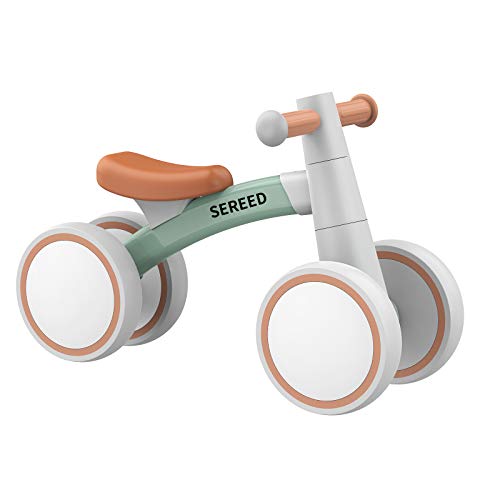
SEREED targets 12- to 24-month-olds with a four-wheel balance bike designed for stability and early mobility. The no-pedal format encourages balance, steering, and coordination while keeping the ride simple and approachable. A lightweight aluminum frame and a softly padded seat contribute to comfortable, confident sessions both indoors and outside, letting toddlers practice without the intimidation of pedals or gears.
Key safety features include a 135° turning limit and gravity-inspired steering that keeps the bike on the floor, preventing tipping. Fully widened wheels reduce floor wear and provide a solid base for beginners. Parents can expect a gentle progression from standing balance to seated balance as motor skills develop, supported by a dependable, easy-to-handle design.
Gamfeiny Colorful Lighting Balance Bike

Gamfeiny adds a playful twist with a rear wheel that glows through motion, appealing to toddlers aged 10–36 months. This no-pedal bike supports balance, steering, and coordination while sparking imaginative play. The design emphasizes safety with a fully enclosed wheel system and a 135-degree steering limit to minimize side falls, making it a friendly option for both indoor playrooms and outdoor patios.
The bike is built around a sturdy frame with a soft seat and comfortable grips, ensuring small hands can manage balance practice without strain. The internal electronics are simple (wheel glow through spinning), avoiding batteries while delivering a visual cue that motivates little riders as they grow more confident in their movements.
Allobebe Balance Bike For Toddlers

Allobebe offers a lightweight option designed for 1-year-olds and up, featuring a four-wheel base for stability and a no-pedal format that supports early mobility. The bike’s modest weight and simple design aim to ease toddlers into balance and coordination without overwhelming them as they progress toward walking and cruising.
Adjustability and safety are prominent; the seat height ranges from about 10.2 to 11 inches, enabling growth up to roughly three years. The silent wheels protect floors during indoor use, while the cheerful pattern adds a friendly, approachable look that can appeal to kids and parents alike as they embark on short, confidence-building rides.
Maysuke Balance Bike (Alternative Model)

Maysuke’s balance bike is designed for 1-year-olds and older with a four-wheel base and no pedals, promoting balance and early mobility. The aluminum frame and soft seat provide a gentle, supportive ride, while the design emphasizes safety with a controlled turning radius and non-slip components, helping children gain confidence as they explore walking-enhanced balance.
With a growth-friendly seat and hand grips, this model supports extended use as a child develops. The lightweight construction makes it easy for a caregiver to assist during initial sessions, and the no-pedal setup reduces complexity, allowing kids to focus on balance, foot placement, and steering control as their coordination improves.
Buying Guide
Choosing a no-pedal baby balance bike involves balancing growth potential with safety and usability. Start with your child’s height, weight, and walking readiness to determine the best age range. Look for an adjustable, low seat height so the child can touch the ground with both feet as they practice balance. A lightweight frame aids handling for caregivers and reduces fatigue during training sessions.
- Age range and growth: Select a model that supports your child as they move from learning to stand to a more confident balance journey, typically within 10–36 months.
- Seat height and adjustability: Ensure the seat has clear locking and adjustable height to accommodate rapid growth.
- Wheel design and floor safety: Choose silent, non-slip wheels and a fully enclosed wheel setup to protect little feet and prevent floor damage indoors.
- Stability vs. maneuverability: Four-wheel bases offer extra stability for new walkers, while a well-balanced design helps teach steering without pedals.
- Materials and weight: Aluminum frames are lightweight and durable, but consider weight limits and how easy the bike is for a caregiver to move.
- Safety features and certifications: Look for certifications such as ASTM F963-11 and EN71, as well as deliberate design choices like 135-degree steering limits to minimize falls.
- Maintenance and durability: Check for secure seat locks, smooth bearings, and simple, tool-free assembly to encourage regular use and easy upkeep.
- Indoor vs. outdoor use: If space is limited, prioritize quieter wheels and floor-friendly materials; for larger spaces, ensure the bike remains stable over varied surfaces.
- Growth compatibility: A seat and handlebars that adapt as your child grows provide longer-term value and reduce the need for frequent replacements.
Across these options, the common thread is safe, gradual progression toward independent balance and steering. Parents should assess each model’s age recommendations, weight limits, and safety features to find the best fit for their child’s development and their living space. The best choice will combine a sturdy yet lightweight build, adjustable seating, and wheel designs that support confident practice in a home or yard.