Electric scooters that run on batteries and a motor — often called automatic or electric scooters — are a popular choice for kids who want independent, powered rides. The following selections emphasize safety, durability, and age-appropriate performance. Each model brings unique strengths, from high-speed options for older kids to stable, three-wheel designs that help younger riders feel secure. Below you’ll find concise overviews, a quick product snapshot, and a practical Buying Guide to help families compare features and choose the best fit for their child.
| Product | WERHY | iScooter IK3 | Hiboy Q2 Lite | ECOROAD EK6 | Gotrax KS1 |
|---|---|---|---|---|---|
| Top Speed mph | 19 | 10 | 9.3 | 10 | N/A |
| Range / Runtime | Up to 12 miles | 60-80 minutes | N/A | 5-7 miles | N/A |
WERHY 350W Kids Electric Scooter

The WERHY scooter is built for older children seeking stronger performance. It uses a 350W motor and reaches speeds up to 19 mph, offering a confident ride for qualified riders. A 36V 162Wh battery supports up to about 12 miles of range under favorable conditions, with real-world results varying by rider weight and terrain. The scooter provides three speed modes and app connectivity for easy control of riding modes, lighting, cruise control, and status displays. A lightweight, foldable design helps with storage and transport. Weighing around 22 pounds, it folds in about three seconds for quick portability.
Safety and usability are central. The dual braking system delivers strong, predictable stopping power, while the sturdy frame supports daily use at home or on campus. The Bluetooth app enhances rider control and monitoring, making it easier for parents to oversee settings and performance. The overall package targets older kids who want higher speed and reliable features, with emphasis on ease of use, durability, and safety in everyday scenarios.
iScooter IK3 Kids Electric Scooter

The iScooter IK3 is designed for kids aged 6–12 who are ready for a guided, energetic ride. It uses a 150W motor with three adjustable speeds (3/6/10 mph) to accommodate growing riders and changing comfort levels. A magnetic charging system simplifies plugging in, helping to prevent cable wear and misconnection. A single charge delivers roughly 60–80 minutes of use, with range affected by factors such as rider weight and terrain. The IK3 also features a simple LED display to monitor speed and battery life, plus safety-oriented design choices that minimize unexpected acceleration.
Charging convenience and safety align with practical family needs. The magnetic port reduces connection wear, while the selectable speeds help parents tailor the ride to a child’s experience. The lightweight construction and straightforward controls support independent riding while maintaining oversight through the app or manual checks. The IK3 stands out for balance between approachable speed, intuitive operation, and a focus on user-friendly charging and monitoring features.
Hiboy Q2 Lite With Seat

The Hiboy Q2 Lite emphasizes a comfortable seated experience with a 100W motor and a top speed around 9.3 mph, making it suitable for younger riders or those who prefer a relaxed ride. It offers three adjustable speeds and features a rear basket for small items, plus LED neon/brake lights and an LCD display for clarity on speed and battery life. The design prioritizes safety and ease of use, with intuitive controls and a weight-conscious frame. The Q2 Lite provides a steady, low-risk introduction to electric scooting for beginners and younger children.
Portability is aided by its lightweight frame, while the seat adds extended comfort for longer sessions. The scooter’s controls are designed to minimize distractions for younger riders, promoting a safer riding environment. For families seeking a gentle, low-speed option with practical features, the Q2 Lite offers a balanced combination of comfort, visibility, and straightforward operation.
ECOROAD EK6 Kids Electric Scooter
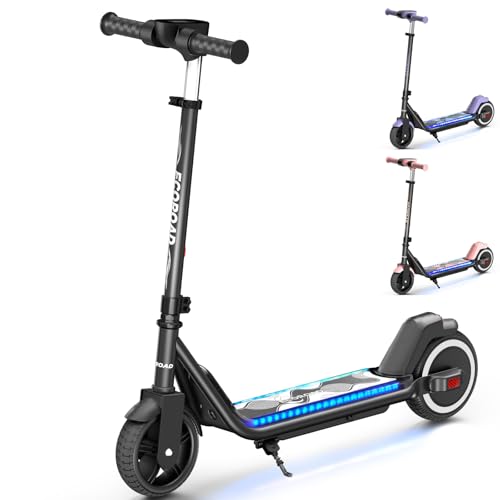
The ECOROAD EK6 focuses on adjustable sizing and safety features for growing riders. It offers three speed modes (3/6/10 mph), enabling progress from cautious starts to more confident cruising. The height-adjustable handlebars (32″/35.5″/39″) fit children from roughly 6 to 8 years old and accommodate riders up to about 154 pounds. A 21.6V battery powers 5–7 miles of riding per charge, and dual braking enhances stopping reliability. The scooter also incorporates smart safety measures, including auto-shutoff after five minutes of idle, helping conserve battery when not in use.
Durability and practical use are central. The EK6 is designed for regular commutes or family outings, with a focus on an adjustable fit that reduces the need for frequent replacements as a child grows. Its combined features create a well-rounded option for families seeking a mid-range, adaptable electric scooter for kids who are developing riding skills and confidence.
Gotrax KS1 Kids Kick Scooter

The Gotrax KS1 is a three-wheel scooter designed to grow with younger riders. It features LED-lit wheels that add visibility and excitement, especially in low light. Lean-to-steer geometry helps develop balance and coordination as kids learn to navigate by shifting their weight. Height-adjustable handlebars provide a comfortable riding height across three settings (approximately 33.7″, 31.9″, 29.9″), and the overall weight is light at about 5.1 pounds for easy carrying and storage. The KS1 supports riders up to around 100 pounds and is targeted toward ages 2–8, offering a simple, engaging entry into scooting with a safety-focused design.
Disassembly and compact storage are straightforward, making it a practical option for car trips or quick trips to the park. The KS1 emphasizes safety and ease of use for younger children, with a focus on control, stability, and a visually appealing design that encourages active play while meeting parental expectations for safety and durability.
Buying Guide
Age and Size Fit
Choose a scooter that matches your child’s age, height, and weight. Some models offer adjustable handlebars and seat options to accommodate growth, while others provide fixed designs that target a narrower age range. Ensure the maximum rider weight aligns with your child and consider how quickly they will outgrow the scooter. Safe use depends on the rider being able to reach the deck and brake confidently without overextending.
Motor Power, Speed, and Control
Electric scooters for kids come with varying motor power and top speeds. Higher power provides quicker acceleration and better performance on hills but demands more mature handling and extra safety measures. For younger children, lower speeds (around 6–10 mph) and three braking options enhance control. For older kids, higher speeds may be appropriate, provided adequate protective gear and supervision are in place. Look for models with adjustable speed modes to grow with the child.
Braking System and Safety Features
Brakes are a critical safety element. Dual braking systems (electrical and mechanical) offer redundancy and reliable stopping power. LED headlights, reflective decals, and horn or bell features improve visibility. Lockable cruise control may be helpful for older riders who want a steady ride, but ensure it can be safely disabled. Ensure the scooter has a sturdy frame, non-slip deck, and appropriate tires for the rider’s typical terrain.
Wheels, Tires, and Terrain
Solid tires eliminate the risk of flats, but may offer a stiffer ride on rough surfaces. Pneumatic tires provide better shock absorption but require more maintenance. Three-wheel designs increase stability and are often preferred for beginners or younger riders, while two-wheel designs can be more agile for older kids. Consider the typical riding surface (pavement, sidewalks, grass) when choosing tire type and scooter geometry.
Portability, Storage, and Maintenance
Folding mechanisms and lightweight frames enhance portability and storage in small spaces or cars. Check how quickly the scooter folds and whether it stays compact enough to fit in a trunk or closet. Regular maintenance, including battery care and brake checks, helps extend life and performance. Some models pair with mobile apps for battery monitoring and settings, which can be convenient for busy families.
Battery Life, Charging, and Longevity
Battery capacity and charging time influence how often you’ll recharge. Larger batteries typically deliver longer rides but add weight. Look for clear indicators of remaining charge and consider charging time relative to riding plans. App-integrated models may offer more precise battery reporting and maintenance tips to prolong battery life.
What To Consider By Use Case
For beginners or younger children, prioritize stability, low top speed, and simple controls. For older kids seeking more range and speed, choose models with higher motor power, longer range, and advanced safety features. If you want a scooter that grows with your child, favor adjustable handlebars, seat options, and multiple speed modes. Always pair the scooter with proper safety gear, and supervise new riders during initial sessions.