Three-wheel electric bikes offer stability, comfort, and practical cargo options for daily commuting, errands, and relaxed weekend rides. This guide highlights top three-wheel models that balance power, safety, and value. Each selection emphasizes motor performance, battery range, braking power, and ease of use so American riders can compare across features. Whether you need a robust rider for hills, a compact folding trike for urban trips, or a sturdy cargo-capable trike, these options showcase the best in class for stability and confidence on the road.
| Product | Brand | Motor Power (W) | Battery (Wh) | Range (miles) |
|---|---|---|---|---|
| Qlife Triker Electric Bike | Qlife | 750W peak brushless | 468 | Up to 50 |
| NARRAK Electric Tricycle for Adults | NARRAK | 750W (1350W peak) | 624 | Up to 50 |
| Soumye Electric Tricycle for Adults | Soumye | 350W (540W peak) | 374 | Up to 30 (40 PAS) |
| QRONGE Electric Trike for Adults | QRONGE | 750W (960W peak) | 540 | Not specified |
| Geemax Electric Tricycle for Adults | Geemax | 350W (500W peak) | 468 | 28-40 |
Qlife Triker 3-Wheel Ebike

The Qlife Triker combines a robust 750W peak brushless motor with a sizeable 468Wh removable battery. This configuration supports strong acceleration and a top speed around 16 MPH, making it suitable for urban commutes and moderate hills. A removable battery simplifies charging at home or on the go, reducing downtime between rides. Disc brakes provide reliable stopping power, and the rear differential contributes to stability on uneven pavement, helping short trips feel controlled and predictable in everyday traffic.
Riders benefit from a stable tri-wheel stance that helps with balance during turning and loading cargo. The motor’s torque assists climbs or headwinds without requiring excessive effort, while the battery’s range line up to about 50 miles supports longer weekend outings. The overall design emphasizes safety and practicality, with a focus on a trusted braking system and a chassis that keeps you steady at modest speeds.
NARRAK 750W Tricycle For Adults

The Narrak trike delivers power through a rear central hub motor rated at 750W, with peak output around 1350W. Its differential system enables varied rear-wheel speeds, enhancing handling during turns and on uneven surfaces. The 48V 13Ah battery offers solid range, up to 50 miles in PAS mode, balancing speed and efficiency for longer rides. The rider experience centers on multiple modes, including pedal-assist, walk mode, and full electric, guided by an onboard LCD display that presents speed, distance, and battery status for informed control.
The Narrak model emphasizes safety and longevity with UL-certified components and controlled power delivery. Its design supports smoother cornering and better stability on varied terrains, while the folding capability aids storage and transport. With a focus on advanced control and comfort, this trike suits riders seeking more aggressive performance without sacrificing stability.
Soumye 350W Tricycle With Removable Battery

The Soumye trike uses a 350W front hub motor (540W peak) to deliver smooth, everyday performance. Its 374Wh removable battery supports up to 30 miles of travel per charge, with up to 40 miles in pedal-assist mode, and the 36V system offers reliable efficiency for daily commutes. The trike provides three riding modes—throttle power, pedal assist, and regular pedaling—allowing riders to tailor the experience to traffic, terrain, and energy goals. A large LCD display keeps essential ride data visible for quick adjustments on the road.
Design considerations emphasize a comfortable ride with stable handling and practical features, including a spacious basket for groceries or gear. The foldable frame aids storage in small spaces or apartment living, while the front fork and wheel setup provide predictable steering at common urban speeds. This model suits riders who want a simple, versatile trike with straightforward maintenance and dependable daily use.
QRONGE 960W Peak Electric Trike
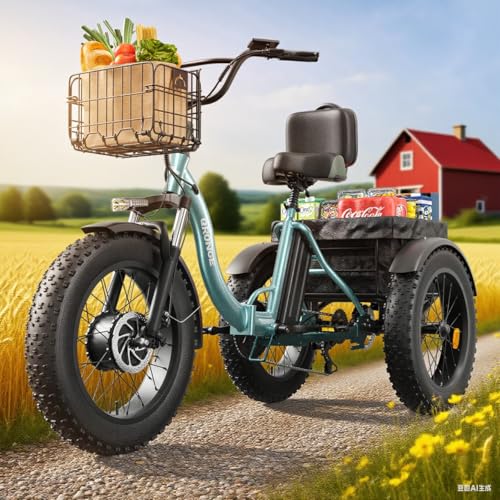
QRONGE’s Lava Trike centers on high power with a 750W motor and 960W peak, delivering fast acceleration and comfortable cruising up to 25 MPH. A notable feature is the large rear basket and a foldable front basket, enabling practical storage for shopping or gear. The trike emphasizes stability and torque for confident handling across mixed surfaces, with the ability to carry substantial loads and remain controllable at speed.
While this model highlights power and cargo versatility, the specific range data isn’t listed in the available features. Potential buyers should consider battery choice and charging routines to maximize uptime on longer rides. The frame construction focuses on durability and stability, making it a strong option for riders who value brisk performance and practical capacity in a three-wheel format.
Geemax 3 Wheel Electric Bicycle

The Geemax three-wheel bike blends a 350W motor with a 36V 13Ah lithium battery, delivering practical power for city streets and gentle hills. The motor peaks at 500W, offering a useful boost when starting from a stop or cresting mild grades. The design emphasizes stability through double-wall rims and disc brakes, which enhance grip and stopping precision on varied surfaces. A 20-inch fat-tire setup increases traction and comfort, helping riders maintain control during adverse weather or rough pavement.
With a range of 28-40 miles per full charge, this model balances affordability with practical daily use. It arrives 80% preassembled for quicker setup, and the foldable frame permits easier storage. The Geemax trike is well-suited for riders who want a dependable, entry-to-mid-level option that blends stability, cargo capability, and straightforward maintenance for regular trips and recreational outings.
Buying Guide
Choosing a three-wheel electric bike involves weighing power, range, and practicality against the rider’s needs. The following considerations help compare the five models above and other similar trikes on the market:
- Motor power and torque: Higher wattage often means quicker acceleration and better hill-climbing ability. A model with peak power above 1000W may feel bold on steeper grades, but consider how often you actually need that level of power and whether it affects weight and price.
- Battery capacity and range: Look at watt-hours (Wh) and real-world range under your typical riding conditions. A larger battery adds weight but extends distance between charges, which matters for longer commutes or weekend trips.
- Braking system: Disc brakes are common on these trikes and provide strong stopping power in varied weather. Ensure the braking system is reliable, easy to service, and matched to the bike’s overall weight and speed.
- Stability features: A tri-wheel design inherently enhances balance, but rear differential systems and wheel geometry can further improve handling in turns and on uneven surfaces. If you ride on mixed terrain, stability technology becomes a key factor.
- Payload capacity: Cargo space and rider plus gear weight should fit within the stated limits. Large baskets or racks expand usability for groceries, errands, or daily gear.
- Weight and portability: Heavier trikes may be more capable but require more vibration damping and sturdier storage. Folding models help with apartment living or vehicle transport.
- Display and ride modes: LCD dashboards that show speed, distance, and battery status support better ride planning. Multiple modes (throttle, pedal assist, or traditional pedaling) offer flexibility for different environments and fitness goals.
- Safety certifications and warranties: UL certifications and solid after-sales support contribute to long-term reliability, especially for daily use in a city setting.
Across the five models reviewed, riders can choose based on their priorities. For pure power and long-range potential, Qlife, NARRAK, and QRONGE offer higher wattage and robust performance. Soumye presents a balanced package with removable battery convenience and three riding modes for easy adaptation to various urban scenarios. Geemax prioritizes stability and affordability with fat tires and reliable braking, making it a practical entry point for new riders or those prioritizing confidence on slick surfaces. All five provide the stability benefits inherent to three-wheel designs, which can reduce fatigue on longer trips and improve maneuverability in crowded areas.