For parents seeking early riding experiences, balance bikes for toddlers provide safe, pedal-free ways to build balance, steering, and confidence. When shopping for a girl-specific option, looks matter as well as safety, adjustability, and ease of use. The selections below feature pastel to bold colors, child-friendly designs, and sturdy construction from trusted brands. Each product supports little learners with low center-of-gravity frames, adjustable seats, and reliable wheels to help toddlers transition to a pedal bike later.
| Product | Brand | Age Range | Notable Feature |
|---|---|---|---|
| Gamfeiny Colorful Lighting Balance Bike | Gamfeiny | 10-36 months | Colorful lighting rear wheel |
| Bobike Pink No-Pedal Balance Bike | Bobike | 1-3 years | Adjustable seat/handlebar |
| SEREED Balance Bike For 12-24 Months | SEREED | 12-24 months | 135° turning limit, aluminum frame |
| BEKILOLE Baby Balance Bike | BEKILOLE | 10-24 months | 4 silent wheels, safety certified |
| Youthkkee 12 Inch Balance Bike | Youthkkee | 2-5 years | Adjustable seat, high weight capacity |
Gamfeiny Colorful Balance Bike

Designed for toddlers ages 10 to 36 months, this pedal-free balance bike helps children learn balance, steering, and basic riding skills. A standout feature is the colorful lighting rear wheel that glows when it spins, with no batteries required. This playful element can motivate practice sessions and creative play. The bike uses a fully widened closed wheel to protect tiny feet, and a 135° steering limit to reduce tipping risks. A soft, cushioned seat and rounded edges contribute to a safe, comfortable ride for beginners indoors or outdoors.
- Colorful lighting rear wheel glows when spun
- Ages 10-36 months; no-pedal design supports balance learning
- 135° steering limit reduces fall risk; widened wheels protect feet
- Soft seat and safe, rounded construction
Bobike Pink No-Pedal Balance Bike
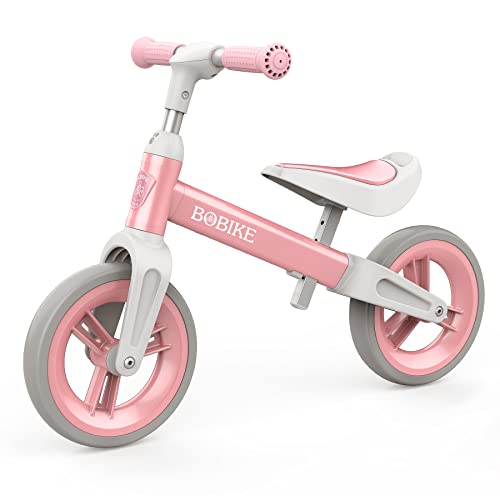
Bobike’s pink balance bike supports children up to about 4 years old, focusing on balance and steering before pedaling. The two-wheeled design mirrors a bicycle, giving a familiar feel for new riders. It features a durable carbon steel frame with an adjustable seat and handlebars to grow with the child. Enclosed, non-slip wheels enhance safety, and the bike is designed for straightforward assembly. This model emphasizes durability and user-friendly handling, helping parents guide kids as they learn to balance.
- Adjustable seat and handlebars
- Durable carbon steel frame
- Enclosed non-slip wheels for safety
- Easy, quick assembly
SEREED Balance Bike For 12-24 Months

SEREED’s balance bike for 12-24 months emphasizes safe, pedal-free riding and early balance development. The bike features a sturdy aluminum alloy frame, a softly padded seat, and non-slip wheels suitable for both indoor and outdoor use. A key safety feature is the 135° turning limit and gravity steering, designed to prevent tipping while encouraging controlled turns. Lightweight construction and smooth finishes support small hands as they learn to steer and balance, laying a foundation for transitioning to a pedal bike later.
- 135° turning limit; gravity steering
- Aluminum alloy frame; soft seat
- Non-slip wheels; indoor/outdoor use
BEKILOLE Baby Balance Bike For Toddlers
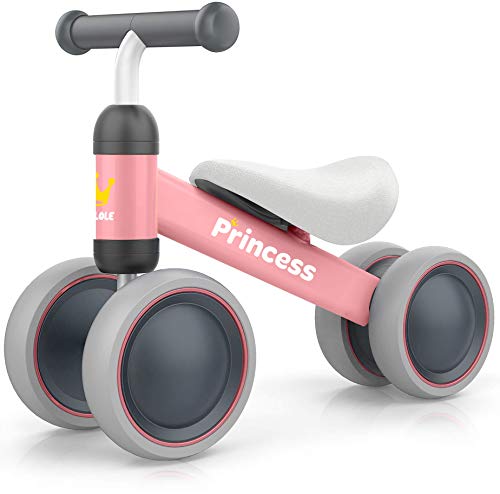
BEKILOLE’s balance bike is designed for toddlers from about 10 to 24 months, delivering a stable, low-to-ground ride. It carries a safety certification, with four silent wheels and a low center of gravity to minimize tipping. The carbon steel frame provides durability, while the soft EVA handlebar grip and cushioned seat ensure comfort. The 135° steering limiter helps prevent sharp turns, making it suitable for curious toddlers learning to balance around the house or in the yard.
- ASTM F963 safety certification
- Four silent wheels; low center of gravity
- 135° steering limiter; durable carbon steel frame
- Soft EVA handlebar; cushioned seat
Youthkkee 12 Inch Balance Bike

Youthkkee’s 12-inch balance bike targets children aged about 2 to 5 years, promoting balance and coordination with a no-pedal design. It combines a low center of gravity with a sleek, ergonomic silhouette that appeals to kids and parents alike. The bike supports up to 110 pounds, a testament to its durability, while an adjustable, tool-free seat height and handlebar height make setup easy as your child grows. This model balances practical features with a modern look to encourage extended use.
- No-pedal balance design helps learning balance
- Adjustable seat height; tool-free handlebars
- Durable frame; weight capacity up to 110 lbs
- Ergonomic, kid-friendly design
Buying Guide
Key purchase considerations
Choosing the right balance bike for a toddler girl involves balancing safety, growth, and enjoyment. Start with the child’s current height and leg length to estimate the appropriate seat height. Pedal-free designs help children focus on balance and steering before pedaling skills are introduced. Weight capacity matters; look for sturdy frames (steel or aluminum) that can handle a growing child. A low center of gravity improves stability on uneven surfaces and during turns. Adjustable seats and handlebars extend the usable life of the bike as your child grows.
Safety features and build quality
Safety features vary by model. Many bikes use a 135° steering limiter to prevent sharp turns and reduce tipping. Enclosed, non-slip wheels protect tiny feet and clothing from pinch points or slips. Four-wheel configurations add stability for very young riders, especially indoors. Look for rounded edges and smooth finishes to minimize scrapes. Certifications (such as ASTM F963) indicate adherence to consumer safety standards. A durable frame (carbon steel or aluminum) ensures longevity through active toddler use.
Adjustability and growth
Kids grow quickly, so adjustable components are crucial. Prefer bikes with tool-free seat height adjustments and adjustable handlebars to maximize ride time before a replacement is needed. Plate kits or customization options (stickers, plates) can help personalize the bike, which may improve engagement and continued interest in riding. The ability to transition from a balance bike to a pedal bike later is enhanced when the core balance skills are well established before pedaling is introduced.
Wheels, weight and environment
Wheel design influences performance. Four silent wheels offer extra stability for beginners, while 2-wheel designs provide a bicycle feel with greater challenge as confidence grows. Indoor use benefits from quiet wheels and soft seats, but outdoor use demands better traction and ruggedness. Weight matters for caregivers who may need to carry or transport the bike; lighter frames ease handling while still supporting a growing child.
Design and color considerations for toddler girls
Color and aesthetics can boost a child’s enthusiasm for riding. Choose gentle pinks, pastels, or bright accents that align with your child’s preferences, while not compromising on safety and comfort features. A visually appealing bike is more likely to be used regularly, supporting quicker balance and coordination improvements. However, prioritize fit, stability, and adjustability over color alone to ensure long-term usability.
Practical tips and comparisons
When comparing models, note the age range, adjustability, and weight capacity. For younger toddlers, prioritize four-wheel stability and low step-in height. For older children, ensure the bike can adjust to taller seating and handlebars to maximize longevity. Compare assembly requirements; some models need tools, while others offer tool-free setups. Finally, assess warranty coverage and after-sales support, which can matter if parts require replacement as your child grows.