Selecting a commercial-grade wall-mounted bike rack requires evaluating durability, weight capacity, and ease of loading. The following five models stand out for garages, studios, gyms, and small businesses, combining rugged construction with space-saving design. Each option accommodates common bike styles—from road and mountain bikes to fat tires—and includes hardware for solid wall mounting. This guide highlights key features, installation considerations, and practical pros and cons to help facility managers and operations teams choose reliable storage that keeps bicycles secure, accessible, and easy to service in busy environments.
| Product | Brand | Key Benefit | Capacity |
|---|---|---|---|
| No Lift Premium Heavy Duty Vertical Bike Storage | Velo Dock | No-lift loading; vertical space saver; commercial-grade | Not specified |
| Velo Dock Wall Mounted Bike Rack | Velo Dock | Lift-free design; supports heavy bikes; space saving | Not specified |
| Steadyrack Road Bikes | Steadyrack | Original pivoting design; fits narrow tires; space saving | Not specified |
| Steadyrack Mountain Bikes | Steadyrack | Built for big bikes; pivot to save space; supports wide tires | Up to 77 lbs |
| Ultrawall Stainless Steel Bike Storage Rack | Ultrawall | Stainless steel; high capacity; adjustable spacing | Up to 6 bikes / 300 lbs |
No Lift Vertical Bike Rack By Velo Dock

This model emphasizes ease of use in high-traffic commercial settings. The Easy-Load Bike Mount enables loading by pulling up on the rear wheel and sliding the front tire into the rack, eliminating heavy lifting. Vertical storage frees floor space, improving circulation and turnover in busy garages, clinics, or bike shops. Built from heavy-duty steel with a black powder-coated finish, it offers durable wall mounting for long-term service. The design accommodates road and mountain bikes, making it versatile for mixed fleets. Installation can be completed on wood or steel stud walls with standard mounting hardware, reducing downtime during setup.
Designed for safety and efficiency, this rack minimizes floor contact with tires and provides stable support for vertical storage. Its compact footprint makes it suitable for small commercial rooms or shared facilities, where multiple bays are needed without sacrificing floor space. The all-steel construction and protective coating help resist daily wear and environmental factors in garages, maintenance bays, or rental facilities. For teams managing bike fleets, the No Lift model combines simplicity with robust performance, helping staff process bike returns and parking quickly and safely.
Velo Dock Space-Saving Wall Rack

This lift-free wall rack from Velo Dock focuses on user-friendly, quick-storage for commercial spaces. The design allows loading by pulling up on the back wheel and guiding the front tire into the rack without lifting the bike off the ground, making it suitable for staff and patrons of multi-unit buildings, gyms, or bike shops. The heavy-duty steel construction paired with a black powder coat provides structural integrity for frequent use, while the vertical orientation preserves floor area for walking paths and service corridors. Includes mounting hardware compatible with wood or steel studs for flexible installation across facilities.
Capable of handling a range of bikes, including heavy electric models and fat-tire bikes, this rack supports diverse fleets common in commercial settings. Its simple, space-saving profile helps optimize interior layouts where floor space is precious, such as storefronts, cardio rooms, or maintenance areas. The robust finish and straightforward loading process help minimize training time for staff, promoting efficient, safe bike storage in busy environments.
Steadyrack Road Bike Rack

The Steadyrack Road Bike Rack represents the original pivoting vertical storage solution, widely adopted in commercial and residential spaces alike. Its pivot design enables easy access and efficient storage for road, hybrid, and commuter bikes. The system supports tires up to 2.1″ wide and wheel sizes ranging from 20″ to 29″, making it a versatile choice for fleets with standard road tires. The pivot feature lets staff store bikes flush to the wall, dramatically reducing floor footprint. The steel construction is built to endure daily use in garages, studios, or boutique bike shops, delivering long-term reliability with minimal maintenance.
Installation complexity is moderate, as mounting to wood studs or steel frameworks is typical. Once installed, it affords quick rolling-in storage—often a key requirement for high-turnover environments like rental facilities or service centers. The pivot approach is particularly beneficial where bikes must be moved frequently or accessed by multiple users, since bicycles can be swiveled out of the way with minimal effort. This model is well-suited for environments prioritizing space efficiency and straightforward operation.
Steadyrack Mountain Bikes

Steadyrack Mountain Bikes is designed for larger, wider tires and heavier bikes, making it a favored option for Trail, enduro, and fat-tire fleets in commercial spaces. It supports up to 77 lbs and wheels from 20″ to 29″ with tires between roughly 2.1″ and 2.8″ wide. The patented Pivot-to-wall design lets riders roll the bike onto the rack and pivot it into a compact position, optimizing wall clearance and floor space. In busy facilities, this reduces the risk of accidental tip-overs and provides a reliable solution for storing bulky bikes in tight rooms or entryways.
As a heavy-duty option, Steadyrack Mountain Bikes is often chosen for bike shops, shared garages, or workplaces with frequent bike use. The installation requires robust mounting into appropriate wall substrates, but once secured, the system delivers straightforward, ergonomic loading and unloading. The pivot mechanism remains a standout feature for maximizing usable space and ensuring racks stay out of the way during other operations.
Ultrawall Stainless Steel Bike Rack
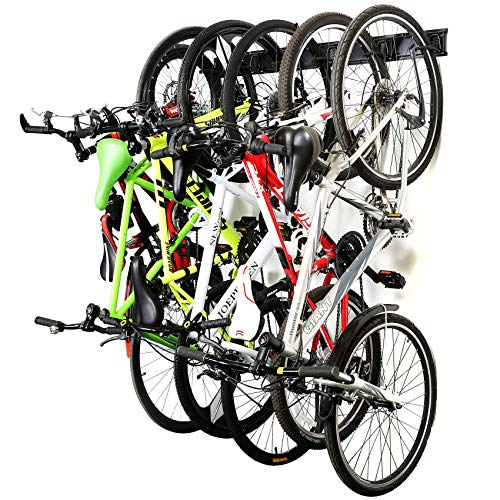
The Ultrawall Stainless Steel Bike Rack combines industrial-grade durability with high-capacity storage. It is designed to hold up to 6 bikes and supports up to 300 lbs of total weight, making it an ideal solution for bike fleets in communal spaces, apartment complexes, or fitness centers. The system uses a 48″ long steel rail with adjustable spacing, allowing staff to tailor bike placement to available wall length. A safety hook design adds stability, reducing the chance of bikes slipping or becoming dislodged in busy environments. Stainless construction provides corrosion resistance and long-term aesthetics in high-traffic areas.
For facilities requiring robust, scalable storage, Ultrawall offers flexibility and resilience. The ability to customize spacing helps accommodate various bike types, including road, mountain, and fat-tire models, while maintaining a neat, organized appearance. The combination of high capacity and sturdy hardware makes it suitable for multi-use spaces such as bike rental stations, corporate campuses with bike programs, and performance centers where consistent bike access is essential.
Buying Guide
When choosing a wall-mounted bike rack for commercial use, consider these core factors to ensure the solution matches your facility’s needs:
- Capacity and bike types: Match the rack’s weight capacity and tire width compatibility to your fleet (road, mountain, fat tire, or e-bike).
- Loading mechanism: Compare no-lift/lift-free designs versus pivot or roll-in systems. No-lift reduces worker strain; pivot designs maximize space with minimal floor clearance.
- Wall and mounting requirements: Confirm wall construction (wood studs, concrete, or steel) and ensure hardware is included or easily sourced. Consider vibration and load distribution in high-traffic areas.
- Durability and finish: Powder-coated steel offers good durability; stainless steel provides corrosion resistance in damp environments or long-term installations.
- Space efficiency: Evaluate the rack’s footprint and how it affects pathways, doors, and nearby equipment. Vertical racks are typically the strongest space savers.
- Maintenance and safety: Look for robust locking or safety hooks, smooth wheel contact, and ease of cleaning. A durable finish extends service life in commercial settings.
- Installation complexity: Some options require professional mounting, especially on concrete walls or multi-story buildings. Plan for access to tools and anchor systems.
- Future scalability: If you anticipate fleet growth, choose a system that can accommodate more bikes or be reconfigured with additional units.
- Cost of ownership: Factor in purchase price, installation, maintenance, and potential replacement parts when budgeting for fleet storage.
In evaluating options, assess how well each rack aligns with your environment’s usage patterns, staff training needs, and the physical constraints of the space. For facilities prioritizing speed and safety in busy hours, lift-free designs with sturdy construction and clear loading guidance often perform best. Where wall length is ample but floor space is at a premium, pivot-based systems can maximize capacity without obstructing workflows. Finally, consider long-term durability and corrosion resistance in environments with humidity or outdoor-adjacent walls to reduce replacement cycles and downtime.