Trail-ready electric mountain bikes blend power, range, and comfort to expand your riding possibilities. This guide highlights five top models that excel on steep climbs, rough descents, and everyday commutes alike. You’ll see differences in motor power, battery capacity, suspension, and wheel sizing to help you pick the right e-bike for your trails, weather, and riding style. All picks emphasize reliable motors, removable batteries, and capable components designed for American riders who value efficiency, safety, and performance.
| Product | Brand | Motor Power | Battery | Approximate Range | Notable Feature |
|---|---|---|---|---|---|
| YOLOWAY 750W Powerful Electric Bike | YOLOWAY | 750W peak | 480Wh removable | Up to 50 miles | 27.5″ wheels, front suspension |
| Electric Bike For Adults – 21-Speed, 1200W Peak | ESKUTE | 1200W peak | 48V 10.4Ah removable | Up to 55 miles (PAS) / 40 miles (throttle) | UL-certified battery, 4-hour charge |
| Totem Electric Bike – 750W Peak | Totem | 750W peak | 374.4Wh removable | 25-40 miles | 3 riding modes, front suspension |
| X-koala 26” Electric Bike – 1000W Peak | X-koala | 1000W peak | 36V 13Ah | Up to 40 miles | IPX7 waterproof, 7-speed gears |
| TST Electric Bike – 1500W Peak Fat Tire | TS TST GRP LLC | 1500W peak | 48V 15Ah removable | Up to 60 miles | 20″x4.0″ fat tires, LED lighting |
YOLOWAY 750W Electric Mountain Bike

The YOLOWAY model is built for urban riders who ride off-road on weekends. It features a robust 750W peak brushless hub motor to help with steep climbs and rapid acceleration. A 480Wh removable battery supports extended rides up to roughly 50 miles in pedal-assist mode, depending on rider weight and terrain. The bike uses a 7-speed Shimano-style gearing system for precise cadence control, and its 27.5-inch wheels with a front suspension fork provide improved comfort and traction across pavement, gravel, and light trails. The bike also enables easy off-bike charging thanks to its detachable battery, a practical feature for city dwellers.
Key considerations: motor power supports confident hill-climbing and fast commutes; battery removability enhances charging convenience; extended-range performance is favorable for longer weekend rides. Potential trade-offs include heavier weight and a reliance on pedal-assist for maximizing range, depending on terrain and assist level.
ESKUTE Electric Bike For Adults – 21-Speed, 1200W Peak
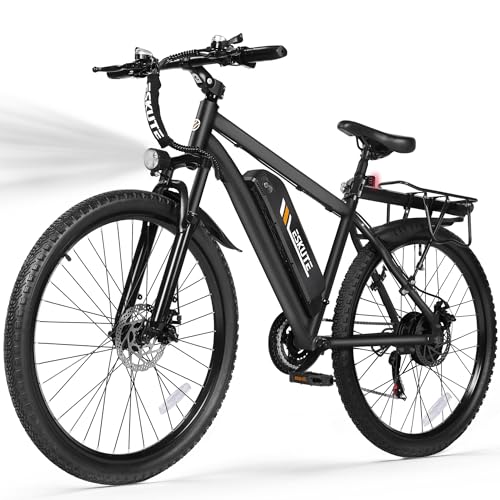
ESKUTE’s mountain e-bike pairs a high-power 1200W peak motor with a versatile 21-speed gear system. It’s designed for riders who want strong acceleration and the option to tackle varied terrain, including city streets and trails. The 48V 10.4Ah removable battery supports up to 55 miles per charge in pedal-assist mode (40 miles on throttle), with a quick 4-hour recharge. The UL-certified battery adds a layer of safety and reliability, while the design supports urban commuting as well as weekend MTB sessions. A robust waterproof build helps riders handle rain and debris in outdoor environments.
Key considerations: higher motor power supports steep climbs and fast trail traversal; battery life is optimized for longer rides; charging speed is competitive. Trade-offs may include weight and geometry that favor mountain performance over compact urban handling in some models.
Totem Electric Bike – 750W Peak Mountain MTB

Totem’s 750W peak motor delivers strong climbing power and a compact frame suitable for riders who want agile handling on mixed terrains. The 374.4Wh removable battery provides a practical balance between weight and range, typically delivering 25-40 miles per charge depending on riding mode and terrain. Three riding modes (including walk mode) expand options for starting on steep grades, commuting, and casual cruising. The front suspension helps absorb bumps and maintain control on irregular surfaces, while a 26-inch wheel setup provides a familiar feel for riders transitioning from traditional mountain bikes.
Key considerations: moderate battery capacity keeps weight manageable; three riding modes offer versatility for varied days; front suspension improves comfort on rugged paths. Potential drawbacks include shorter range relative to larger-pack battery builds and a more traditional wheel size that may affect clearance on very narrow trails.
X-koala 26” Electric Bike – 1000W Peak
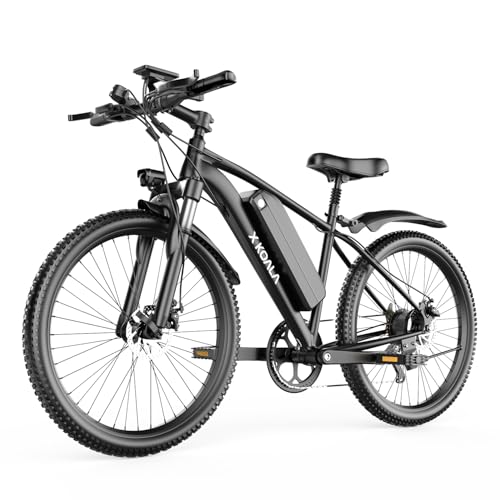
The X-koala model emphasizes power with a 1000W peak motor, delivering confident hill-climbing ability and quick acceleration. Its 36V 13Ah battery supports up to 40 miles per charge, making it suitable for longer rides without frequent recharging. With 26-inch wheels, professional-level 7-speed gearing, and dual disc brakes, this bike emphasizes control and safety across varied terrains. The IPX7 waterproof rating adds resilience against wet weather, making it a solid year-round option for riders who encounter rain or wet trails.
Key considerations: high-powered motor enables rapid acceleration and steep climbs; waterproofing and braking system increase reliability in adverse conditions; weight and handling should be considered for riders who prioritize nimbleness on tight trails.
TST Electric Bike – 1500W Peak Fat Tire MTB

The TST model targets riders seeking serious off-road capability with a 1500W peak motor and 20×4.0-inch fat tires. This combination affords powerful traction on sand, snow, mud, and rugged trails, along with a maximum range approaching 60 miles per charge in pedal-assist mode. The 48V 15Ah removable battery supports convenient charging away from the frame, while the bike’s full-suspension setup and LED lighting provide enhanced visibility and comfort on diverse terrain. Expect strong performance on challenging landscapes, from backcountry trails to sandy beaches.
Key considerations: exceptional traction for extreme terrains; large-fat tires improve stability but add weight and rolling resistance on smooth surfaces; battery capacity supports long rides with pedal assist. Trade-offs include heavier handling and the need for ample storage space when transporting the bike.
Buying Guide
When evaluating e-assist mountain bikes, several factors influence performance and long-term satisfaction. Understanding these considerations helps you align features with your typical riding conditions, storage, and maintenance expectations.
- Motor power and control: A higher peak wattage provides stronger hill-climbing ability and quicker acceleration, but it can drain the battery faster. Consider your terrain mix—steeps, rocks, or long flat sections—and choose a motor that matches your usual routes.
- Battery capacity and charging: Larger batteries extend range but add weight. Look for removable batteries for convenient charging away from the bike, and note charge times to plan trips and commutes.
- Range in real-world use: Range varies with rider weight, terrain, assist level, and wind. Pedal-assist modes typically yield longer ranges than throttle-only modes, so assess how you intend to ride.
- Wheel size and suspension: 27.5″ wheels strike a balance between agility and rollover capability; 26″ wheels favor nimbleness in tight trails. Front or full suspension improves comfort on rough terrain; fat tires (e.g., 4.0″) offer traction on sand, snow, and mud but increase rolling resistance on pavement.
- Drivetrain and braking: A reliable multi-gear system—such as 7- or 21-speed setups—helps with varied climbs. Mechanical or hydraulic disc brakes affect braking performance in wet or muddy conditions.
- Frame design and weight: Aluminum frames are lightweight yet sturdy. Consider total weight, as heavier bikes demand more effort when power is limited or when mounting and dismounting on rugged trails.
- Build quality and warranty: Waterproofing, motor protection, and battery safety features impact reliability. Check warranty terms and service availability in your region.
- Intended use and future upgrades: If you plan to upgrade components or add racks and fenders, ensure compatibility and weight limits. Urban-commute riders may prioritize compact charging and ease of maintenance.
Model Comparisons at a Glance
- Powerful trail-ready options: Models with 1000W–1500W peak motors excel on steep grades and challenging terrain, offering strong performance but potentially shorter battery life if used aggressively.
- Balanced daily rider choices: Bikes with around 750W–1200W peak motors and mid-size batteries aim for a blend of range and agility, suitable for mixed commuting and weekend rides.
- Terrain-specific tires: Fat tires provide traction in sand, mud, and snow—great for off-road adventures but heavier and slower on pavement.
- Battery strategy: Removable batteries enable charging in apartments or offices. Consider charging infrastructure where you usually park your bike.
- Maintenance and support: Look for reputable brands with accessible service networks and straightforward maintenance routines to minimize downtime.