The right BMX bike for a 13-year-old blends beginner-friendly handling with durable construction and room to grow. Key choices include wheel size, frame material, braking system, and the bike’s ability to adapt as your rider gains confidence. Below, we review five widely available BMX-style options that balance safety, performance, and value for tweens and early teens stepping into freestyle riding, park laps, and street sessions.
Summary Table Of Chosen Products
| Product | Wheel Size | Age Range | Key Benefit |
|---|---|---|---|
| Cubsala Freestyle BMX Bike | 20″ | 7-13 | Beginner-friendly with sturdy Hi-Ten steel frame |
| Vollsch Freestyle BMX Bike | 20″ | 8-15 | High-carbon steel frame and reliable braking |
| WEIZE Kids Mountain Bike | 20″ | 6-13 | Durable frame with dual braking for safety |
| Bixike Princess BMX-Style Bike | 12-20″ | 2-13 | Training wheels, kickstand, and colorful styling |
| RoyalBaby Freestyle BMX Bike | 18″ | 5-8 | Adjustable fit with sealed bearings and stable ride |
Cubsala Freestyle BMX Bike Review
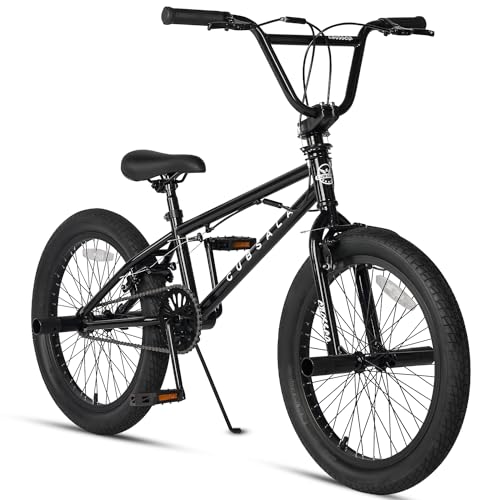
The Cubsala Freestyle BMX Bike is pitched as a first-step BMX for kids and beginners. It’s designed for riders between roughly 4’3″ and 5’4″, placing many 13-year-olds within reach. The 19.5″ top tube offers a balanced stance for street, park, or trail riding, while the Hi-Ten steel frame promises lasting durability under confident use. Braking is supported by front and rear aluminum brakes, complemented by hand-brake levers for precise control. The drivetrain features a 165mm one-piece crank and a 36T chainring, aiding a straightforward pedaling rhythm as new riders learn. This setup emphasizes safety and reliability as skills develop.
Overall, Cubsala’s setup emphasizes approachable handling for a rider transitioning into more advanced tricks or park sessions. The combination of a mid-sized wheel and sturdy frame provides stability without feeling overly bulky. For a 13-year-old who values straightforward maintenance and predictable braking, this model is a practical starter that can grow with basic skills into mid-level BMX riding.
Vollsch 20-Inch Freestyle BMX For 8-15 Riders

The Vollsch BMX bike is clearly intended for young riders moving into freestyle riding, with an age range listed up to 15 years. It uses a durable 19.5-inch top tube high-carbon steel frame, offering robust support for daily rides and occasional park sessions. The 165mm one-piece crank and 36T chainring support efficient pedaling, while the 20″ wheels provide a familiar BMX feel. Front and rear braking are handled by aluminum brakes with a hand lever, which contributes to confident speed control and smoother stops for less experienced riders.
Durability and stability are standout features here: the high-carbon steel frame is designed to handle regular use, and the braking system is geared toward predictability, important for a rider still refining balance and pedal control. For a teen who plans to practice tricks or longer neighborhood routes, Vollsch offers a capable platform with growth potential and straightforward maintenance.
WEIZE 20-Inch Kids Mountain Bike With Dual Suspension

WEIZE’s 20-inch kids mountain bike targets riders who ride across multiple terrains, including playful off-road trips and light trails. The frame is described as enduring and child-friendly with a comfortable standover height that suits growing riders. Tires at 20 x 2.125″ offer better grip and stability, enabling riders to feel secure on uneven surfaces. The braking system is a dual setup with front and rear V-brakes that are easier for young hands to operate, improving confidence during braking and speed management. Safe handling is a focus, with a design that accommodates riders in the 4’0″ to 4’7″ height range.
In practice, this bike suits a 13-year-old who values versatility and a smoother ride on varied terrain. The dual braking and robust tires provide a reassuring ride under @street or park conditions, while the adjustable frame and seat help accommodate growth as skills progress. Maintenance is straightforward, and the bike’s components support regular practice sessions without major upgrades.
Bixike Princess BMX-Style Bike For 2-13

Bixike offers a princess-themed BMX-style bike with a broad wheel-size range from 12″ to 20″. This flexibility is useful for a growing rider who may scale up wheel sizes as they mature. The model includes training wheels and a kickstand, catering to beginners who want extra stability at the start and convenience later on. The design emphasizes a sporty, fun aesthetic with multiple color options to match a child’s personality. For a 13-year-old who is just beginning or wants a bike that can adapt to growing height, the Bixike line provides a transitional option that blends style with safety features.
Key features that support early skill development include training wheels, a coaster brake option, and a low standover height on smaller sizes, making it easier to mount and dismount. While not all versions may deliver top-tier performance, the practical setup is appealing for families seeking a confidence-building bike that can scale up in wheel size as the rider grows older and taller.
RoyalBaby Freestyle BMX Bike Review

The RoyalBaby Freestyle BMX Bike targets younger riders with an 18-inch wheel and a design strongly rooted in BMX aesthetics. It’s pitched for ages 5-8, but its features—such as a fully adjustable seat and handlebar, compatible with riders as they grow taller—can be relevant for families planning an earlier bike that won’t be outgrown quickly. The bike includes training wheels, a stable steel frame, and 2.4″ wide tires, which contribute to better grip and balance on varied surfaces. The patent-sealed bearings promise smoother pedaling, and a BPA-free water bottle adds a practical touch to longer rides.
For a 13-year-old, the RoyalBaby model may serve as a cost-effective starter or secondary bike for younger siblings. It is, however, less suited for advanced BMX tricks given the design emphasis on beginner balance and safety rather than high-level freestyle capability. Still, the adjustable seat and handlebar can provide a comfortable fit as the rider’s height increases over time.
Buying Guide: Key Purchase Considerations For A 13-Year-Old BMX Bike
Choosing the right BMX bike for a growing rider hinges on balancing safety with the bike’s growth potential. Here are the main factors and how they apply to riders around age 13, along with practical comparisons between the five options above.
- Rider Height And Reach: A 13-year-old often falls between rider height ranges that fit 20″ wheels and mid-size top tubes (around 19.5″). Look for bikes with adjustable saddles and handlebars to extend the usable lifespan as height increases. The Cubsala and Vollsch bikes emphasize a 19.5″ top tube and 20″ wheels, which are typically well-suited for teens around this height.
- Wheel Size And Geometry: 20″ wheels are common for beginner-to-intermediate BMX and work well for riders transitioning into more advanced tricks. Some models provide smaller sizes or a range (12″ to 20″), like the Bixike, which supports early growth, but 20″ is often ideal for a 13-year-old seeking stability and control.
- Frame Material And Build: High-carbon steel or Hi-Ten steel frames offer durability for learning crashes and daily use. High-carbon steel tends to be stiffer and stronger, suitable for riders who want longer-lasting frames. Both Cubsala and Vollsch emphasize robust frames for everyday riding and park sessions.
- Braking System: Hand brakes paired with front and rear brakes provide precise stopping power and are safer for older children who ride at higher speeds. Some models feature V-brakes (WEIZE) or aluminum brakes with easy-to-use levers for quick, controlled stops; others use a coaster brake setup, which can reduce maintenance for very new riders but offers less modulation.
- Training Wheels And Learning Aids: If a rider is still developing balance, training wheels can be a valuable transitional feature. The Bixike model offers multiple wheel sizes and training wheels, allowing a seamless transition toward conventional BMX riding as confidence grows.
- Durability, Maintenance, And Parts Availability: Inexpensive bikes may require more frequent replacement parts. Favor models with widely available spare parts, simple single-speed drivetrains, and widely available brake components. The selected bikes provide straightforward maintenance and widely available components, which is important for a teen rider who is actively learning tricks and park etiquette.
- Weight And Maneuverability: Lighter bikes are easier to handle for beginners and younger teens. Heavier frames may offer durability but can be harder to maneuver during tricks or in busy skateparks. The bikes reviewed here balance durability with practical weight for a teen rider who is practicing new techniques.
- Intended Use: Park riding, street cruising, and light trails each demand slightly different setups. A dual-suspension model (as listed in product titles) can smooth out rough surfaces, but for most 13-year-olds, a well-built rigid frame with reliable brakes and a comfortable fit is a reliable choice for learning and progressing.
- Growth Longevity And Upgrades: A bike that supports height and wheel-size growth reduces the need for replacement as soon as a rider grows a few inches. The Bixike range, with multiple wheel sizes and training wheels, is especially adaptable, while the Cubsala and Vollsch bikes provide sturdy platforms that last through the early teen years with straightforward upgrades if needed.
In summary, for a 13-year-old, prioritize a bike with a 20″ wheel, a sturdy frame (preferably steel), reliable hand brakes, and adjustable saddle height. If the rider is still refining balance or shows interest in progressing to more challenging tricks, consider a bike that offers growth options, such as a larger wheel size or adjustable geometry, and ensure the bike’s weight remains manageable for consistent handling.