Choosing the best light up scooter for an 8-year-old involves safety, durability, and features that make riding exciting without sacrificing control. For kids around this age, scooters should be easy to balance, easy to stop, and capable of growing as their skills improve. The following five models combine high-visibility LED lighting with sturdy construction, comfortable rides, and adjustable components that fit growing youngsters. Use this guide to compare features, understand what matters most, and pick a scooter that keeps your child active and entertained outdoors.
| Product | Brand | Lighting Feature | Notes |
|---|---|---|---|
| Jetson Jupiter Black Kick Scooter | Jetson | Over 100 LED lights on stem, wheels, and deck | Collapsible, portable, fast folding |
| Aero Scooter For Kids 6-12 | AERO MOBILITY | Motion-activated light up wheels (tyre and core) | 7” wheels, built-in shock absorption |
| Micro Maxi Deluxe LED 3-Wheeled | Micro | Two front LED motion-activated wheels | Lean-to-steer, adjustable T-bar |
| Rahmory 3-Wheel Light-Up Kids Scooter | Rahmory | 20 light patterns on deck and handlebars | 3-height adjust, tilt-to-turn steering |
| JOYSTAR Kick Scooter 12-Inch Wheels | JOYSTAR | No built-in lights listed | Adjustable handlebar, large wheels, safety deck |
Jetson Jupiter Black Kick Scooter
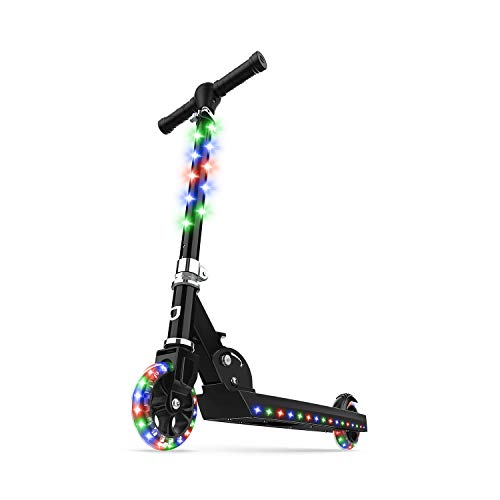
The Jetson Jupiter Black Kick Scooter is designed for easy stepping into independent riding, with safety and visibility built into its core. The model features extensive LED lighting that lights up the stem, wheels, and deck, making it easier for youngsters to be seen in low-light conditions. The trainer-like balance is supported by a low deck, which helps new riders place their feet securely and push off with confidence. The scooter’s shock-absorbing wheels provide a smooth glide over sidewalks and pavement, even when surfaces aren’t perfectly flat.
This scooter uses a full-contact rear braking system that delivers reliable stopping power with modest finger force. That combination—helpful brakes, stable deck, and bright LEDs—helps eight-year-olds cruise with more control and less effort. When it’s time to take it on the go, the Jupiter folds quickly without tools, allowing kids to carry it into a garage, school, or car with ease. The overall build is lightweight, aiding handling for younger riders while maintaining enough durability to withstand regular outdoor use.
Compared with other light-up options, the Jetson Jupiter Black stands out for its broad LED footprint and straightforward folding process. It’s a good pick for parents seeking a visible, reliable learner scooter that can transition from elementary training to confident, everyday use. Its simple, two-wheel ride style remains approachable for most eight-year-olds, especially those building kick-pushing technique and balance. If your child loves bright visuals, this model pairs safety lighting with practical features in a single, compact package.
AERO MOBILITY Aero Scooter With Light-Up Big Wheels

The Aero Scooter A5 is built with a kid-friendly design that targets ages 6-12, including eight-year-olds who are refining balance and endurance. Its 7-inch big PU wheels help absorb minor irregularities in pavement, delivering a smoother ride for longer sessions. The built-in shock absorption and wider, non-slip deck help young riders stay comfortable and confident, even as they ride on busier sidewalks or uneven surfaces. The motion-activated lights add a dynamic visual element that engages kids and enhances visibility during dusk play.
Parents appreciate the design focus on safety and longevity. The scooter is lightweight yet sturdy, which makes it easier for kids to push and steer without fatigue. The foldable, portable frame supports quick storage at home or in a backpack when traveling to parks or school events. By combining robust wheels, quiet micro-movements, and eye-catching LEDs, this Aero model offers a balanced mix of performance and fun that aligns with an 8-year-old’s developing riding skills.
Compared with two-wheeled counterparts, the A5 Aero’s three-part construction and larger wheels can feel more stable for kids who are transitioning from beginner to confident rider. The motion-activated LEDs add excitement without requiring extra setup, while the weight limit supports heavier children within the target age range. If you want a scooter that prioritizes a steady ride with bright lighting, this Aero option is a strong contender for daily practice and weekend adventures alike.
Micro Maxi Deluxe LED Three-Wheeled Scooter

The Micro Maxi Deluxe LED three-wheeled scooter uses a lean-to-steer mechanism, which helps kids develop balance and steering intuitively. The two front LED light-up wheels create a striking visual cue as soon as the child starts moving, increasing visibility and excitement. The scooter is designed to hold up to 110 pounds, providing a longer window of use as a child grows taller and stronger. The adjustable T-bar ensures the handlebar height can be raised as needed for comfort and proper posture during riding.
Riding on smooth sidewalks or slightly rough terrain is comfortable thanks to Micro’s attention to ride quality. The three-wheel layout tends to offer enhanced stability, which is particularly beneficial for eight-year-olds who are still refining their cornering and balance. The combination of durable construction, simple mechanics, and LED accents makes this scooter a practical option for kids who want a dependable daily ride with a touch of flair.
For families comparing features, the Maxi Deluxe provides a stable ride with front LED wheels and a straightforward upgrade path via its adjustable handlebar height. The lean-to-steer layout can help kids quickly learn nuanced steering without feeling overwhelmed by complex controls. If you value long-term use and a low-maintenance design, this Micro model delivers consistent performance in a compact package.
Rahmory 3-Wheel Light-Up Kids Scooter

Rahmory’s three-wheel design emphasizes balance-friendly learning with a soft progression into faster, more confident riding. This scooter features 20 different light patterns, allowing kids to customize their ride aesthetics while keeping higher visibility during dusk play. The three-wheel layout contributes to stability and predictable turning behavior, which is valuable for 8-year-olds who are still mastering steering dynamics. The handlebars offer a 3-position height adjustment, enabling a better fit as a child grows.
The Rahmory scooter supports an engaging riding experience through its light-up deck and handlebars, which encourage longer outdoor play sessions. The safety button lift lock and adjustable height help keep the scooter secure and comfortable for a range of sizes. Tilt-to-steer functionality adds a slightly more sophisticated steering mechanism while remaining approachable for younger riders, making it a good transitional option for kids who are ready to advance beyond basic two-wheel models.
For families weighing options with more lighting variety, Rahmory stands out for its built-in customization and adjustable fit. The 3-wheel layout reduces over-correction and improves learner confidence, while the light-up elements offer a visual cue that’s appealing to kids. If you want a scooter that balances stability, grow-with-me adjustability, and eye-catching effects, this Rahmory model is an appealing pick for 8-year-olds exploring more advanced riding techniques.
JOYSTAR Kick Scooter With Big Wheels

JOYSTAR’s kick scooter targets riders aged 5-9 and is designed with large 12-inch wheels to handle sidewalks and minor terrain variations more smoothly. The adjustable handlebar allows the scooter to grow with a child, ensuring a comfortable riding posture as height increases. The deck emphasizes safety with a non-slip surface and wide stance, making it easier for new riders to balance and coast without wobbling. These features make it a solid choice for eight-year-olds seeking a sturdy, scalable scooter.
The JOYSTAR model emphasizes versatility and durability, suitable for daily commutes to school, jaunts around the neighborhood, or park days. Its wide foot deck provides ample room for stable foot placement, and the engine-like feel of larger wheels helps maintain momentum with less effort. While this option does not advertise LED lighting, its stability, comfort, and grow-with-me design compensate by delivering dependable performance as a child’s riding skills advance.
From a comparative standpoint, the JOYSTAR scooter stands out for its wheel size and adjustability, which can be particularly beneficial for kids who need a broader platform and longer use life. If your priority leans toward extended usability and a solid, stable ride rather than flashy lighting, this model complements the LED-focused options nicely by emphasizing long-term comfort and safety.
Buying Guide: Key Purchase Considerations And Comparisons
Age and skill level: For eight-year-olds, a scooter with adjustable handlebars and a stable three-wheel option early in the learning curve can be very helpful. As confidence grows, two-wheel models with solid brakes and responsive steering become more suitable. Look for designs that accommodate gradual progression from basic balance to controlled carving and speed management.
Weight capacity and build: A higher weight tolerance extends a scooter’s usable life as a child grows. Materials should balance light weight for easy handling with sufficient rigidity to withstand daily use. Laminated frames, reinforced decks, and strong locking mechanisms on foldable models contribute to durability and safety on varied terrains.
Wheels and suspension: Bigger wheels (like 7-inch and 12-inch options) absorb bumps more effectively and enable smoother rides, especially on uneven sidewalks. Integrated suspension or shock-absorbing components reduce jostling and fatigue during longer sessions, maintaining comfort for kids who ride daily or for extended periods.
Lighting and visibility: LED lighting on the stem, deck, and wheels improves visibility and adds a “fun factor” that motivates kids to ride in the early morning or evening. Motion-activated lights provide a dynamic effect without requiring extra actions from the rider, which can help maintain interest and safety during twilight playtime.
Brakes and stopping power: Full-contact rear brakes offer controlled, predictable stopping with modest effort, which is essential for younger riders. Some models pair rear brakes with a responsive front wheel setup to provide balanced braking performance. Check for a brake system that is easy to reach and operate without requiring excessive finger strength.
Adjustability and growth: An adjustable T-bar or handlebar height ensures the scooter can grow with a child from early elementary years onward. Quick-fold mechanisms support parental transport and storage, reducing the “bulk” factor when taking scooters to parks or school events.
Portability and storage: Collapsible designs, light weight, and compact folded sizes make scooters easier to transport and store away when not in use. This is particularly important for families with limited space or those who travel frequently with outdoor equipment.
Price and value: While prices vary, prioritize models that pair robust construction with features that match your child’s current needs and future growth. A slightly higher upfront investment can yield longer-term use and better safety features, which pays off over time.
Variant choices and features: If LED lighting is a top priority, identify models with lights on the stem, wheels, and deck, and consider motion-activated options for added effect. If a child enjoys a lean-to-steer or triple-wheel design, those can provide extra stability and confidence during learning phases. Compare a mix of models to cover both safety and excitement factors.
Summary and decision framework: For an eight-year-old, select at least one stability-first option (three-wheel or wide-deck two-wheel with strong brakes) and one with heightened visibility for outdoor play. Consider adjustability to extend the product’s life as the child grows. If you want visual appeal paired with safety, LEDs offer both function and fun. Use this framework to align your choice with your child’s riding maturity and your family’s lifestyle.
Practical next steps: Check the product pages for the presence of a fold mechanism, the height range of the handlebar, and the maximum rider weight. Ask about warranty coverage and replacement parts in case of wear on wheels or the braking system. Review user feedback about durability in daily use and how easy it is for a child to manage the scooter during transitions between learning and independent riding.