Choosing the right rear tire can dramatically improve grip, stability, and puncture resistance on rugged trails. This guide highlights five top options that balance durability, traction, and value for American riders tackling everything from technical climbs to loose, rocky sections. Each selection emphasizes rear-tire performance, whether you ride a 26-inch or 29-inch setup. Read on to compare sizes, tread styles, and puncture protection so you can pick a tire that keeps you rolling through rough terrain and changing conditions.
| Product | Brand | Size | Notable Feature |
|---|---|---|---|
| Schwinn 29×2.25 Kevlar Mountain Tire | Schwinn | 29″ x 2.25″ | Kevlar puncture guard, steel bead |
| WTB Velociraptor Rear Tire 26×2.1 | WTB | 26″ x 2.1″ | Rear-focused tread for braking traction |
| Kulifoo Mountain Bike Tires 26×1.95 Pack | kulifoo | 26″ x 1.95″ | Puncture-resistant with inner tubes included |
| Schwinn 26×1.95 All-Terrain Tire | Schwinn | 26″ x 1.95″ | Wide blocky knobs, puncture guard |
| Continental Cross King ShieldWall 29×2.2 | Continental | 29″ x 2.2″ | Three-layer Tubeless Ready casing, strong puncture protection |
Schwinn 29-Inch Kevlar Mountain Tire

Schwinn’s 29 x 2.25-inch tire offers a robust setup for aggressive trail riding. The Kevlar layer adds puncture resistance, while the durable steel bead supports reliable bead retention on rough surfaces. Its aggressive tread pattern delivers solid grip in loose soil and mud, helping riders maintain control on climbs and descents. This tire is designed for 29-inch mountain bikes and aims to balance durability with performance across varied trail conditions. It suits riders who want standout puncture protection without sacrificing traction.
WTB Velociraptor Rear Tire 26×2.1

This rear-specific tread tire by WTB is engineered for maximum traction during braking on challenging downhill trails. Its wide-spaced knobs are designed to bite into dirt and rocks, providing reliable grip even on loose surfaces. The tire’s DNA compound enhances off-road performance, and the wire bead keeps weight down for efficient acceleration. It’s ideal for riders who frequently descend technical sections and need dependable rear-end traction on rugged terrain.
Kulifoo 26X1.95 Mountain Tire Pack

Kulifoo’s 26 x 1.95-inch tires come as a two-pack with two inner tubes and tire levers. Constructed from Thai natural rubber, these tires emphasize durability and traction across mud, rocks, and varied trails. A puncture-resistant layer adds protection against sharp debris, making them suitable for riders who value extended ride times without frequent repairs. The included butyl tubes assist with sealing and long-term performance, ensuring quick field repairs when needed.
Schwinn 26×1.95 All-Terrain Tire
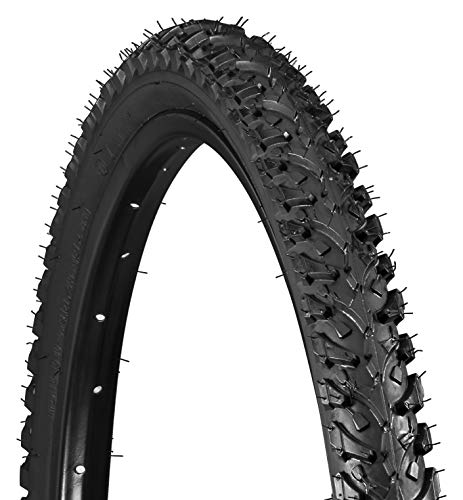
Schwinn’s 26 x 1.95-inch tire is designed for versatility across off-road conditions. The model features wide, blocky knobs that improve traction on loose soil and rocky landscapes, combined with a puncture guard for added protection against debris. It’s compatible with internal rim widths from 19mm to 29mm, making it well-suited for a broad range of mid-sized mountain bikes. This tire aims to deliver stable handling and dependable grip on diverse terrains.
Continental Cross King ShieldWall 29×2.2

The Continental Cross King ShieldWall tire blends a versatile, easy-rolling profile with high puncture protection thanks to its Tubeless Ready three-layer casing. At 29 x 2.2 inches, it’s built to handle a wide range of surfaces, from smooth trails to chunky singletrack. The ShieldWall construction enhances durability and control, while the tubeless-ready design reduces pinch flats and allows riders to run lower pressures for improved traction on technical sections.
Buying Guide
- Tire size and rim compatibility: Match the tire size (26″ vs 29″) to your bike’s wheel diameter and internal rim width. Wider rims support wider tires and can influence traction and ride feel, especially on loose surfaces.
- Tread pattern and terrain: Aggressive knobs excel on loose dirt and mud, while smoother center tread improves rolling efficiency on hard-packed trails. For rear tires, consider tread that prioritizes braking traction and stability during descents.
- Puncture protection: Kevlar layers, puncture guards, and reinforced casings reduce flats in rocky or debris-strewn terrain. Weigh the trade-off between added protection and potential weight or rolling resistance.
- Bead type and tubeless readiness: Folding beads tend to be lighter and easier to mount, while wire beads are robust and affordable. Tubeless-ready tires offer better pinch-flat protection and lower pressures for grip, but require compatible rims and sealant.
- Width and impact on ride: Common rear-tire widths range from 1.75″ to 2.25″. Wider tires provide more traction and stability in loose conditions but can increase rolling resistance on hard surfaces. Choose width based on riding style, terrain, and bike clearance.
- Maintenance considerations: Inner tubes included with some tires simplify repairs on the trail, but tubeless setups may require ongoing sealant checks. Carry patch kits, levers, and a pump to handle flats efficiently.
- Durability vs. weight: Heavier, more protective tires tend to last longer in rough terrain, while lighter tires offer quicker acceleration and lower rolling resistance. For aggressive riders, prioritizing puncture resistance can reduce downtime.
- Cost and availability: Popular brands offer broader compatibility and easier replacements. Evaluate local availability and the ability to source matching sizes and tubes for future replacements.
When selecting a rear tire, consider how often you ride technical descents, the typical terrain, and the rim width you use. A tire with solid puncture protection and appropriate tread will help you stay confident on rough sections while maintaining predictable handling. The featured options here provide a mix of sizes (26″ and 29″), tread styles, and protection levels to suit riders who value durability and traction on demanding trails.